 Reviewed by
In short
Anxiety is a feeling of fear, worry, or unease that can include physical symptoms such as muscle tension and a racing heart. An anxiety disorder involves persistent or excessive fear that disrupts daily life. Treatment depends on the condition and can include psychotherapy, medication, and practical coping strategies.
Key facts
- Anxiety disorders are among the most common mental health conditions worldwide. WHO estimates that 359 million people had an anxiety disorder in 2021. Source: WHO.
- Occasional anxiety is common. An anxiety disorder involves persistent or excessive fear, worry, or avoidance that interferes with daily life. Source: NIMH.
- Treatment can include psychotherapy, medication, or both. CBT and exposure-based approaches help people change anxious thinking and avoidance; the plan depends on the disorder and individual needs. Source: NIMH.
- Anxiety can occur alongside depression. A clinician can assess both and consider how they affect the treatment plan. Source: NIMH.
What is anxiety?
Anxiety is a feeling of fear, dread, or unease in response to a perceived threat. In small doses it is useful: it sharpens focus, helps you prepare, and keeps you safe. People may feel anxious before an exam, a big decision, or a difficult conversation. A clinician considers the intensity, persistence, triggers, and impact of that response when deciding whether an anxiety disorder may be present.
An anxiety disorder is different. The worry is more intense than the situation calls for, it does not go away, and it gets in the way of work, relationships, and everyday activities. Anxiety disorders are real medical conditions with biological, psychological, and social roots, not a sign of weakness or something you can simply talk yourself out of. The good news is that they respond well to treatment.
Anxiety disorders are also the most common category of mental health conditions. According to the National Institute of Mental Health (NIMH), anxiety disorders affect a large share of U.S. adults at some point in their lives, and the World Health Organization (WHO) describes them as the most prevalent mental disorders worldwide. If you are living with one, you are far from alone.
Clinicians diagnose anxiety disorders using the criteria in the Diagnostic and Statistical Manual of Mental Disorders (DSM-5), published by the American Psychiatric Association. The specifics differ by disorder, but in general a diagnosis involves fear or worry that is excessive, persistent (often present more days than not for six months or more in conditions such as generalized anxiety disorder), and disruptive to daily life, after a clinician has ruled out a medical cause, medication effect, or substance use. A qualified professional applies the relevant diagnostic criteria. For generalized anxiety disorder, NIMH describes hard-to-control worry on most days for at least six months; this duration is not a reason to delay seeking help. Source: NIMH.
| Feature | Everyday anxiety | An anxiety disorder |
|---|---|---|
| Trigger | Tied to a real, specific stressor | Often out of proportion, or with no clear cause |
| Duration | Fades once the situation passes | Persists for months, often more days than not |
| Intensity | Uncomfortable but manageable | Intense, hard to control, sometimes with panic |
| Daily life | Work, sleep, and relationships carry on | Interferes with work, sleep, and relationships |
| Avoidance | You still do the things that matter | You start avoiding situations that set it off |
| Next step | Self-care is usually enough | Worth discussing with a professional; treatment works |
What is the definition of anxiety, and how common is it?
Anxiety is a state of apprehension or worry about a possible threat. It can involve thoughts, feelings, and physical changes. Experiencing it sometimes does not by itself mean you have an anxiety disorder. Clinicians consider persistence, intensity, context, and interference with daily life.
NIMH reports that 19.1% of US adults experienced an anxiety disorder in the survey's past-year window and 31.1% experienced one at some point in their lives. These estimates draw on the National Comorbidity Survey Replication, conducted during the period from February 2001 through April 2003. They are historical survey estimates, not measurements of prevalence on September 13, 2026. The survey used DSM-IV categories, which included OCD and PTSD within the anxiety grouping; current classifications separate them.
Those percentages describe disorders, not every experience of nervousness. If worry is restricting your life, the GAD-7 anxiety screening can help you organize a conversation. Screening is not a diagnosis and does not assess every possible anxiety condition. A therapist who works with anxiety can help you decide what support fits.
If you are in emotional crisis or thinking about suicide, call or text 988 in the United States. For immediate danger, call 911.
Symptoms
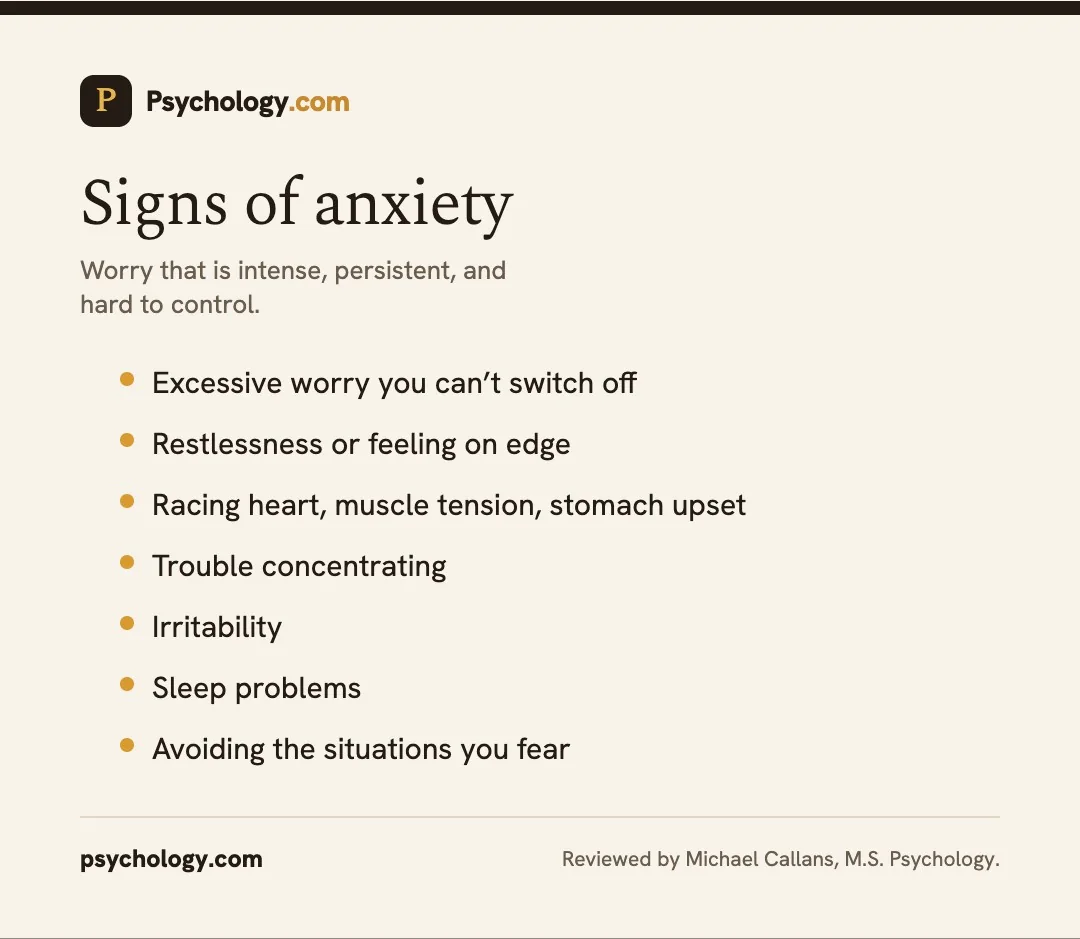
Anxiety affects the mind and the body. Common signs include:
- Excessive, hard-to-control worry or fear
- A sense of restlessness or feeling on edge
- Difficulty concentrating or the mind going blank
- Irritability
- Muscle tension
- Trouble falling or staying asleep
- Racing heart, shortness of breath, or chest tightness
- Sweating, trembling, or shaking
- Stomach upset, nausea, or dizziness
- Avoiding situations that trigger the anxiety
When these symptoms are frequent, persist for months, and interfere with daily life, they may point to an anxiety disorder. The pattern varies by type. Generalized anxiety disorder tends to show up as ongoing, free-floating worry, while panic disorder produces sudden surges of intense physical fear, and social anxiety centers on the dread of being judged. The NHS notes that physical symptoms like a pounding heart and dizziness are a core part of anxiety, which is one reason people sometimes first seek help thinking something is wrong with their heart or stomach rather than recognizing anxiety.
Types of anxiety disorders
- Generalized anxiety disorder: chronic, excessive worry about many everyday things, often without a clear cause.
- Panic disorder: recurrent, unexpected panic attacks and fear of having more. See our guide to panic disorder.
- Social anxiety disorder: intense fear of being judged, embarrassed, or scrutinized in social situations.
- Phobias: strong, irrational fear of a specific object or situation. See phobias.
- Separation anxiety disorder: excessive fear of being apart from people you are attached to.
Related conditions such as OCD and PTSD were once grouped with anxiety disorders and share some features, though they are now classified separately.
19.1%of U.S. adults had an anxiety disorder in the past-year window of the 2001 to 2003 surveyNIMH
31.1%of U.S. adults had experienced an anxiety disorder during their lifetime in the 2001 to 2003 surveyNIMH
4.4%of the global population experienced an anxiety disorder in 2021WHO
1 in 4people with an anxiety disorder received any treatment in the survey estimate cited by WHO (27.6%)WHO
Causes and risk factors
There is no single cause. Anxiety disorders usually develop from a mix of factors:
- Biology: brain chemistry and genetics. Anxiety can run in families.
- Temperament: being naturally shy or prone to negative emotions in childhood.
- Life events: trauma, stress, abuse, or significant change.
- Health: certain physical conditions, chronic illness, and some medications.
- Substance use: caffeine, alcohol, and drug use can trigger or worsen anxiety.
These factors interact rather than act alone. Someone with a family history of anxiety and a naturally cautious temperament may stay symptom-free until a stressful period tips the balance. Women are diagnosed with anxiety disorders more often than men, and the conditions frequently begin in childhood, adolescence, or early adulthood. Some physical conditions, including thyroid problems and heart rhythm issues, can mimic anxiety, which is why a medical check is part of a thorough evaluation.
How anxiety is treated
“There are highly effective treatments for anxiety disorders.”
Anxiety disorders are highly treatable. Most people improve significantly with treatment, and a combination often works best. The right approach depends on the type of anxiety, its severity, and your preferences, so it is worth talking the options through with a professional.
Psychotherapy
Talk therapy, especially cognitive behavioral therapy (CBT), is a first-line treatment. CBT helps you recognize and reframe the thoughts that fuel anxiety and learn practical coping skills. A specific form called exposure therapy gradually and safely reduces fear of the situations you avoid, and is especially useful for phobias, panic disorder, and social anxiety. Other evidence-based approaches include acceptance and commitment therapy and applied relaxation. The skills learned in therapy tend to last well beyond the final session.
Medication
Several medications can ease anxiety. Antidepressants are usually the first choice for ongoing treatment, including selective serotonin reuptake inhibitors (SSRIs), such as sertraline and escitalopram, and serotonin and norepinephrine reuptake inhibitors (SNRIs), such as venlafaxine and duloxetine. These are typically used long term and take a few weeks to work. Other medicines, such as buspirone, may be added, and benzodiazepines are sometimes used for short-term relief but carry a risk of dependence, so they are prescribed cautiously. All should be managed by a prescriber. Learn more about antidepressants.
Lifestyle and self-care
Regular physical activity, good sleep, slow breathing and relaxation techniques, limiting caffeine and alcohol, and staying socially connected all help manage anxiety. These complement, but do not replace, professional treatment for moderate to severe anxiety.
When to see a therapist vs. a psychiatrist
A therapist (such as a psychologist, licensed counselor, or clinical social worker) provides talk therapy and is often the best first step for anxiety, since therapy is so effective for it. A psychiatrist is a medical doctor who can diagnose anxiety disorders, prescribe and adjust medication, and help with more severe or treatment-resistant cases. Many people work with both. If you are unsure where to start, your primary care doctor can evaluate your symptoms, rule out physical causes, begin treatment, and refer you to the right specialist.
Does this sound familiar? If you have been wondering whether what you feel is more than everyday worry, these prompts can help you take an honest look.
Free and confidential, with an instant plain-language result and a PDF you can bring to a professional. A screening is not a diagnosis.
Free tools and worksheets
Practical, printable exercises from our free library that people managing anxiety often find useful. No signup needed.
When to seek help
Reach out to a doctor or mental health professional if worry and fear feel out of control, last for months, or interfere with work, relationships, or daily life. Also seek help if anxiety leads you to avoid important activities or if you rely on alcohol or other substances to cope. Treatment is effective, and getting help early makes recovery easier.
Frequently asked questions
What is the difference between normal anxiety and an anxiety disorder?
Normal anxiety is temporary and tied to a specific stressor, and it fades once the situation passes. An anxiety disorder involves worry that is intense, persistent, out of proportion to the situation, and disruptive to daily life. A GAD-7 anxiety screening can organize recent symptoms for a clinician, while a social anxiety screening focuses on social fears. Neither establishes a diagnosis.
Can anxiety be cured?
Many people experience lasting relief with treatment. While anxiety may not vanish entirely, therapy and medication can reduce symptoms to a manageable level and give you tools to handle it long term. Recovery can mean returning to activities you have avoided and feeling more able to handle uncertainty. If symptoms return or treatment stalls, review the plan with your clinician.
Is anxiety a physical or mental condition?
Both. Anxiety affects the mind through worry and fear, and the body through symptoms like a racing heart, muscle tension, and stomach upset. Effective treatment addresses both sides. New or severe physical symptoms need medical assessment. A clinician may check medication effects or health conditions alongside anxiety, especially when symptoms begin suddenly or change substantially.
What is the 3-3-3 rule for anxiety?
The 3-3-3 rule is a quick grounding exercise: name three things you can see, three sounds you can hear, then notice three things you can touch, such as your clothing, chair, or floor. It may help direct attention toward your surroundings during an anxious moment. Responses vary, and persistent symptoms deserve professional assessment. Rethink Mental Illness describes this grounding exercise.
Does caffeine make anxiety worse?
It can. Caffeine is a stimulant that raises heart rate and can trigger jitteriness, restlessness, and even panic-like symptoms in people prone to anxiety. Cutting back, especially in the afternoon and evening, often lowers baseline anxiety and improves sleep, which itself calms the nervous system. Reduce gradually to avoid withdrawal headaches. Consider recording caffeine intake and sleep alongside symptoms so you can discuss patterns with your clinician. NIMH describes caffeine reduction as a supportive habit.
At what age does anxiety usually start?
Anxiety disorders often begin early, with symptoms commonly first appearing in childhood, adolescence, or early adulthood. That said, anxiety can develop at any age, sometimes after a stressful event, a health change, or a major life transition, and people with later-onset anxiety can also benefit from treatment. New symptoms warrant assessment for medical, medication-related, and emotional contributors.
Related conditions
- Panic Disorder
- Phobias
- Depression
- Anxiety Statistics 2026
Therapists who specialize in anxiety
Connect with a licensed therapist on Psychology.com who works with anxiety.
- 180 Wellness
- A FAMILY MATTER
- A. Nires
- Advance Thru Psychotherapy and Family Development
- Amanda P Bailey
- Amy Keller
Finding the right help
When you are ready to take the next step, these guides walk you through finding and starting with the right therapist.
- Normal anxiety or an anxiety disorder?
- Getting started with therapy
- How to find the right therapist
- Find a therapist who takes insurance
- Free & low-cost therapy
What anxiety journal prompts can help before an appointment?
Use an anxiety worry journal to record what happened, what you feared, what you felt in your body, and what you did next. Note whether you avoided a situation, sought reassurance, or found a useful coping response. These observations can help a clinician understand triggers and the effect on your daily life.
Useful prompts include: “What was I predicting?”, “What information did I have?”, and “What activity did anxiety stop me from doing?” Bring examples alongside an anxiety screening. For social fears, the social anxiety screening may help you describe the pattern. Screening results support a conversation and do not diagnose an anxiety disorder.
The anxiety cycle worksheet explains how avoidance can maintain fear. Explore the conditions hub and guides to panic disorder and phobias for related patterns. NIMH explains anxiety assessment and treatment.
References
- NIMH. Generalized Anxiety Disorder: What You Need to Know.
- Rethink Mental Illness. What is the 3 3 3 rule for anxiety?.
- National Institute of Mental Health (NIMH): Anxiety Disorders
- National Institute of Mental Health (NIMH): Any Anxiety Disorder statistics
- World Health Organization (WHO): Anxiety disorders fact sheet
- Mayo Clinic: Anxiety disorders
- NHS: Overview of generalised anxiety disorder in adults
- American Psychiatric Association (APA): What are anxiety disorders?
- NIMH. Caring for Your Mental Health.
