Nervous Breakdown Test: See How Close You Are to a Breaking Point Across Body, Mind and Daily Life
For anyone who has typed 'am I having a nervous breakdown' into a search bar at 3am. Twenty plain statements about the past two weeks, scored across body, mind and daily functioning, with a clear read on how close to a breaking point you are, what usually sits underneath it, and what helps in the first 72 hours. An educational check-in for adults, not a diagnosis.
 Reviewed byMichael Callans, MSW
Nervous Breakdown Test: Am I at a Breaking Point? is a free, confidential 20-question self-assessment, educational check-in · 'nervous breakdown' is a real state, not a diagnosis. It takes about 5 minutes, runs entirely in your browser, and gives you a plain-language score across 3 interpretation bands plus an optional in-depth report. It is an educational screening, not a diagnosis.
One honest check-in on acute overwhelm
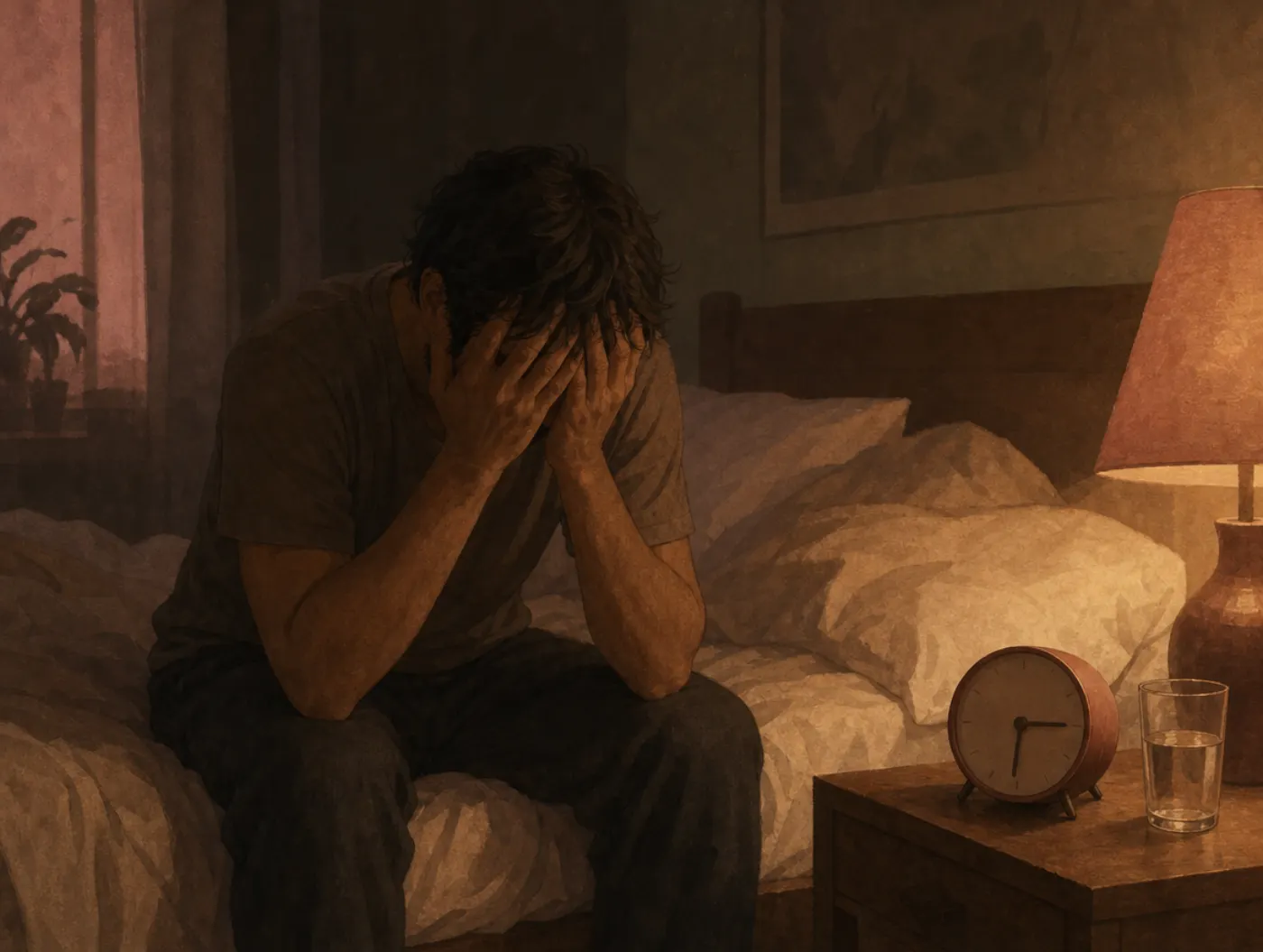
'Nervous breakdown' is not a diagnosis, but it names something real: a stretch where stress has outrun your capacity to cope, and sleep, thinking and ordinary functioning start to give way at once. This check-in asks about that state directly, in plain language, across your body, your mind and your daily life, so you get a clear read and a specific next step instead of a frightening label. One statement asks directly about thoughts of self-harm, and it changes the result if you endorse it.
Plain statements about acute overwhelm
Sleep collapse, panic symptoms, crying spells, feeling unreal, dread, numbness, not being able to make small decisions, pulling away from everyone, basic self-care slipping. Written the way people describe it, not in clinical language, and rated for the past two weeks.
Body, mind and daily functioning
A breakdown is rarely one thing. The result splits your score across what your body is doing, what your mind is doing and what has actually changed in your daily life, plus a separate safety check, so you can see where the strain is landing hardest.
What is underneath, and what helps first
The state usually sits on top of burnout, depression, an anxiety disorder or an acute stress reaction. The reading explains how to tell them apart, which test to take next, and what the first 72 hours should look like.
| Feature | Typical free quiz | Psychology.com |
|---|---|---|
| Written for the 3am search, not clinical jargon | Clinical or vague | Plain language, direct |
| Scores body, mind and daily functioning separately | One blended number | Yes, three areas plus a safety check |
| Asks about self-harm thoughts directly and clearly | Often avoided | Yes, one plain question that changes the result |
| Explains what usually sits underneath a breakdown | Rarely | Yes, burnout, depression, anxiety, acute stress |
| Says what helps in the first 72 hours | No | Yes, concrete steps |
| Clinician-reviewed interpretation | Rarely | Yes, clinician reviewed |
| Answers stay on your device | Often collected | Scored in your browser; only summary scores if you request a PDF or report |
Therapists Who Work With Stress
If your result points to something you want help with, these licensed therapists work with it. Every member is matched to the federal NPI Registry; board checks are dated on the profile.
-
View profile
Shaudi AdelLCSW, MSW
License verified, checked Oct 13, 2026
“Check out my profile for a free consultation!”
New York, New York Telehealth $80 per session, sliding scale
-
View profile
License verified, checked Oct 7, 2026
“Change is inevitable, but transformation is by conscious choice. - Heather Ash Amara”
Birmingham, Alabama Telehealth $125 to $175 per session
-
View profile
Karen BorkowskiMSW, LCSW
License verified, checked Sep 28, 2026
Madison, Wisconsin Telehealth and in person $200 to $250 per session, sliding scale


How scoring works
Answers are scored 0–80 in total. Your result falls into one of 3 bands:
| Score | Band | What it suggests |
|---|---|---|
| 0–26 | Strained but coping | Your answers suggest you are under strain but still coping. Something brought you here, and that is worth listening to, but the collapse this check-in screens for does not seem to be happening right now. |
| 27–53 | Close to a breaking point | Your answers suggest you are close to a breaking point. Stress is outrunning your capacity to cope, and it is showing up in your body, your mind or your daily life, often all three. This is the moment to bring the load down, not push through. |
| 54–80 | At a breaking point | Your answers suggest you are at a breaking point right now. Please treat this result as a signal to get real support today, not as something to sit with alone. |
How this nervous breakdown test is scored
The check-in has 20 statements about the past two weeks. Each one is rated from not at all (0) to nearly all the time (4), for a total of 0 to 80. The breakdown splits that total across what your body is doing (sleep, panic symptoms, crying, exhaustion, appetite), what your mind is doing (feeling unable to cope, racing or blank thoughts, feeling unreal, hopelessness, dread, indecision, numbness) and what has changed in your daily functioning (work, people, self-care, obligations), with one statement in a separate safety category. The groupings are ours; this is an educational check-in, not a validated instrument.
The three bands, strained but coping, close to a breaking point, and at a breaking point, are educational thirds of the range rather than clinical cutoffs. The safety statement is treated as a critical item: if you endorse thoughts of being better off dead or of hurting yourself at any level, your result is raised to the top band and a direct note points you to crisis support, whatever the rest of your answers add up to. A low total cannot tell someone who endorsed that statement that they are doing fine.
'Nervous breakdown' is not a diagnosis, but the state is real
You will not find 'nervous breakdown' in any diagnostic manual, and that confuses people, because the experience it names is unmistakable: a point where the stress you have been carrying outruns your ability to carry it, and several systems give way at once. Sleep collapses. Panic arrives without warning. You cry in the car and cannot say why. Small decisions become impossible. You stop answering messages, stop showering, stop going in. Many people describe a sense of watching themselves from outside, or of having run out of feelings altogether. Researchers have tracked the term for decades; in a series of American national surveys, the share of adults who said they had felt close to a nervous breakdown rose markedly between 1957 and 1996, which tells you how common the experience is and how useful people find the phrase.
Because it is not a diagnosis, it is better understood as a description of acute stress collapse: the body's alarm system running at full volume for too long, and the capacity to function draining away under it. That framing matters for two reasons. It is not a sign that something is permanently broken in you, and it is not a single condition with a single treatment. It is a state, it has causes, and it eases when the causes are addressed and the load comes down.
What usually sits underneath a breakdown
Four things most often sit underneath this state, and they call for different next steps. Burnout builds slowly out of chronic, unrelenting demand, usually at work or in caregiving, and shows up as exhaustion, cynicism and a sense that nothing you do matters; our Burnout Test looks at it directly. Depression brings low mood, lost interest, changed sleep and appetite, and hopelessness, and it can be the ground a breakdown grows from or the thing it tips into; the Depression Test is the next step if mood and numbness led your breakdown. An anxiety disorder, especially panic, produces the racing heart, the dread and the sense of impending catastrophe, and the Anxiety Test looks at that pattern. An acute stress reaction follows a specific shock, a death, a diagnosis, a job loss, a relationship ending, and tends to come on fast; the Adjustment Disorder Test covers the state where a clear stressor has knocked daily life off course.
Often two or three of these are present at once, and the breakdown is the point where they combine. If you are not sure which fits, our Am I Okay? Mental Health Check-In check-in gives a broad read across mood, worry, thinking and daily life, and the Stress Level Test measures how overloaded you feel. The most important thing is that each of these responds to treatment. Therapy has strong evidence for all four; medication helps for depression and anxiety; and burnout and acute stress often ease markedly once the load is reduced and sleep returns.
What helps in the first 72 hours
The first three days are about stopping the fall, not fixing the cause. Reduce the load wherever you can: take sick leave, cancel what can be canceled, ask one person to handle one thing for you. Protect sleep above everything else, because almost every symptom in this check-in gets worse without it; keep the room dark, drop caffeine and alcohol, and see a doctor if you have not slept properly in several days. Eat something simple at regular times even without appetite. Tell one person the plain truth about how you are, which breaks the isolation that makes this state worse and gives someone the chance to help. Avoid big decisions about your job, your relationship or your life; a breakdown is a terrible time to decide anything permanent.
Then get professional support in place. A primary-care doctor can check for physical contributors, help with sleep and refer onward; a licensed therapist can work with what is underneath. If at any point you feel unsafe, or have thoughts of hurting yourself, that comes before everything else on this page: call or text 988 in the US, go to an emergency room, or reach someone you trust right now. Most people recover, and the people who recover fastest are the ones who let the load come down and let someone in.
Methodology & sources
This check-in was written to answer the plain-language question people actually type, not to reproduce any validated instrument. 'Nervous breakdown' is a lay term with no diagnostic definition; the experience it names overlaps the symptom areas measured by distress screeners such as the Kessler Psychological Distress Scale (K10; Kessler et al., 2003), the acute stress and adjustment categories of the DSM-5-TR, and the burnout literature (Maslach and Leiter, 2016). We wrote 20 original statements covering the signs people describe when they say they are breaking down: sleep collapse, panic symptoms, crying spells, feeling unreal, hopelessness, numbness, indecision, withdrawal and loss of basic functioning, each rated for the past two weeks on a 0 to 4 frequency scale. The three-area breakdown (body, mind, daily functioning) plus a safety category is our own grouping; the bands are educational thirds, not clinical cutoffs.
The self-harm statement is treated as a critical item: endorsing it at any level raises the result to the top band and surfaces a direct crisis note, rather than being averaged into the total. The result routes the top band to urgent support and points every band toward the specific, more detailed screener that fits what is underneath. The references give the research context for the term's prevalence, for psychological distress screening, for burnout and for the diagnostic categories; none of them validates this questionnaire, which is a triage tool for adults, not a measure of any disorder.
References
- Swindle R, Heller K, Pescosolido B, Kikuzawa S. Responses to nervous breakdowns in America over a 40-year period: mental health policy implications. American Psychologist. 2000;55(7):740-749. doi.org/10.1037/0003-066X.55.7.740
- Kessler RC, Barker PR, Colpe LJ, et al. Screening for serious mental illness in the general population. Archives of General Psychiatry. 2003;60(2):184-189. doi.org/10.1001/archpsyc.60.2.184
- Maslach C, Leiter MP. Understanding the burnout experience: recent research and its implications for psychiatry. World Psychiatry. 2016;15(2):103-111. doi.org/10.1002/wps.20311
- American Psychiatric Association. Diagnostic and Statistical Manual of Mental Disorders. 5th ed., text rev. Washington, DC: American Psychiatric Publishing; 2022.
- 988 Suicide & Crisis Lifeline. About 988. Substance Abuse and Mental Health Services Administration. 988lifeline.org/about/
Cite this source
Psychology.com. (2026, October 20). Nervous Breakdown Test: Am I at a Breaking Point? Psychology.com. https://psychology.com/tests/nervous-breakdown
Nervous Breakdown Test: Am I at a Breaking Point? FAQ
What is a nervous breakdown?
It is a lay term, not a diagnosis, for a stretch where stress has outrun your ability to cope and several things give way at once: sleep, thinking, emotional control and ordinary daily functioning. People describe panic, crying spells, feeling unreal, being unable to make small decisions and pulling away from everyone. It is a real and common state, and it sits on top of things that can be treated, most often burnout, depression, anxiety or an acute reaction to a specific shock.
Is a nervous breakdown the same as depression or anxiety?
Not quite. A breakdown is the acute collapse; depression, an anxiety disorder, burnout or an acute stress reaction is usually what sits underneath it, often more than one at a time. Your result points you to the specific test that fits what led your score, such as the depression test, the anxiety test or the burnout test, because those are what a clinician would actually assess and treat.
Why does it ask about thoughts of hurting myself?
Because it is a common experience at a breaking point and deserves a direct question rather than being talked around. It is treated as a critical item: endorsing it at any level raises your result to the top band and adds a note pointing you to crisis support, whatever the rest of your answers add up to. If it applies to you, please call or text 988 in the US, any time.
How long does a nervous breakdown last?
There is no fixed length, because it is a state rather than an illness. For many people the acute phase eases within days to a few weeks once the load comes down, sleep returns and support is in place. What sits underneath can take longer and usually benefits from treatment. If the state has lasted more than two weeks, or you cannot function at all, see a doctor or therapist rather than waiting it out.
Is the test really confidential?
Yes. It runs entirely in your browser. Your individual answers are scored in your browser and are never sent to us or linked to you. They stay in this tab so you can return to your result, and closing or clearing the tab clears them. If you ask us to email the PDF, we receive your summary scores with your email address, never your individual answers. No account is needed.
Should I go to the hospital for a nervous breakdown?
Go to an emergency room, or call or text 988 in the US, if you feel unsafe, have thoughts of hurting yourself, cannot keep yourself safe, or have not slept or eaten for days. If you are exhausted and overwhelmed but safe, a same-week appointment with a primary-care doctor or a therapist is the right level of care, and taking sick leave is a legitimate medical step, not a failure. Our am I okay check-in can help you see the broader picture.