
 By
 Reviewed by
What is the best psychology book for beginners?
For a free, broad starting point, choose OpenStax Psychology 2e; for an informal overview, consider Adam Cash's Psychology For Dummies. The best choice depends on whether you want a whole-subject introduction, a closer look at one topic, or a book to support a study routine.
This list includes ten real books, with authors, publication years, edition details where needed, and links to publishers or libraries. The suggestions about who should choose or skip a book are editorial judgments about fit, not a ranking derived from a study. There are no affiliate links.
Read one broad introduction before filling your shelf with topic books. Then choose a question: how do people judge uncertainty, why do groups influence choices, or how can I practice remembering? A focused book makes more sense when you can see the part of psychology it addresses and the parts it leaves out.
Which ten psychology books should I consider?
Consider the four general introductions below first, then select from the six topic books according to your interests. You do not need to read all ten, and buying a book is not a prerequisite for using this learning path.
1. Psychology 2e, Rose M. Spielman, William J. Jenkins, and Marilyn D. Lovett, 2020
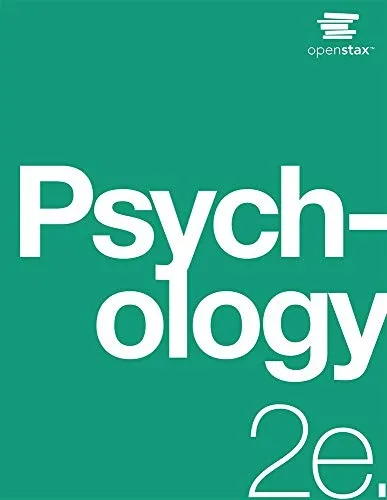
This is our starting recommendation for someone who wants a free introductory psychology textbook with a broad table of contents. Use the web version for a first chapter and the publisher's download options if you want a PDF. Begin with the research chapter as well as a topic that interests you, so you have a way to question the claims you encounter. Skip it as your main book if what you want today is a short narrative about one idea; its survey format asks you to move across many subjects. Read the OpenStax edition.
Related Learn track: Learn and remember. Pair a chapter with a short exercise and a question to revisit.
2. Introduction to Psychology, Charles Stangor, 2010
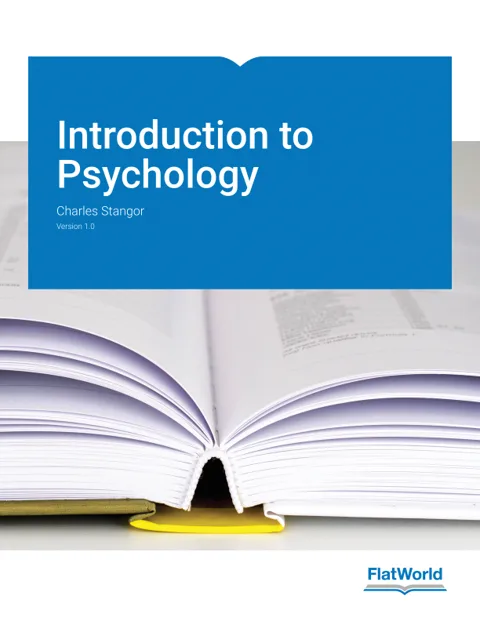
Stangor's original appeared in 2010; the Open Textbook Library lists a 2015 adaptation with an emphasis on empirical reasoning. See the original publisher record for authorship and date. It is another free option if you want to read introductory psychology online rather than purchase a commercial textbook. Try the opening research material and compare its explanations with a second source. Skip this edition as your only reference for the latest findings: treat its publication year as a reason to check newer work when a claim matters to you. Keep the exact version in your notes because other editions and adaptations exist. View the library record and access options.
Related Learn track: Think clearer. Use it to practice asking what evidence supports an explanation.
3. Psychology For Dummies, Adam Cash, third edition, 2020
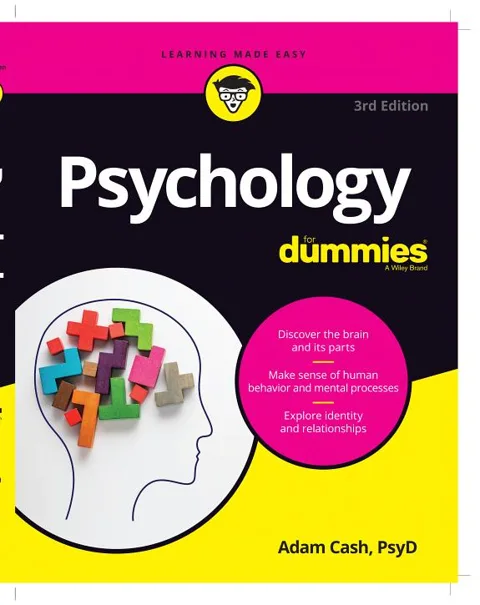
Cash's book is a general introduction written for readers who want an accessible route into the subject. Choose it if the phrase “psychology for dummies” describes the friendly overview you are searching for, rather than a judgment about your ability. Read the contents before buying and select one chapter to work through slowly. Skip it if you specifically need an openly available full textbook or a detailed source for a narrow research question. Use a library copy if you want to compare the style with OpenStax before committing. See the publisher's book record.
Related Learn track: Know yourself. Keep reflections specific rather than turning new vocabulary into labels.
4. Psychology, David G. Myers, C. Nathan DeWall, and June Gruber, fourteenth edition, 2024
This is a broad commercial textbook for readers who want a substantial introductory reference. The edition matters: June Gruber joins Myers and DeWall as a coauthor of the fourteenth edition. Choose it if you want a main text to return to across a long study plan. Skip it if you only need one brief topic overview or if the free textbooks already meet your needs. Inspect the format before purchasing: a printed book, an electronic book, and an accompanying learning package are different products. See Macmillan Learning's edition details.
Related Learn track: Learn and remember. Use a lesson as a practice session alongside your chapter reading.
5. Thinking, Fast and Slow, Daniel Kahneman, 2011
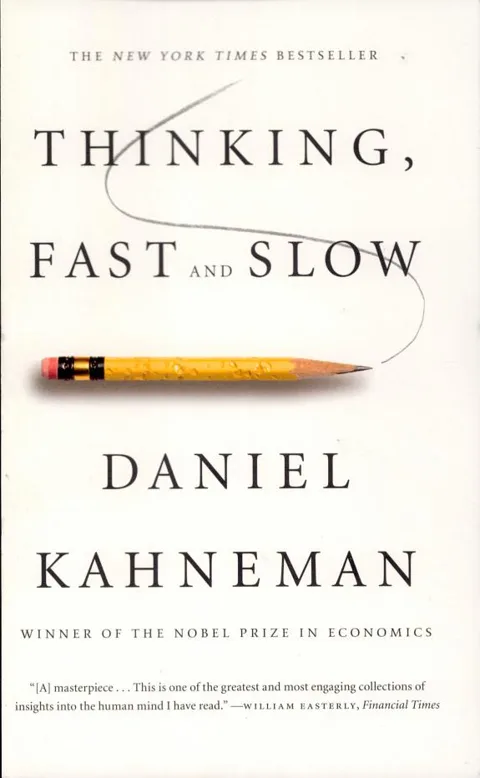
Kahneman's book explores judgment and decision-making through the contrast between relatively automatic and more deliberate thinking. Choose it when you want a sustained discussion of decisions and uncertainty, not a complete introduction to every branch. Keep a notebook of examples and identify the research question behind each. Skip it as your sole Psychology 101 book: a focused account of thinking cannot supply the whole introductory map. Treat memorable explanations as starting points for checking evidence, not as permission to classify everyone else's reasoning. See the publisher's book page.
Related Learn track: Think clearer. You can also try the main-site Anchoring bias mini course.
6. Influence, New and Expanded, Robert B. Cialdini, 2021
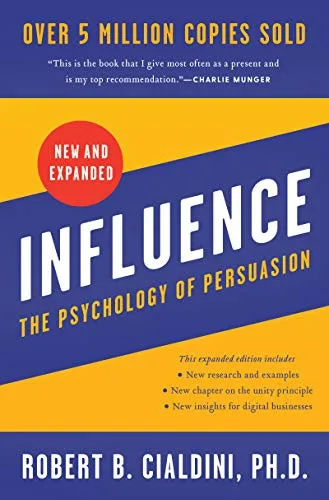
Cialdini's book examines persuasion and the conditions under which people agree to requests. Choose this edition if your main interest is influence in ordinary decisions, organizations, or communication. Use the examples to identify a proposed mechanism and ask what would count against the explanation. Skip it if you are looking for a broad introduction to memory, perception, and biological foundations, or for a script that guarantees agreement. An account of persuasion should invite scrutiny of requests, including your own. See the public library record.
Related Learn track: Understand people. Compare it with Conformity and the Asch experiment.
7. Mindset, Carol S. Dweck, 2006
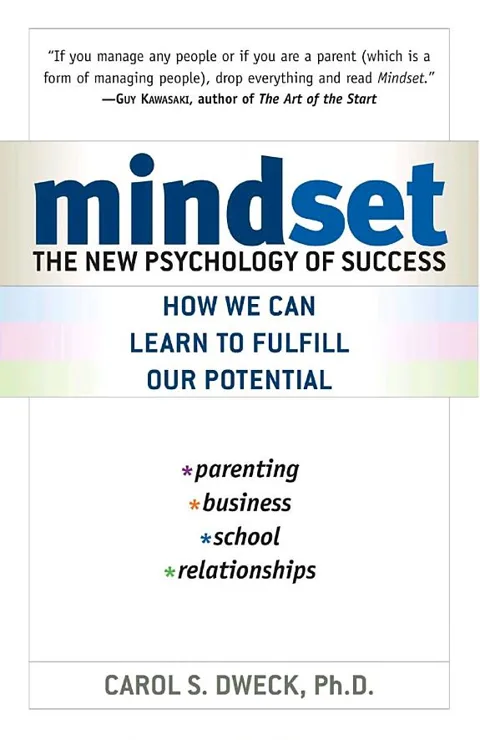
Dweck's book centers on beliefs about ability and improvement. Choose it for a focused discussion that you can connect to how you approach a learning task. While reading, write down the difference between a belief, a chosen action, and an observed outcome. Skip it if you want a general textbook or a promise that changing your attitude guarantees success. A useful reading exercise is to ask what else, beyond the belief being discussed, would have to change in a particular example. See the publisher's 2006 edition.
Related Learn track: Know yourself. Choose a concrete learning question and keep track of your revisions, or take the growth mindset test first.
8. The Righteous Mind, Jonathan Haidt, 2012
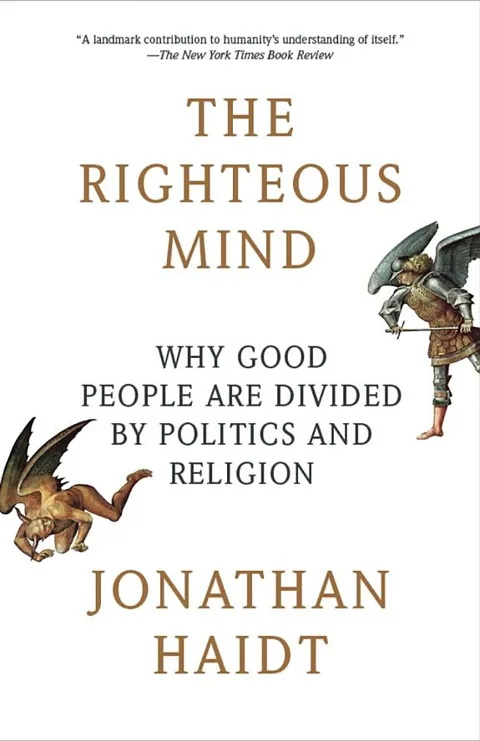
Haidt examines moral judgment and disagreement, especially in politics and religion. Choose it if those are the questions that brought you to psychology. Read it as an argument to examine: identify an example, the interpretation offered, and a possible alternative. Skip it if you want a neutral survey of the whole subject or a quick way to explain someone else's political views. A broad theory is not enough information to settle why a particular person believes something. See the publisher's listing; the original hardcover appeared in 2012.
Related Learn track: Relationships. Practice separating a person's statement from your interpretation of their motives, then see how a crowd changes what people do in the bystander effect mini course.
9. The Social Animal, Elliot Aronson and Joshua Aronson, twelfth edition, 2018
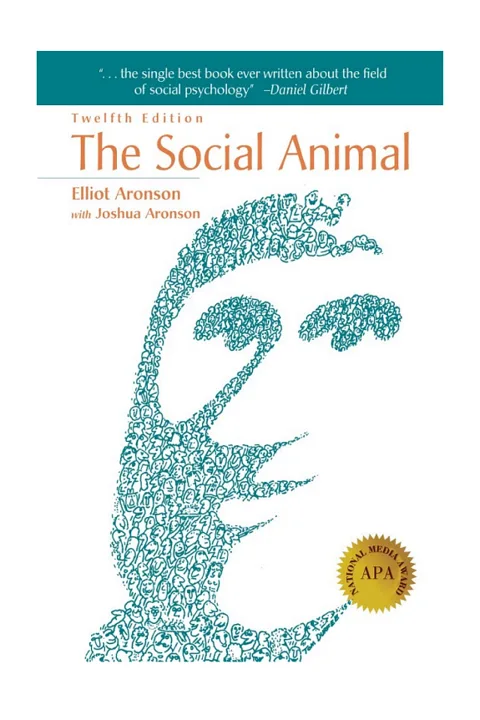
The twelfth edition brings Elliot Aronson's social psychology survey together with coauthor Joshua Aronson. Its focus includes conformity, persuasion, and interpersonal behavior. Choose it if you want a sustained account of people in social settings rather than a short list of biases. Skip it if you need a first reference for the biological or sensory parts of psychology. As you read, compare an explanation based on the person with one based on the situation, and ask what evidence would separate them. See Macmillan Learning's edition record.
Related Learn track: Understand people. Follow with the Bystander effect mini course.
10. Make It Stick, Peter C. Brown, Henry L. Roediger III, and Mark A. McDaniel, 2014
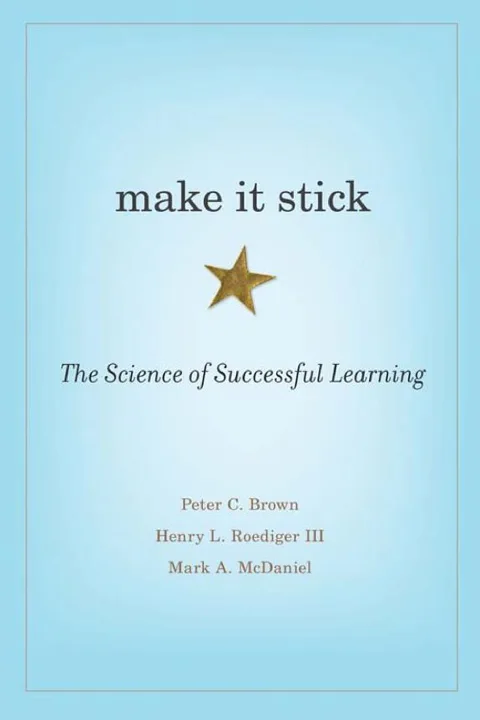
This book focuses on learning and remembering, making it a companion to a psychology reading plan rather than a replacement for one. Choose it when your question is how to turn reading into something you can retrieve and explain later. Try one suggested study practice with your actual notes, and record what you did instead of only highlighting the advice. Skip it if you want an overview of personality, social behavior, and the rest of the field. See the publisher platform's book record.
Related Learn track: Learn and remember. Turn a completed lesson into a question to answer on another day.
Which beginner psychology books are free online or as a PDF?
OpenStax Psychology 2e and the Open Textbook Library's Introduction to Psychology offer free access through their official pages. Use those pages to choose the available web or download format; the commercial books in this list are not presented as free downloads.
For a library copy, search the exact title, author, and edition. An older edition may still help with a conceptual introduction, but record its year and check claims against newer sources when needed. If you find a PDF with no clear author or edition, set it aside until you can identify what it is. For a course-shaped companion, use our Psychology 101 study track.
What order should I read psychology books in?
Read a broad introduction first, then one focused book, and return to the textbook whenever the focused book assumes background you do not have. Choose either OpenStax, Stangor, Cash, or Myers and colleagues as your starting reference rather than trying to finish four surveys.
Make your second choice by topic. For decisions, choose Kahneman; for persuasion, Cialdini; for social psychology, Aronson and Aronson; for moral judgment, Haidt; for beliefs about improvement, Dweck; for study practice, Brown and colleagues. These are reading suggestions, not prerequisites. Read a sample before deciding whether the author's style helps you engage with the question.
Should I read it or do it?
Use reading to meet an explanation and practice to check whether you can use it in a new example. Roediger and Karpicke (2006) found a later-memory advantage from retrieval practice in their experiment; that is a reason to close the book and try recalling an idea. See the study.
After a reading session, write three sentences without looking: what the idea claims, an example, and one limit. Reopen the chapter and correct anything you missed. Then try a related mini course from the free catalog. If you want guided practice in shorter sessions, Learn offers five-minute interactive lessons and is free in full; the optional Learn Plus membership adds extras such as unlimited tries and a results history.
Questions about psychology books for beginners
What is the best psychology book for beginners?
For a free general introduction, start with OpenStax Psychology 2e. For a more informal overview, compare a sample of Adam Cash's Psychology For Dummies. The recommendations are about fit; no single book is best for every reader.
Who wrote Psychology For Dummies?
Adam Cash wrote Psychology For Dummies. The third edition listed here was published by Wiley in 2020. Check the edition when comparing a library copy, print copy, or electronic version.
Who are famous psychologists?
Wundt and James are important historical figures, while this list includes writers such as Kahneman, Cialdini, Dweck, Haidt, and Aronson. Use the history reference below to connect names to approaches instead of treating fame as evidence that every claim is correct.
What is social psychology?
Social psychology examines thinking and behavior in social settings, as explained in the OpenStax source below. Aronson and Aronson's The Social Animal is the focused social psychology book in this list.
Can I learn psychology if I'm bad at math?
You can begin these introductory readings without advanced mathematics. When a book uses a graph or statistic, pause to identify what was measured and compared. Build those skills gradually rather than skipping the evidence behind an interesting claim.
Can I get a psychology introduction book as a free PDF?
Yes. OpenStax and the Open Textbook Library provide official free access options. Use their own pages rather than assuming every commercial title on this list is available as a free download.
Keep going
Sources
- Stangor, C. (2010). Introduction to Psychology. Version 1.0. FlatWorld. Read the source.
- Roediger, H. L., and Karpicke, J. D. (2006). Test-enhanced learning: Taking memory tests improves long-term retention. Psychological Science, 17(3), 249 to 255. Read the source.
- Spielman, R. M., Jenkins, W. J., and Lovett, M. D. (2020). Psychology 2e. OpenStax. Read the source.
- Introduction to Psychology. (2015). Open Textbook Library edition, adapted from Charles Stangor's earlier text. Read the source.
- Cash, A. (2020). Psychology For Dummies. Third edition. Wiley. Read the source.
- Myers, D. G., DeWall, C. N., and Gruber, J. (2024). Psychology. Fourteenth edition. Macmillan Learning. Read the source.
- Kahneman, D. (2011). Thinking, Fast and Slow. Farrar, Straus and Giroux. Read the source.
- Cialdini, R. B. (2021). Influence, New and Expanded: The Psychology of Persuasion. Harper Business. Read the source.
- Dweck, C. S. (2006). Mindset: The New Psychology of Success. Random House. Read the source.
- Haidt, J. (2012). The Righteous Mind: Why Good People Are Divided by Politics and Religion. Pantheon. Read the source.
- Aronson, E., and Aronson, J. (2018). The Social Animal. Twelfth edition. Macmillan Learning. Read the source.
- Brown, P. C., Roediger, H. L., and McDaniel, M. A. (2014). Make It Stick: The Science of Successful Learning. Belknap Press. Read the source.
- Spielman, R. M., Jenkins, W. J., and Lovett, M. D. (2020). Psychology 2e: History of psychology. OpenStax. Read the source.
- Spielman, R. M., Jenkins, W. J., and Lovett, M. D. (2020). Psychology 2e: What is social psychology? OpenStax. Read the source.
Reviewer: Michael Callans, MSW. Reviewed book authors, edition dates, reading scope, and the distinction between general textbooks and focused popular books.
Put an idea into practice
Close the book and test an idea. Learn's short lessons are the retrieval practice a reading list cannot give you, and every one of them is free.