
- Free and no account
- 10 to 20 minutes each
- Progress stays on your device
Start with a little
“why is that?”
Pick an idea that catches your curiosity. Follow the story, make a few choices, and leave with a new way to look at everyday life.

Cognitive PsychologyMini course
Anchoring Bias
Spin a random wheel, compare your estimate with its anchor, and practice using evidence to make better judgments.
Explore the course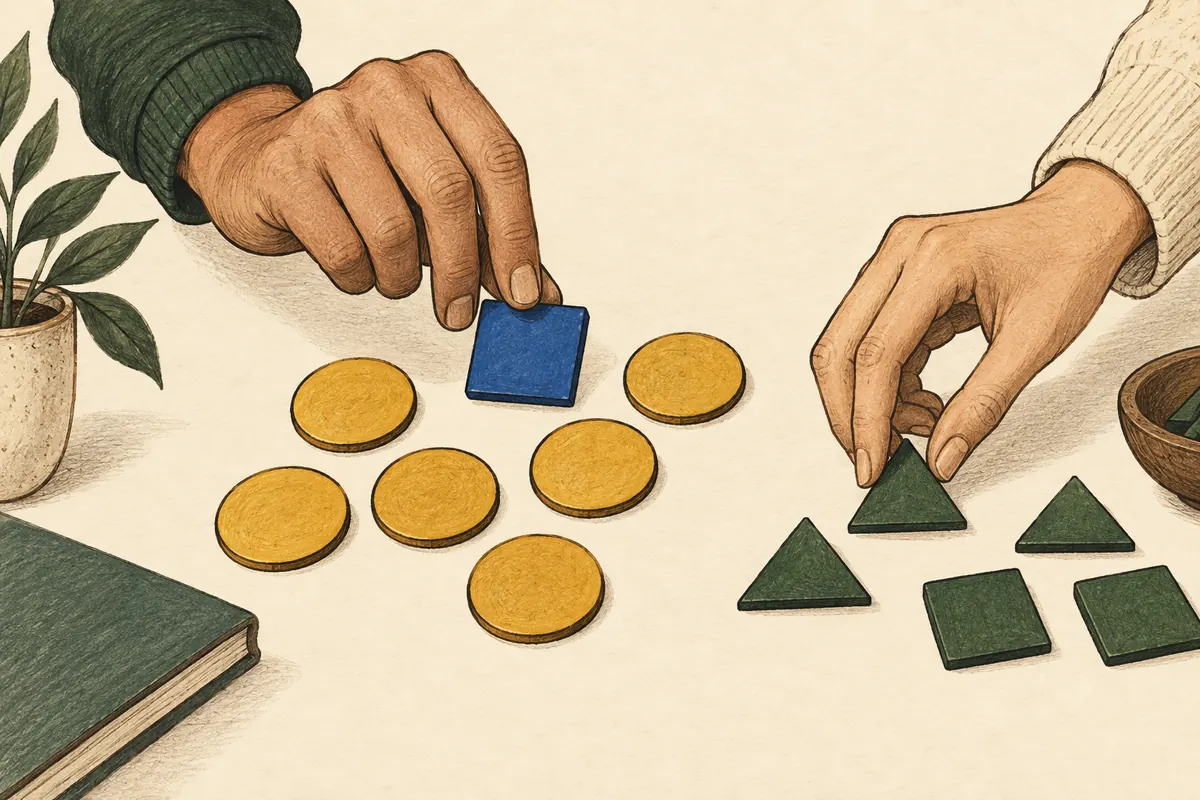
Cognitive PsychologyMini course
Confirmation Bias
Try the 2-4-6 number puzzle, inspect your test choices, and learn to look for evidence that could change your mind.
Explore the course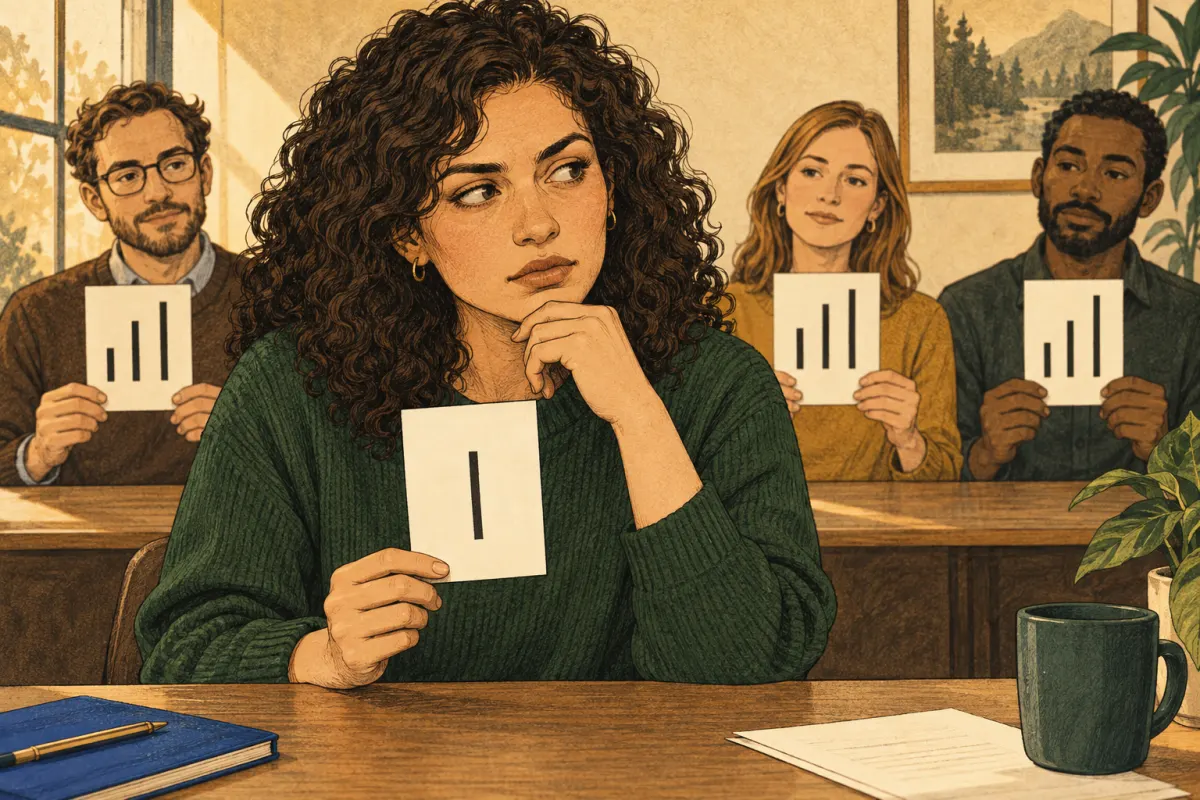
Social PsychologyMini course
Conformity and the Asch Experiment
Try an Asch-style line task, distinguish two reasons for following a group, and practice making room for independent views.
Explore the course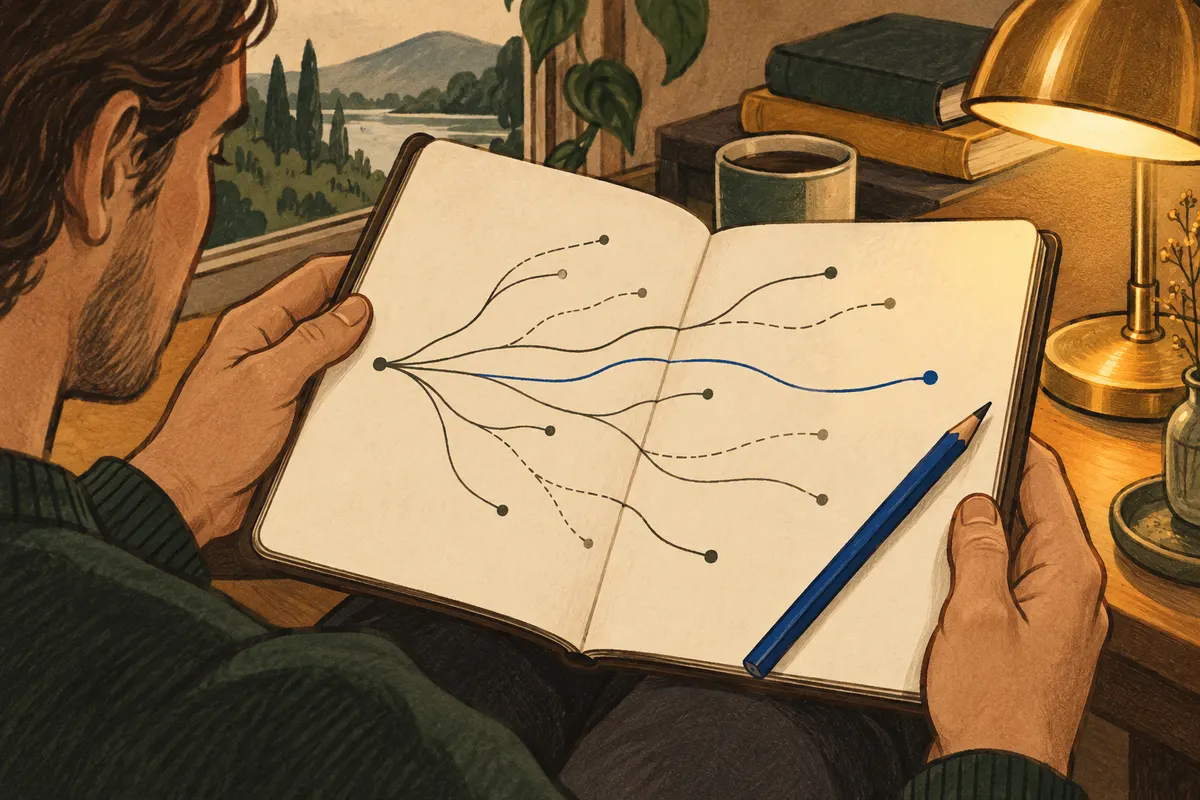
Cognitive PsychologyMini course
Hindsight Bias
Make five predictions, then compare your remembered answers with the record. Learn why a known ending can make uncertainty disappear.
Explore the course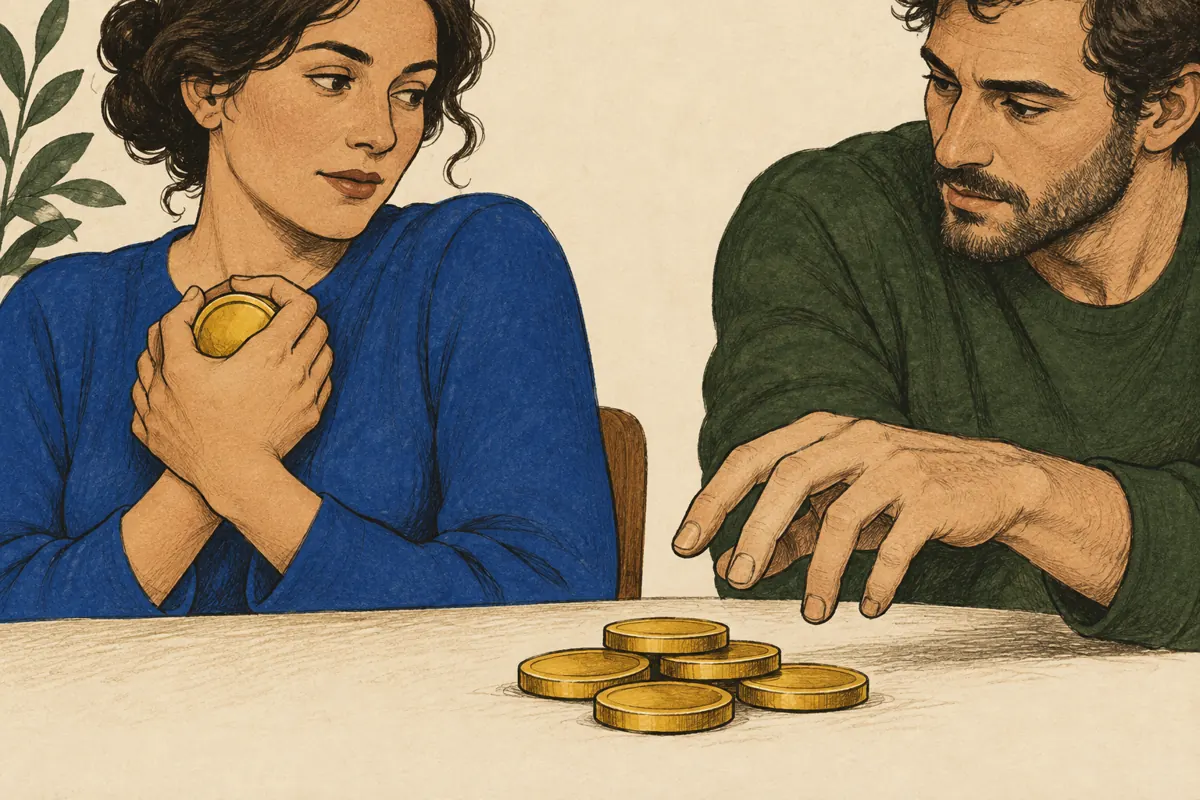
Behavioral EconomicsMini course
Loss Aversion
Set your own coin-flip threshold, compare gains and losses, and learn why there is no universal multiplier.
Explore the course
Learning and BehaviorMini course
Negative Reinforcement Is Not Punishment
Sort twelve everyday scenarios to see why removing something can strengthen an action, and why negative reinforcement is not punishment.
Explore the course
Attention and PerceptionMini course
Selective Attention and Inattentional Blindness
Count moving shapes, notice what gets missed, and explore inattentional blindness and the cocktail party effect.
Explore the course
Cognitive PsychologyMini course
The Availability Heuristic
Compare your frequency estimates with real counts, distinguish recall from evidence, and practice a simple base-rate check.
Explore the course
Social PsychologyMini course
The Bystander Effect
Compare when you would help as a group grows, explore shared responsibility, and check the facts behind a famous story.
Explore the course
Behavioral EconomicsMini course
The Endowment Effect
Run the classic mug experiment on yourself, then learn why ownership inflates value and how to spot it in daily life.
Explore the course
Cognitive PsychologyMini course
The Stroop Test
Try a color-response experiment, compare your times and errors, and learn why a familiar word can compete with what you mean to do.
Explore the course
Behavioral EconomicsMini course
The Sunk Cost Fallacy
Run a small cinema through three decisions. Separate past spending from future tradeoffs, and learn why quitting is not always the answer.
Explore the course
Cognitive PsychologyMini course
Top-Down and Bottom-Up Processing
Try two perception demos, compare context with sensory evidence, and learn how expectations shape a first interpretation.
Explore the courseLess like a lecture.
More like a discovery.
You bring the curiosity. We bring a story, the science, and a chance to try the idea for yourself. Here is the journey.
Feel the effect
Make a choice before you meet the concept. Try a thought experiment and compare your own responses.
Meet the science
Discover the studies behind the idea, with sources you can follow and the limits worth knowing.
Spot the pattern
Sort everyday situations and look for the clue that separates one explanation from another.
Use it wisely
Try a new situation. Check your understanding, get feedback, and take another look when you need to.
Keep the field guide
Download a PDF with the key ideas, a reflection exercise, and answers to revisit in your own time.
What's inside
every course.
Four things you can count on, whichever topic you pick. The stories change; the method does not.
An experiment you run on yourself
Every course opens with a choice you make before you know the theory. Your own answer becomes the first data point, so the effect is something you felt, not something you were told.
The original research, cited
The studies behind each idea are named and linked, with the replications and the limits included. If a finding is contested, the course says so.
Checks that explain, not grade
Short questions after each chapter come with a written explanation for every answer, right or wrong. You can retry, and nothing is scored against you.
A field guide to keep
Each course ends with a short PDF: the key ideas, a reflection exercise and the answers, made for printing or for a second read in a week.
Why learn it
this way.
The format is not a gimmick. It follows what memory research says about how understanding forms and how it lasts.
Guessing first makes the answer stick
Trying to answer a question before you are taught the material improves what you remember afterwards, even when the first guess is wrong. That is why every course starts with your prediction, not with a definition. [1]
Doing beats listening
Across 225 studies in science courses, students who worked through problems and questions outperformed students who sat through lectures, and were far less likely to fail. The courses are built around choices, not paragraphs. [2]
Testing yourself beats rereading
People who take a short test on what they just read remember more a week later than people who study the text a second time. Each chapter closes with a check for that reason. [3]
- Kornell, N., Hays, M. J. and Bjork, R. A. (2009). Unsuccessful retrieval attempts enhance subsequent learning. Journal of Experimental Psychology: Learning, Memory, and Cognition, 35(4), 989 to 998. doi.org/10.1037/a0015729
- Freeman, S., Eddy, S. L., McDonough, M., Smith, M. K., Okoroafor, N., Jordt, H. and Wenderoth, M. P. (2014). Active learning increases student performance in science, engineering, and mathematics. Proceedings of the National Academy of Sciences, 111(23), 8410 to 8415. doi.org/10.1073/pnas.1319030111
- Roediger, H. L. and Karpicke, J. D. (2006). Test-enhanced learning: taking memory tests improves long-term retention. Psychological Science, 17(3), 249 to 255. doi.org/10.1111/j.1467-9280.2006.01693.x
On the
drawing board.
Topics we are building next. None of these is available yet and the order is not final; the ones people ask for most move up.
Questions,
answered.
The practical things people ask before they start.
Are the courses really free?
Yes. There is no account, no email address to leave and nothing to unlock. The PDF field guide is free as well.
Do I have to finish a course in one sitting?
No. Your progress is saved in your own browser, so you can close the tab and come back. It is stored on your device only; clearing your browser data resets it, and switching devices starts fresh.
Is this therapy, or a psychological test?
Neither. The courses are educational: they explain how the mind tends to work, using experiments from the research literature. They do not assess you and they are not a substitute for care. If you are in crisis in the United States, call or text 988.
Can I use a course in a class or share it?
Yes. Link to any course freely, print the field guide for personal or classroom use, and cite the course page. If you build something on top of it, credit Psychology.com and keep the sources intact.
Do I get a certificate or continuing-education credit?
No. These are consumer courses and carry no credential. Licensed therapists, counselors and social workers will find accredited CE at psychology.com/ce/.
How are the courses made and checked?
Each course is written from the original studies, which are listed on the course page with links. The Psychology.com editorial team checks the claims, the wording of the checks and the field guide against those sources before a course goes live. The stories and illustrations are original.
How do I suggest a topic?
Use the contact page and name the effect, bias or idea you would like to feel from the inside. Topics with the most requests move up the list.
Let's be clear
from the start.
These are free educational courses for anyone curious about psychology. They are not therapy or a psychological assessment, and they do not award continuing-education credit.
Licensed professional looking for CE? Explore our continuing education courses.
Curiosity doesn't
stop here.
New courses are added as they pass review. In the meantime, find another question to explore with our free tests and practical tools, or tell us which topic you would take first.