Explore a longer free introduction
The Open University / OpenLearn, Exploring Sport Coaching and Psychology
Compare study routes, then explore focus and practice in eight free lessons. Diagrams, fictional adult scenarios, quick checks, and worked exercises help you distinguish goals, cues, and performance results. Review the route comparison for longer study.
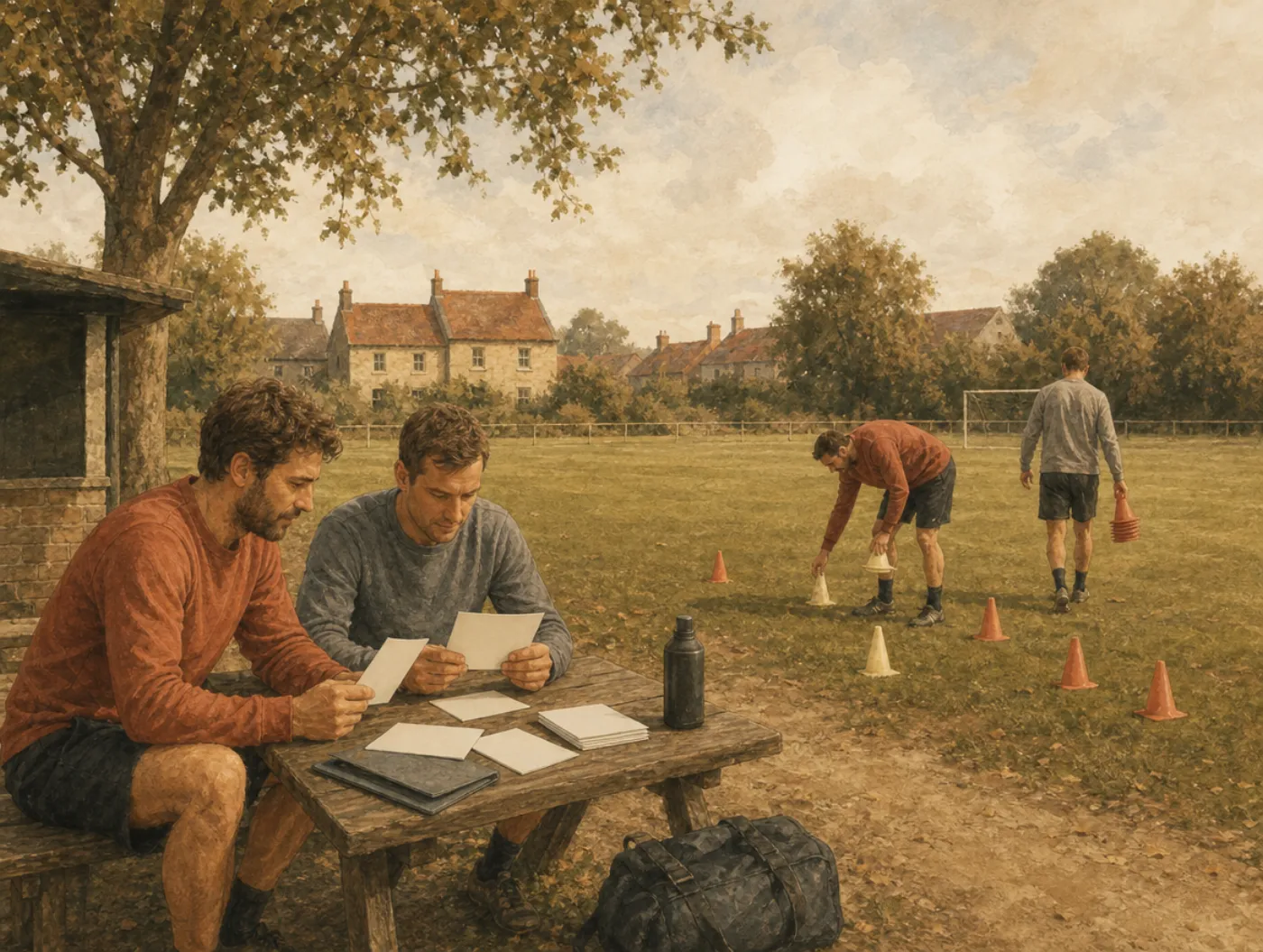
 BySeph Fontane Pennock
 Reviewed byMichael Callans, MSW
These lessons examine sport psychology through fictional adult practice, with process goals and evidence kept separate from results.
Choose a free introduction for concepts, live instruction for a scheduled course, or academic study for a broader syllabus. The comparison separates those purposes. You can also read about the field or begin the eight lessons now.
Sport psychology examines attention, motivation, mental skills, and social interactions in performance settings. The APA overview describes both research and applied roles. Here, recreational running, club play, and amateur rehearsal provide ordinary adult cases for explaining those concepts.
Compare free reading, live instruction, one academic subject, and a complete program. Check their different access requirements and schedules.
The Open University / OpenLearn, Exploring Sport Coaching and Psychology
ELVTR, Sport Psychology
University of North Dakota, KIN 440: Sport and Exercise Psychology
Arizona State University, Psychology, Sport Psychology (MS)
| Provider and offering | Type | Scope | Audience | Access | Workload | Entry requirements | Assessment | Availability |
|---|---|---|---|---|---|---|---|---|
| The Open University / OpenLearn Exploring Sport Coaching and Psychology | free resource | Coaching, motivation and psychological skills | UK provider; introductory independent study | Free reading; account for all quizzes and activities | 24 hours across eight sessions; self-paced | Public introductory reading; no application | Quizzes and activities | Publicly available |
| ELVTR Sport Psychology | short course | Mental skills, communication and team dynamics | Coaches and performance practitioners | Paid; fee not public; price disclosed before payment | Labeled 7 weeks; January 14 to February 23, 2027; Tuesday/Thursday, 5:30 p.m. PT / 8:30 p.m. ET | Professional audiences; prerequisites not stated | Applied assignments and a final project | Future cohort listed; seats not verified |
| University of North Dakota KIN 440: Sport and Exercise Psychology | university subject | Sport and exercise theories, research and mental skills | US; online academic study; international English requirements apply | Paid tuition; materials and possible application fee extra | 3 to 9 months; self-paced | Textbook required; prerequisites unverified because linked syllabus would not load | Unverified; syllabus inaccessible | Enroll anytime |
| Arizona State University Psychology, Sport Psychology (MS) | degree | Sport psychology, professional issues and research | US; online advanced study; English requirements apply | Paid; tuition calculator provided | 10 classes; 7.5 weeks per class; 30 credits | Prior bachelor's degree; statistics or research methods strongly recommended; confirm program-specific rules | Breakdown not stated in overview | Next start listed January 11, 2027 |
These eight lessons require no prior psychology study. Longer routes have their own demands: UND estimates three to nine months, while ASU recommends statistics or research methods preparation. Public course descriptions do not establish every assessment requirement or guarantee a seat.
By the end you can separate a psychological research question from a result description.

Sport psychology investigates thinking, attention, motivation, and social interactions in participation and performance. The APA overview includes research and mental skills. A finish position describes a result; it does not explain it.
At a running club, asking which route cues runners noticed investigates attention. The finishing order cannot answer that question. Name the process and the evidence needed to examine it.
A club wins. Write one communication question that the result cannot answer.
One question is: Did teammates agree on who would call for the ball? That concerns communication and shared understanding. An observer could record calls and compare them with the team's stated plan. Winning does not supply that record. The team might win despite confusion, or lose while coordinating clearly. The explanation therefore needs evidence about communication, beyond the final result.
Takeaway: A result tells you what happened; a research question asks which processes to examine. (source)
Source: American Psychological Association. Sport and performance psychology: education and training.
By the end you can distinguish outcome, performance and process goals.
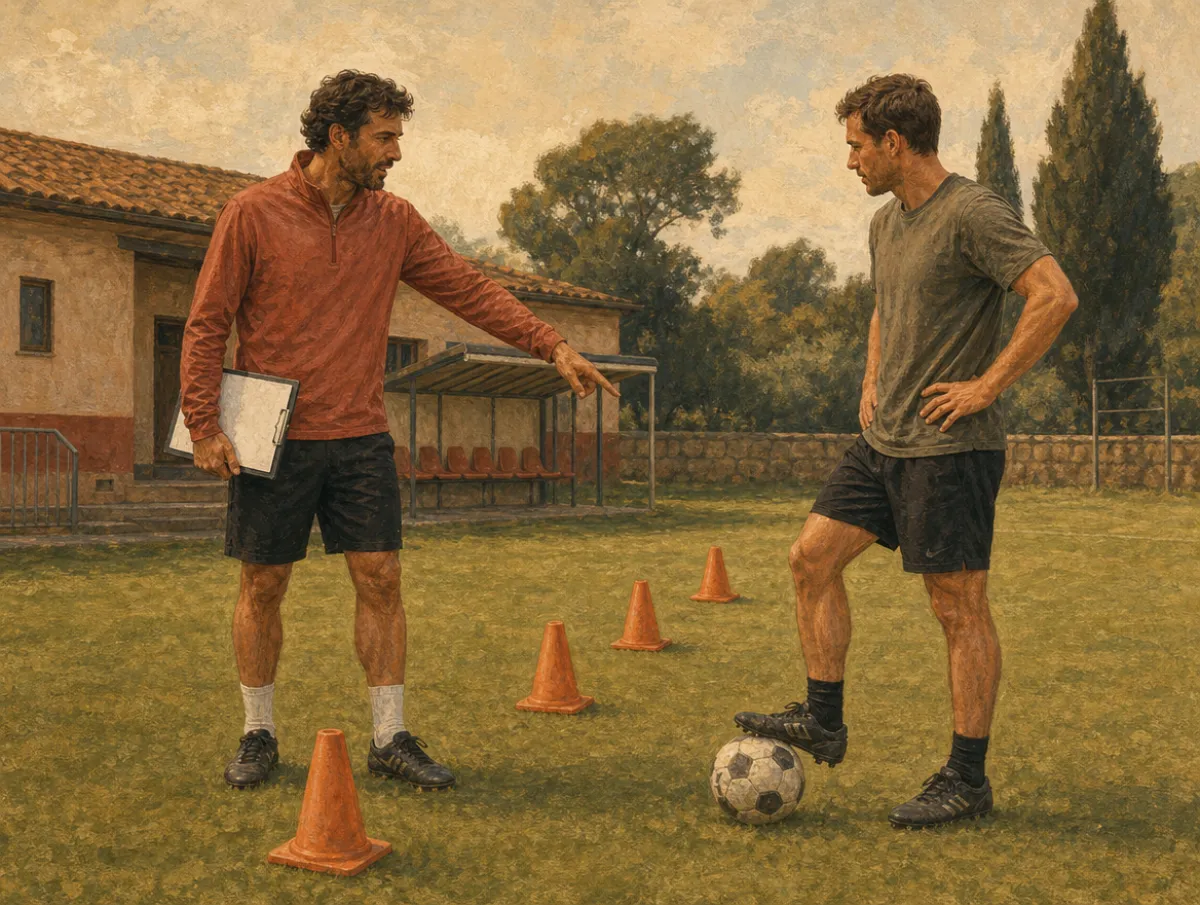
An outcome goal concerns winning or losing. A performance goal names a standard for one's own performance; a process goal specifies how a skill, technique or strategy is carried out. Weinberg (2013) separates these three types and notes that performance and process goals stay under the athlete's own control.
Finishing ahead of another runner is an outcome. Meeting a chosen time is a performance standard. Checking the route marker at each junction is a reviewable process, without guaranteeing a faster run.
"Win the match" becomes "Name the receiver before each practice restart." The observer can check the action separately from the result. Source
Rewrite "Our club must win" as a communication process goal. Specify the observation needed.
A possible goal is: Before each restart, the designated caller names the receiver. An observer records whether the call occurred and identified a receiver. This is more specific than "communicate better" and can be reviewed even after a loss. Winning remains a separate outcome. The example illustrates goal wording, without establishing that this routine suits every team or causes wins.
Takeaway: Make the action clear enough to review without knowing who won. (source)
By the end you can identify a task-relevant cue and a competing distraction.
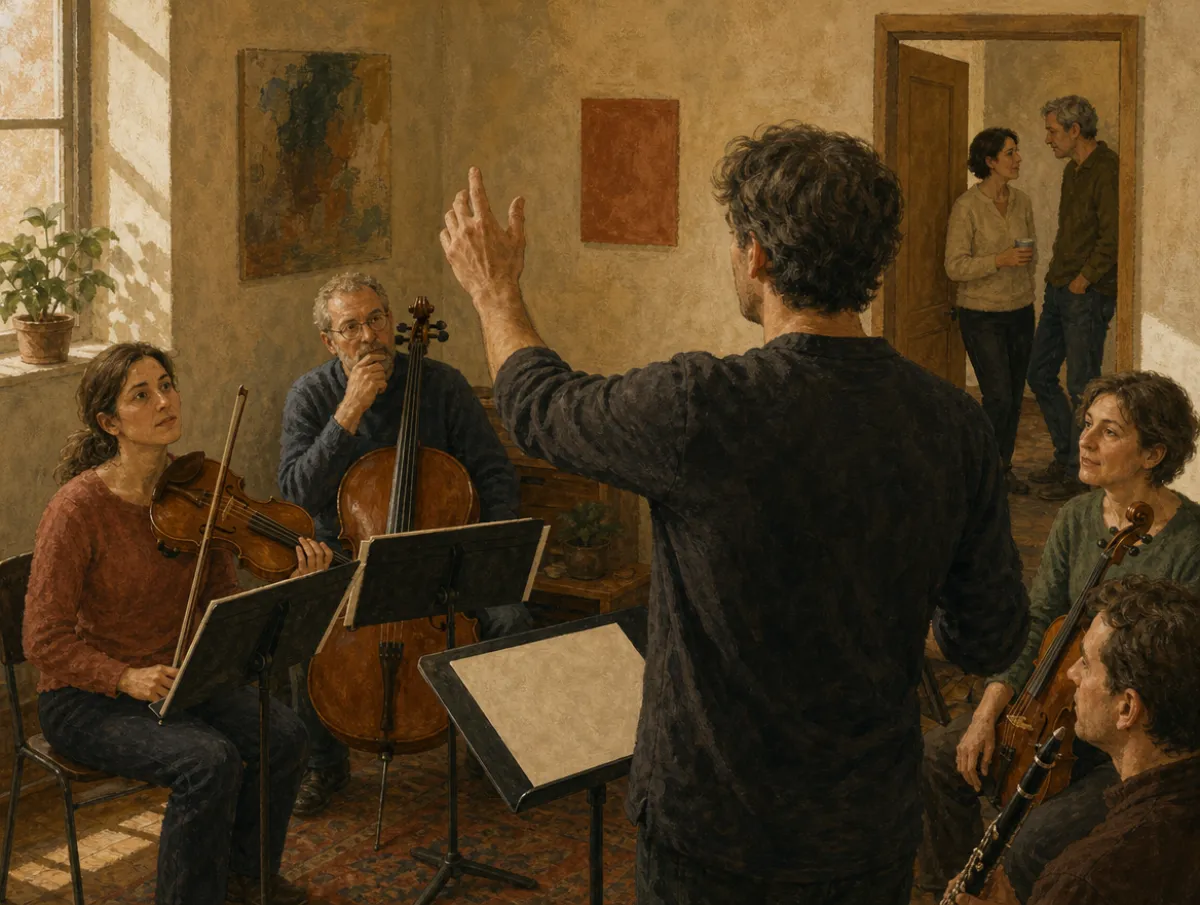
Attention selects some available information for further processing. Relevance depends on the task: a cue can matter while nearby conversation competes with it. OpenStax explains why available information is not always noticed.
At an amateur rehearsal, the musician's task is to enter on the leader's hand cue. Conversation at the doorway competes for attention. A missed entry alone cannot identify its cause.
A runner follows trail markers beside a talking group. Identify the cue, distraction, and missing evidence.
The marker supplies route information. Conversation could compete for attention, but the account does not record what the runner noticed. Merely placing conversation beside the path does not establish distraction. A wrong turn could also reflect a hidden marker or unclear instructions. Separate the competing information present in the scene from evidence that it affected this particular runner's choice of route.
Takeaway: Identify the current task before deciding which information is a distraction. (source)
By the end you can distinguish activation from performance and reject a universal optimum.
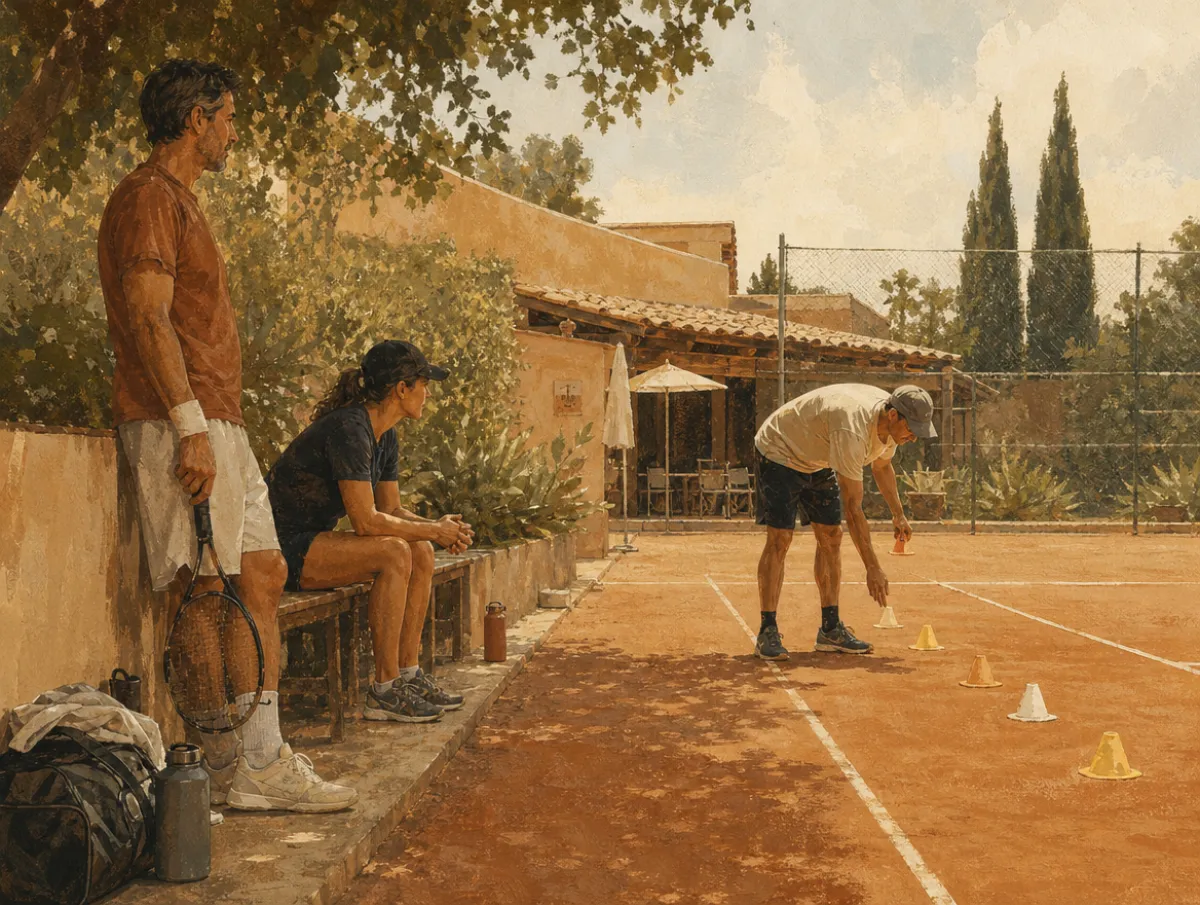
Arousal means activation or alertness, not performance quality. OpenStax describes task difficulty as relevant to their relationship. A familiar curve is a simplification, not a personal target.
A player reports equal alertness before a routine pass and a complex sequence. That report does not establish equal performance. Ask what each task required and what happened; neither follows from reported activation.
Revise this invented claim: "More activation always means better play."
The relationship between activation and performance depends on task demands, so this general statement cannot identify an ideal level for the player. The note needs to specify the task, how activation was measured, and how performance was recorded. None is supplied. The exercise supports questioning the claim; it cannot supply a personal target or show that changing activation improves performance.
Takeaway: An activation report is not a performance result or a personal target. (source)
Source: Spielman, R. M., Jenkins, W. J., and Lovett, M. D. (2020). Psychology 2e: Motivation. OpenStax.
By the end you can distinguish rehearsing an action from imagining its desired result.

Mental imagery represents an experience without performing the full action. It can include movement and sound as well as visual detail. Cumming's AASP guide describes planned mental rehearsal.
Imagining applause represents a desired result. Imagining the leader's cue and the first musical entry specifies actions. The distinction concerns rehearsal content; detail alone does not prove a benefit or replace instrumental practice.
Write imagery content for a fictional player preparing a pass: include a cue and an action.
The player imagines seeing a teammate indicate the receiving space, then imagines the passing movement and the sound of the ball leaving the foot. These sentences name sensory content and an action sequence. They do not assert that the pass reaches its target. Evaluating performance benefit would require performance evidence and a suitable comparison; the imagery description itself supplies neither.
Takeaway: Describe the task being rehearsed before making any claim about its effects. (source)
Source: Cumming, J. Sport Imagery Training. Association for Applied Sport Psychology.
By the end you can separate an instructional cue from an unsupported prediction.
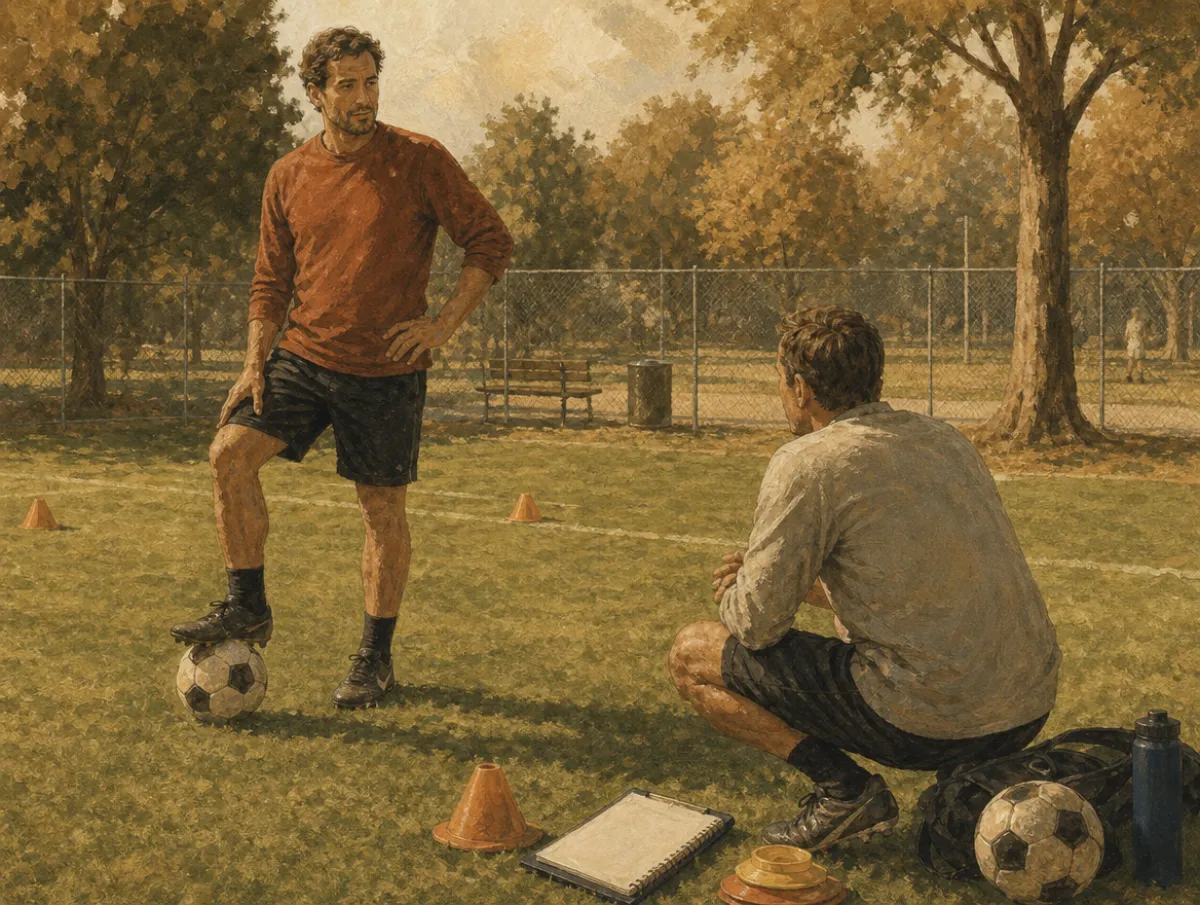
Self-talk is language directed to oneself. It can cue an action or express motivation. OpenLearn distinguishes these functions. Confident wording does not establish an accurate prediction.
"Name the receiver" identifies a task; "We cannot lose" promises an outcome. Constructive wording here means a task-connected cue. It need not deny a mistake, and writing a cue does not prove that it improves performance.
A fictional player missed a call. Replace "I always ruin restarts" with an observation and task cue.
An observation is: I missed the receiver's name on that restart. A cue is: Listen for the receiver before starting. The revision confines the observation to the supplied event and names relevant information for another attempt. It neither erases the mistake nor guarantees a different result. Whether the cue helps needs observation; rewriting it is not evidence of improved performance.
Takeaway: A useful task cue names an action without promising the outcome. (source)
Source: The Open University. Exploring Sport Coaching and Psychology: session 6, self-talk.
By the end you can distinguish encouragement from information that coordinates roles.
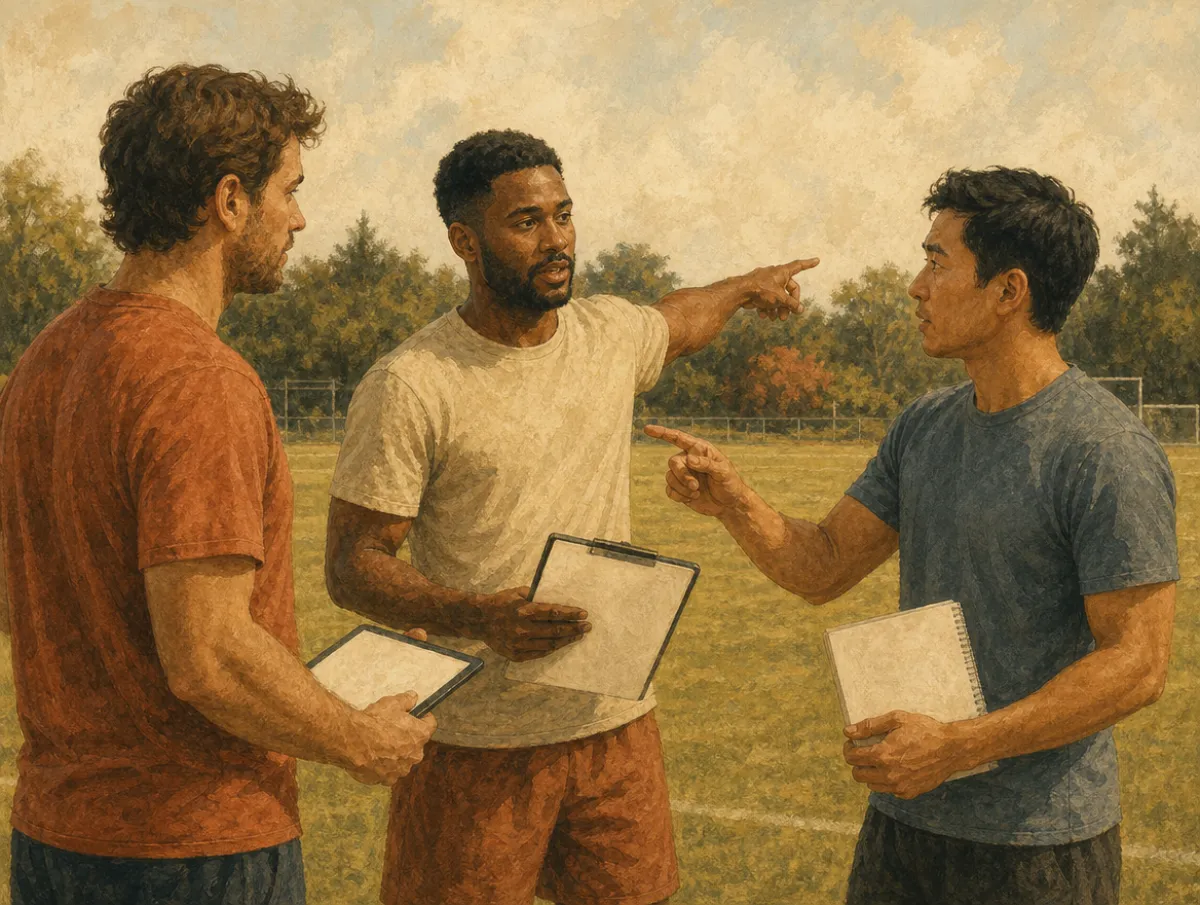
Team messages can encourage effort or coordinate action. AASP's overview distinguishes explicit communication and task responsibilities. Encouragement alone may leave roles unclear.
"Keep going" encourages the fictional club. "Nia calls the receiver before the restart" identifies responsibility and timing. Asking teammates to restate the plan checks their interpretation; enthusiasm alone does not establish shared understanding or show that the plan was followed.
Teammates each wait for the other to call. Replace "Someone should organize this" with specific roles.
A clearer message is: Nia calls the receiver before each restart; Tomas confirms hearing the name. Asking both teammates to restate their roles would reveal whether they understood the same arrangement. This resolves an ambiguity in the fictional description. It does not establish that the arrangement is best, that players will follow it, or that communication determines the match result.
Takeaway: Shared understanding requires specific information about roles and timing. (source)
By the end you can review the same process consistently across a win and a loss.

Baron and Hershey (1988) found that known outcomes affected evaluations of decisions. Aiyer and colleagues (2023) replicated the direction in a preregistered study with online adults. These were decision scenarios, not tests of athletic practice; transferring the distinction to sport is an analogy.
Review the planned action and the available evidence before considering the final result. A win can coexist with a missed process goal; a loss can coexist with following it. Results still matter for later inquiry, but they do not rewrite what was observed during that practice.
Process goal: top row Met, bottom row Missed. Match result: left Loss, right Win.
The receiver was named before every restart. That process goal was met whether the fictional match ended in a win or a loss. Source
A receiver was named before every restart. Review that process under two endings: a win and a loss.
In both versions, the communication goal was met: a receiver was named before every restart. The outcome changes while the process record stays identical. This does not establish that the plan was effective or sufficient. A fuller review could examine whether calls were heard and what other events mattered. The record supports adherence, without identifying the plan's contribution to winning.
Takeaway: Keep the process record fixed when only the result changes. (source)
Sport psychology examines attention, motivation, mental skills, and team interactions. These adult running, club-play, and rehearsal cases teach goals, cues, imagery, self-talk, communication, and review. Athletes and interested coaches can learn concepts here; the examples do not supply individualized performance plans. (source 1, source 2)
Yes. All eight lessons here include diagrams, checks, and worked answers. OpenLearn offers a longer free introduction to coaching and psychology. Its reading is public; an account is needed to access the full set of quizzes and activities. Its broader syllabus differs from this page's adult practice examples. (source 1, source 2)
Yes: UND offers self-paced study, ELVTR live sessions, and ASU a complete online program. For nearby classes, check current local schedules. Compare scope, eligibility, attendance, and assessment: online access need not mean unrestricted enrollment or flexible attendance. No local opening is established here. (source 1, source 2, source 3)
Requirements vary. OpenLearn is introductory and lists 24 hours. UND estimates three to nine months and requires a textbook; its linked syllabus was inaccessible. ASU strongly recommends statistics or research methods. Missing details remain unresolved and should not be interpreted as no requirements. (source 1, source 2, source 3)
Learning concepts differs from professional preparation, which involves formal study and supervised experience. The APA distinguishes applied and academic roles. BLS explains that most states require licensure for psychology practice or the title psychologist. Finishing this introduction does not establish readiness for those roles. (source 1, source 2)
No. A process goal specifies an action; a win depends on other events too. The final exercise preserves one communication record under two endings. Outcome-bias research concerns evaluations of decisions; this fictional sports example does not estimate the effect's size in athletes. (source 1, source 2, source 3)
Psychology.com. (2026, November 6). Sports Psychology Course. Psychology.com. https://psychology.com/courses/sports-psychology