Selective Attention: Why You Miss What Is in Plain Sight
Count moving shapes, compare what you noticed with what was there, and explore how one voice stands out in a busy room. Five short chapters and eight checks explain selective attention and inattentional blindness in about twelve minutes, with a reflection to take into daily life.
 BySeph Fontane Pennock
 Reviewed byMichael Callans, MSW
What is selective attention?
Selective attention is the process of giving some information priority while other information receives less attention. It helps you follow a conversation, read a label, or track a moving object in a busy scene. What you focus on can shape what you consciously notice, even when other things are plainly in view.
Selective attention examples
- At a cafe: you follow your friend’s story while nearby conversations continue.
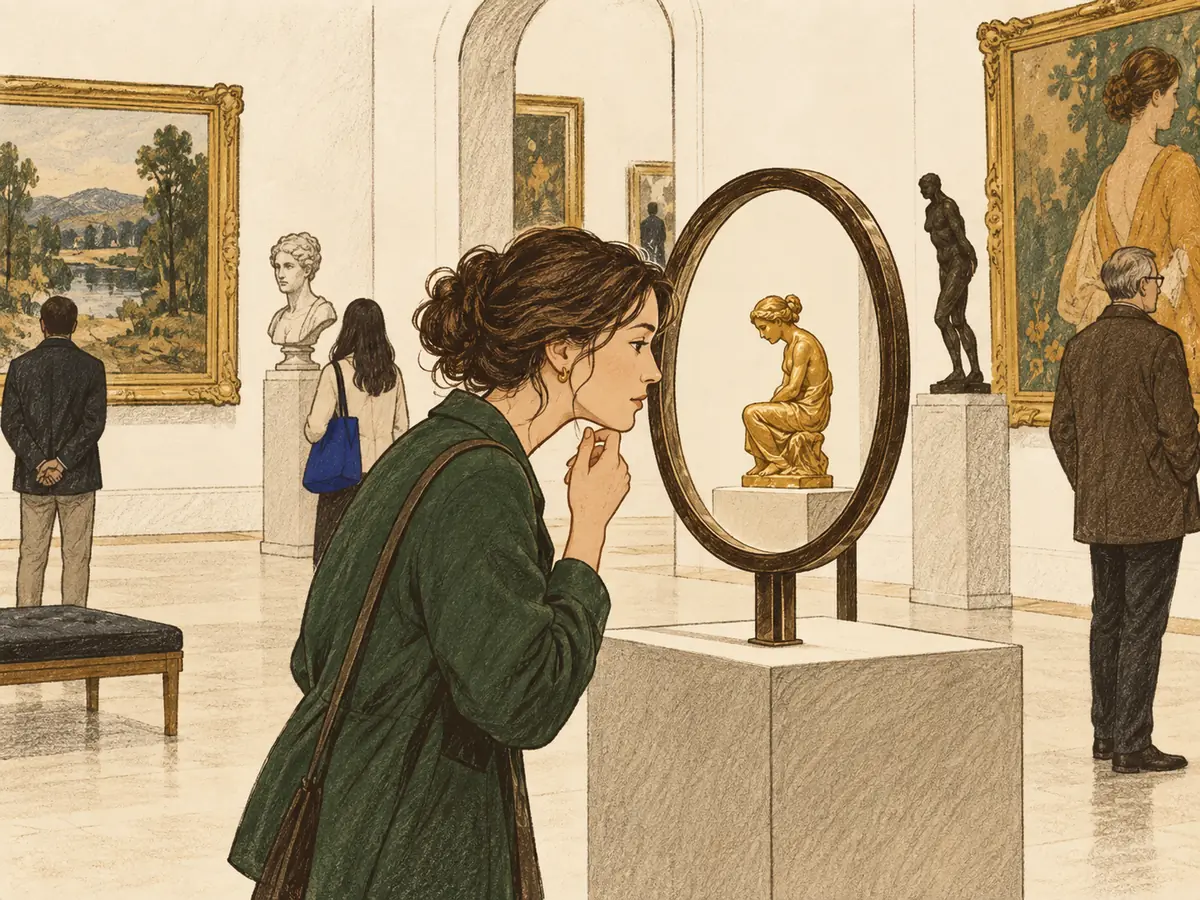
- In a gallery: you search for one painting’s label while other visitors move around you.
- At a desk: you check a column of numbers while surrounding details receive less attention.
In the 1999 study by Simons and Chabris, participants monitored basketball passes while an unexpected person crossed the scene. Many did not report the event, showing that something visible can go unnoticed during another task.
The five chapters below explore selection, inattentional blindness, and the cocktail party effect. Try an original counting scene, work through eight checks, and finish with one practical reflection.
0 / 100 insight points0 / 5 stamps
20 points for completing the experiment or walkthrough, plus 10 for each completed check. Retries earn full points. First-attempt accuracy is kept separately. Stamps mark learning progress.
Enable JavaScript to run the interactive chapters. The definition, examples, frequently asked questions, and linked research are available without it.
Reset your course? This clears your count, checks, stamps, and reflection from this browser. You cannot make the added event unexpected again by resetting.
Selective attention: common questions
What is selective attention in psychology?
Selective attention is giving some information priority while other information receives less attention. Following a friend’s voice in a noisy room is an everyday example. Selection makes a task manageable; it does not provide a complete record of the surroundings.
What is inattentional blindness?
Inattentional blindness is failing to consciously notice an unexpected visible object while attention is engaged elsewhere. It describes awareness during a task, not a diagnosis or a defect in the eyes.
What are some inattentional blindness examples?
An illustrative example is a gallery volunteer concentrating on a count and not noticing someone cross the room. To use the term carefully, the object should have been visible and unexpected, rather than hidden or deliberately ignored.
Is a selective attention test an assessment of my ability?
The counting activity on this page is an educational demonstration, not a validated assessment. A single result depends on the instructions, display, expectations, and circumstances. Noticing or missing the added event does not establish a stable ability.
What is the cocktail party effect?
The cocktail party effect describes selecting one conversation among competing voices. Researchers study auditory selection with tasks such as presenting different messages to the two ears and asking a listener to repeat one of them. This course explains that procedure without requiring audio.
Sources
- Simons, D. J., and Chabris, C. F. (1999). Gorillas in our midst: Sustained inattentional blindness for dynamic events. Perception, 28, 1059–1074.
- Cherry, E. C. (1953). Some experiments on the recognition of speech, with one and with two ears. The Journal of the Acoustical Society of America, 25, 975–979.
- Mack, A., and Rock, I. (1998). Inattentional Blindness. MIT Press. Publisher link includes the 2000 paperback edition.
Cite this source
Psychology.com. (2026, September 16). Selective Attention and Inattentional Blindness. Psychology.com. https://psychology.com/courses/selective-attention
More mini courses
- Anchoring Bias (12 to 15 minutes): Spin a random wheel, compare your estimate with its anchor, and practice using evidence to make better judgments.
- Confirmation Bias (12 to 15 minutes): Try the 2-4-6 number puzzle, inspect your test choices, and learn to look for evidence that could change your mind.
- Conformity and the Asch Experiment (12 to 15 minutes): Try an Asch-style line task, distinguish two reasons for following a group, and practice making room for independent views.