In short
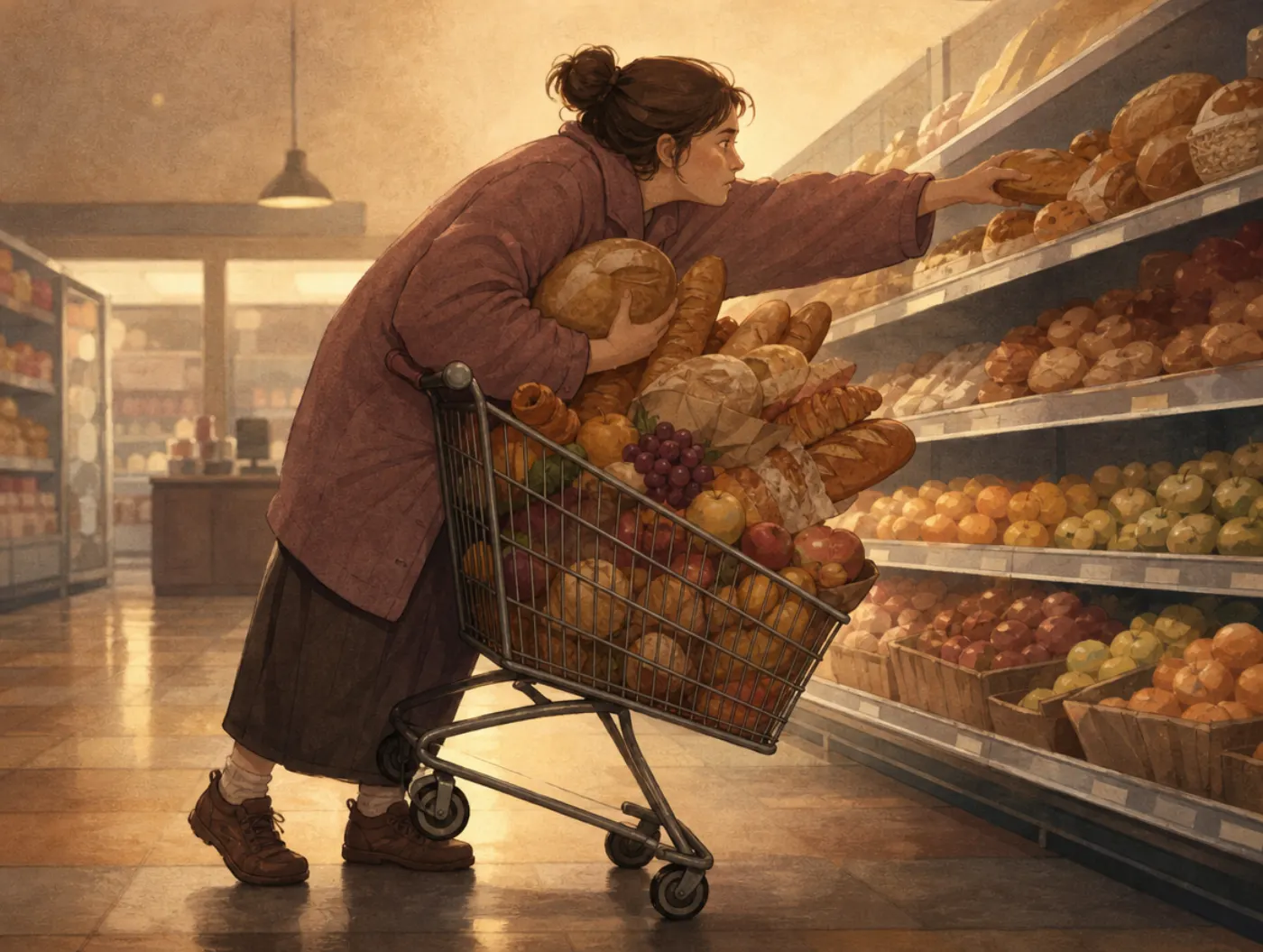
Projection bias is the tendency to predict your future wants from how you feel at the moment you decide, so that a hungry shopper buys for a week of hunger and a rested planner fills a calendar only a rested person could keep. It shows up in grocery runs, gym contracts, vacation plans, coat purchases on the first cold day and any choice whose consequences arrive after the state that produced it has passed.
How projection bias works
Projection bias is a specific prediction error: you forecast your future tastes by reading your present ones and then adjusting too little. The present state is right there, detailed and loud. The future state has to be built out of memory and imagination, and what gets built looks a lot like today. George Loewenstein, Ted O'Donoghue and Matthew Rabin gave the pattern its name in 2003 and wrote it as a formal model in which people know their tastes will change but underestimate by how much, so the forecast lands between the current state and the real future one.
The word belongs to a second tradition as well. In psychoanalytic writing, projection is a defense mechanism, attributing a feeling you cannot accept to somebody else. This page is about the decision-research sense: the weight your present state carries when you predict what you will want later. The two share a word and nothing else.
The states that do the most damage are the physical ones, what Loewenstein called visceral factors in 1996: hunger, thirst, pain, fatigue, cold, craving, arousal, fear. They change what options are worth while they last, and they feel permanent while they last. A full stomach makes next Tuesday's chocolate look unnecessary; an empty one makes it look essential. Neither reading is about Tuesday.
The bias runs in both directions and shows up outside the laboratory. Michael Conlin, Ted O'Donoghue and Timothy Vogelsang looked at catalog orders for cold-weather items in 2007 and found that the colder the day a coat was ordered on, the more likely it was to come back: an order-date temperature 30 degrees Fahrenheit lower raised the chance of return by about 4 percent. Nobody in that data set was asked to imagine next February. They felt cold, they bought for the person who felt cold, and the parcel arrived for somebody else.
Two limits are worth keeping in view. The effect is partial rather than total, which is why the 2003 model treats it as a weighting of the present state and not a replacement of the future one; people do know that hunger will pass. And it is a claim about average predictions, not a rule about any one person's. A reader who wants chocolate now and next week may simply like chocolate.
The original study
Daniel Read and Barbara van Leeuwen published the clearest demonstration in Organizational Behavior and Human Decision Processes in 1998, under the title "Predicting hunger: The effects of appetite and delay on choice." Participants chose between a healthy snack (an apple or a banana) and an unhealthy one (a chocolate bar or beer nuts) that they would receive at a fixed time one week later.
The design crossed two states. Some people made that advance choice while hungry, late in the afternoon; others made it just after lunch, satisfied. They were also told whether the delivery would reach them at a hungry hour or a satisfied one. A week later, at the appointed time, they were offered the chance to change their minds and take whichever snack they wanted on the spot.
Both predictions held. Advance choices tracked current appetite as well as expected appetite: the people who chose while hungry chose more unhealthy snacks than the people who chose on a full stomach, for a snack a week away whose appeal their present hunger could not possibly affect. And the choices were dynamically inconsistent. Across the sample, 51 percent of the advance choices were for the unhealthy snack, against about four in five of the choices made moments before eating, with 35 percent of participants abandoning the healthy snack they had booked in advance.
Read the diagram and evidence as text
Hungry and satisfied present silhouettes send dashed projections of their current state into future eating scenes. Future delivery is held at the same late-afternoon time. Shared percentage rails show unhealthy advance choices of 78% when currently hungry and 56% when currently satisfied. The future silhouettes depict the projected state, not actual hunger measured at delivery.
Advance choices for the same future hunger condition
Percent choosing an unhealthy snack one week ahead; Figure 1, advance bars
Same future late-afternoon delivery time and snack set; current choice time differs
Currently hungry, late afternoon (HH): 78% chose an unhealthy snack
Currently satisfied, after lunch (SH): 56% chose an unhealthy snack
| Condition | Value and unit | Evidence quote |
|---|---|---|
| Unhealthy advance choice: hungry now, hungry at delivery (HH) | 78 percent | FIG. 1. Percentage of unhealthy snacks chosen in all conditions; HH: advance 78 |
| Unhealthy advance choice: satisfied now, hungry at delivery (SH) | 56 percent | FIG. 1. Percentage of unhealthy snacks chosen in all conditions; SH: advance 56 |
Read and van Leeuwen read the first result as an intrapersonal empathy gap, Loewenstein's term for the difficulty of simulating a state you are not in. Five years later the formal treatment arrived: the 2003 Quarterly Journal of Economics paper by Loewenstein, O'Donoghue and Rabin collected the evidence, named it projection bias and worked out what it implies for saving, consumption and the design of commitments.
Everyday examples
The pattern appears wherever a decision is made in one state and lived in another. The rows below are illustrations, not findings from the studies cited on this page.
| Situation | What the bias does | What helps |
|---|---|---|
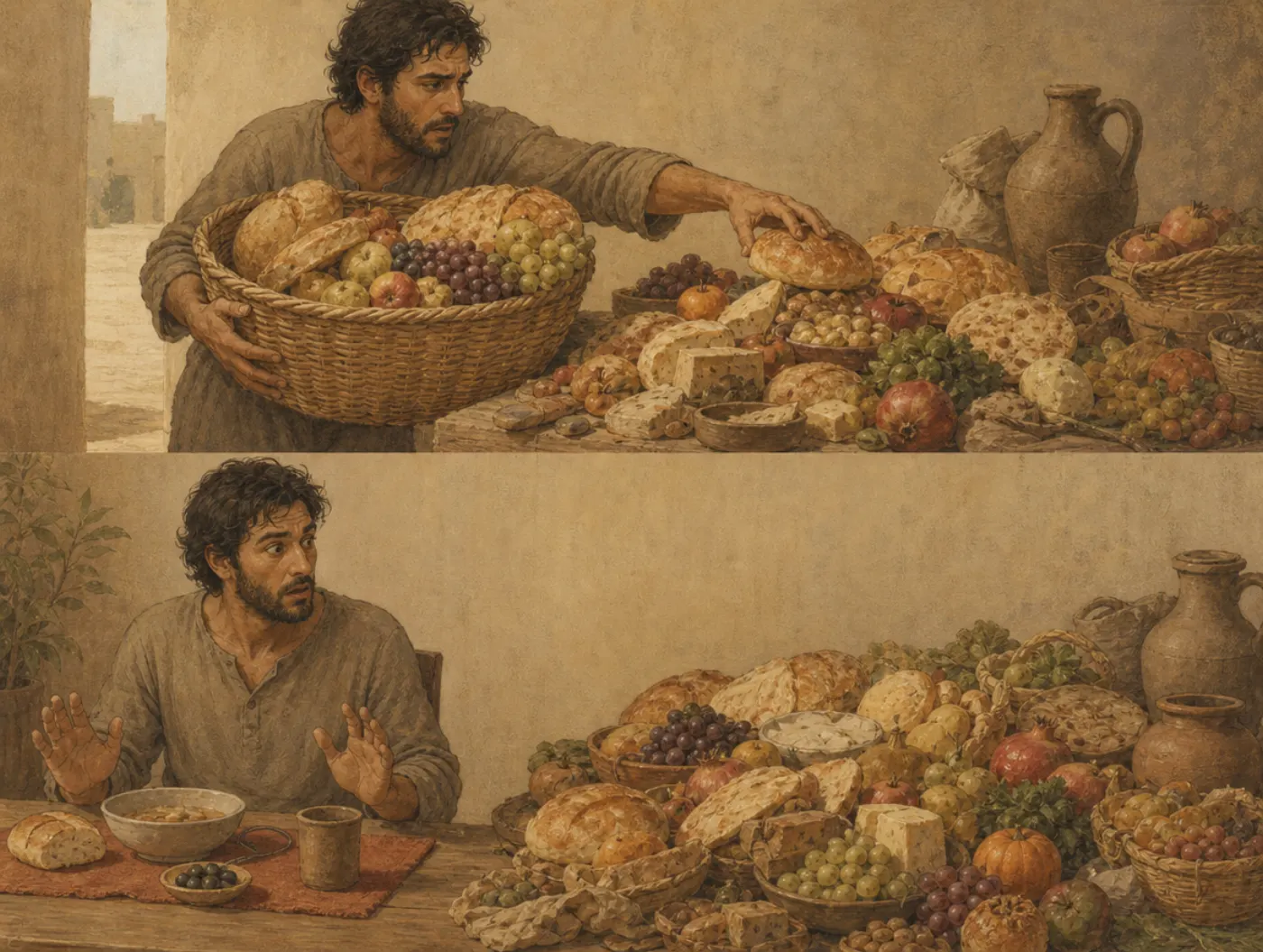
| Grocery shopping before dinner | The cart fills with food for the hunger in the aisle, not the week in the kitchen | Shop from a list written after a meal, or order delivery while full |
| A gym contract signed in January | Twelve months are booked at the enthusiasm of week one | Pay per visit for a month, count the visits, then choose the contract |
| Booking a 7am flight three months out | The schedule is set by a person who is awake and unhurried | Ask what the trip costs the version of you who has to pack the night before |
| Buying a winter coat on the first freezing day | Warmth is overvalued at the moment of purchase and the parcel goes back | Decide on a budget and a use case indoors, before the cold does the choosing |
| Quitting a job in the week after a bad review | The pay, the people and the commute are all weighed in one bad mood | Write the reasons down, wait two weeks, read them again before acting |
How to counter it
The counters all work by moving the decision out of the state that would otherwise answer for you.
- Decide in the state you will be in, or in neither. Food choices made after eating and exercise plans made when tired are both closer to the average week than choices made at a peak.
- Name the state before you decide. Hungry, angry, lonely, tired, cold, bored: the HALT check exists because a decision taken in one of those states is answering a different question.
- Use your own record instead of your current feeling. How many times did you go to the gym last month, how often did the fruit rot, how many 7am flights did you enjoy. Past behavior is a better forecast of a future state than a present mood.
- Put the commitment where the state cannot reach it: a standing grocery order, a packed bag, a pay-per-visit pass, an automatic transfer on payday.
- Build in a delay for anything bought or quit at an emotional peak. A written reason read two weeks later is read by the person who has to live with the decision.
- Expect the mirror error too. Cold states project as well as hot ones, which is how a calm Sunday afternoon produces a schedule that no Tuesday can keep.
What it is not
Several biases sit between a present self and a future one. They differ in what gets misjudged.
- It is not impact bias, which is overestimating how strong and how long-lasting your reaction to an event will be. Impact bias is about the size of a future feeling; projection bias is about which preferences you expect to have at all.
- It is not the empathy gap as it applies to other people, the difficulty of reading a state you are not in when the person in that state is somebody else. Read and van Leeuwen called their result an intrapersonal empathy gap: the same difficulty aimed at your own later self.
- It is not restraint bias, the overestimation of your own ability to resist a temptation once it arrives. That is a belief about willpower; projection bias is a belief about what you will want.
- It is not hyperbolic discounting, the steep preference for a smaller reward now over a larger one later. Discounting explains why the snack in front of you wins; projection explains why you booked the wrong snack a week ago.
Tests and tools that use this
Related biases
Projection Bias FAQ
What is projection bias in simple terms?
It is predicting what you will want later from what you want now. The current state, hunger or fatigue or a good mood, is vivid, and the future state has to be imagined, so the forecast drifts toward today. Loewenstein, O'Donoghue and Rabin named it in 2003 and modeled it as partial correction: people know their tastes will change and underestimate by how much.
What is an example of projection bias?
Shopping hungry is the standard one. In Read and van Leeuwen's 1998 study, participants choosing a snack for delivery a week later picked more unhealthy snacks when they made that choice while hungry than when they made it just after lunch. Outside the laboratory, Conlin, O'Donoghue and Vogelsang found in 2007 that cold-weather items ordered from catalogs on unusually cold days were returned more often.
Is projection bias the same as psychological projection?
No. Psychological projection is a psychoanalytic defense mechanism: attributing a feeling you cannot accept in yourself to someone else. Projection bias is a term from judgment and decision research for overweighting your present state when you forecast your own future preferences. They share a word. If you came here looking for the defense mechanism, this page is about the other one.
How does the demo on this page relate to projection bias?
One answer cannot show it. You read one of two paragraphs about the same warm brownie in front of you, one with you hungry at 4pm and one with you full after lunch, then chose a snack for next week. Question and brownie were identical; only the imagined state differed. A split between the versions is a response to the two imagined situations, the shape of Read and van Leeuwen's result. An imagined state is a weak substitute for real hunger, and the split compares visitors, not you.
How can I avoid projection bias?
Move the decision out of the state. Shop after eating, write the plan on an ordinary day rather than a peak one, and check your own record instead of your current feeling: how many gym visits last month, how much fruit went uneaten. Where a state is unavoidable, make the commitment structural, with a standing order or a pay-per-visit pass, so the choice is not reopened at the worst moment.
Does projection bias apply to the past as well as the future?
The research on the past is a separate line of work. Projection bias as Loewenstein, O'Donoghue and Rabin defined it concerns forecasts of future preferences, and the studies cited here all test predictions forward in time. People do also read their current state into their memories, which is why a bad week makes a good year sound worse, but that is studied under other names and this page does not cite evidence for it.

References
- Read, D., & van Leeuwen, B. (1998). Predicting hunger: The effects of appetite and delay on choice. Organizational Behavior and Human Decision Processes, 76(2), 189-205. doi.org
- Loewenstein, G., O'Donoghue, T., & Rabin, M. (2003). Projection bias in predicting future utility. The Quarterly Journal of Economics, 118(4), 1209-1248. doi.org
- Conlin, M., O'Donoghue, T., & Vogelsang, T. J. (2007). Projection bias in catalog orders. American Economic Review, 97(4), 1217-1249. doi.org
- Loewenstein, G. (1996). Out of control: Visceral influences on behavior. Organizational Behavior and Human Decision Processes, 65(3), 272-292. doi.org
- Nordgren, L. F., van Harreveld, F., & van der Pligt, J. (2009). The restraint bias: How the illusion of self-restraint promotes impulsive behavior. Psychological Science, 20(12), 1523-1528. doi.org
Cite this source
Psychology.com. (2026, October 22). Projection Bias. Psychology.com. https://psychology.com/biases/projection-bias