Thalassophobia Test: See How Strongly Deep or Open Water Affects You
This thalassophobia test explores fear of deep or open water, avoidance, and daily impact using the DSM-5 phobia framework. Get an instant self-assessment result and an optional report to discuss with a therapist.
 Reviewed byMichael Callans, MSW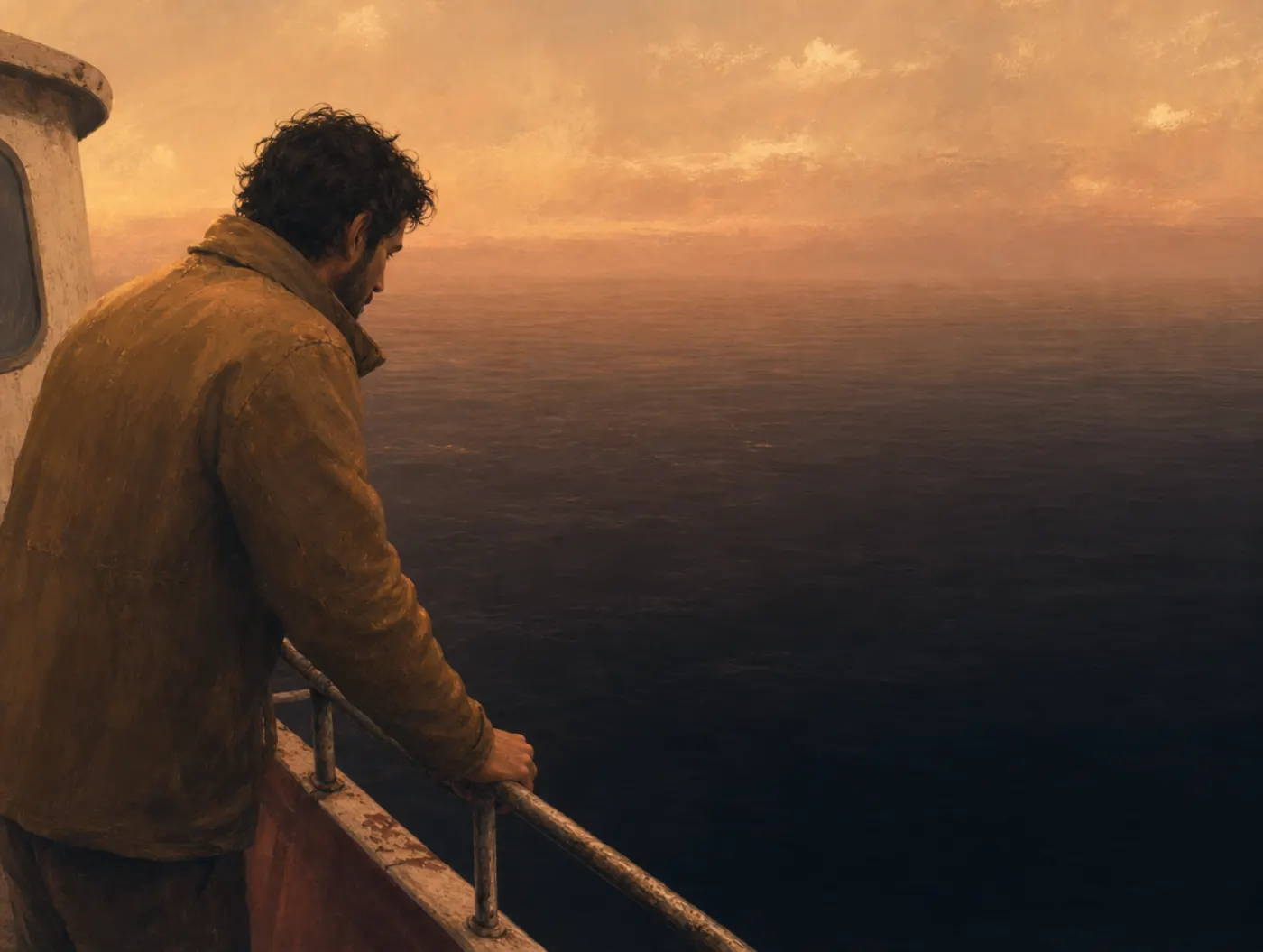
Thalassophobia Test is a free, confidential 15-question self-assessment, educational screener · DSM-5 phobia criteria. It takes about 8 minutes, runs entirely in your browser, and gives you a plain-language score across 4 interpretation bands plus an optional in-depth report. It is an educational screening, not a diagnosis.
What thalassophobia actually looks like
The Thalassophobia Test explores fear centered on deep, vast, or dark water and what may be unseen beneath it. Thalassophobia is not fear of water itself. It is a fear that concentrates on depth, vastness, darkness, and the unseen. This screener rates that fear the way clinicians think about any specific phobia: how intense it feels, how much you avoid, and how far it reaches into your life. Many people describe it as a fear of dark water specifically, since darkness that hides what might be underneath is often the sharpest trigger of all.
Fear and body response
How strongly deep or open water triggers dread, and the physical alarm that comes with it: a racing heart, tight chest, or shallow breath near the sea, on a boat, or even looking at images of the depths.
Avoidance
How much you organize life around steering clear of deep water: skipping swims where you cannot see the bottom, declining boats and open-water trips, or looking away from ocean and underwater imagery.
Recognition and life impact
Whether the fear is out of proportion to the real danger, whether it has persisted, and how much it limits your travel, activities, and time with others. These are the marks that separate a strong dislike from a phobia.
| Feature | Typical free quiz | Psychology.com |
|---|---|---|
| Focused on deep-water fear specifically | Rarely | Yes, thalassophobia throughout |
| Built on the DSM-5 phobia criteria | Seldom stated | Yes, and labeled honestly |
| Honest about not being a validated scale | Often oversold | Yes, clearly stated |
| Separates fear intensity, avoidance, and impact | No | Yes, three-part breakdown |
| Links to the broader phobia screen | No | Yes, for wider context |
| Optional in-depth personalized report | No | Yes, written to your exact score |
| Confidential (no data sent) | Often tracked | Runs in your browser |
Therapists Who Work With Anxiety
If your result points to something you want help with, these licensed therapists work with it. Every member is matched to the federal NPI Registry; board checks are dated on the profile.
-
View profile
Jonathan HerrickLCSW, MSW
License verified, checked Oct 6, 2026
Chilmark, Massachusetts Telehealth and in person $145 to $275 per session
-
View profile
Melanie ONeillLPC, LMHC
License verified, checked Sep 29, 2026
Metairie, Louisiana Telehealth $100 to $160 per session, sliding scale
-
View profile
License verified, checked Sep 29, 2026
“Online therapy for anxiety, overthinking, and burnout in PA, NJ & NY—for high-functioning adults ready for greater clarity and ease.”
Philadelphia, Pennsylvania Telehealth $150 per session


How scoring works
Answers are scored 0–60 in total. Your result falls into one of 4 bands:
| Score | Band | What it suggests |
|---|---|---|
| 0–11 | Minimal water-related fear | Your answers suggest little or no fear of deep or open water. A healthy caution around the sea is normal and sensible. |
| 12–23 | Mild water-related fear | Your answers suggest a mild fear of deep or open water. Many people feel some unease here, and it is very workable. |
| 24–38 | Moderate water-related fear | Your answers suggest a moderate fear of deep or open water that may be shaping some of your choices. This is worth taking seriously and gently. |
| 39–60 | Marked water-related fear | Your answers suggest a marked fear of deep or open water that is likely affecting your life in real ways. Support can make a genuine difference. |
Common triggers for thalassophobia
Thalassophobia rarely responds to water in general. It tends to cluster around specific triggers: swimming over a sudden drop-off where the bottom disappears from view, floating above a shipwreck or a dark trench, being on a boat with no land in sight, or seeing footage of the ocean floor, submarines, or large underwater structures. Even a still image of dark, featureless water can trigger the same dread as being in it.
Pools and lakes are not exempt. A swimming pool with a deep end you cannot see the bottom of, or a lake that turns from clear to black a few feet down, can trigger a reaction just as strong as the open ocean, because the fear responds to depth and the unseen rather than to salt water specifically. Recognizing your own specific triggers, rather than assuming the fear is only about the sea, makes it easier to describe to a therapist and easier to work through with exposure. If the physical alarm, a racing heart, tight chest, or shortness of breath, shows up even away from water, the Panic Disorder Test can help you see whether panic attacks are part of the picture too. Either way, the Psychology.com therapist directory can connect you with a therapist experienced in exposure-based treatment for phobias.
You can answer from remembered experiences without looking at frightening ocean images or going near water. Describe which part unsettles you: losing sight of land, being unable to see the bottom, or imagining something beneath you. These details help separate the situation from the feared consequence when you discuss it with a clinician.
Thalassophobia vs megalophobia and fear of sharks
These three fears often travel together but are not the same thing. Megalophobia is a fear of very large objects and structures, whether or not water is involved: a fear of skyscrapers or whales counts, and someone with megalophobia might feel nothing about a small, clear pond. A fear of sharks is a specific animal fear that can exist with or without any general unease about deep water; some people who are relaxed in a pool still feel a jolt at the thought of a shark below them.
Thalassophobia is broader than either: it is triggered by depth, vastness, darkness, and the unseen itself, with or without a large object or an animal in the picture. In practice the three often overlap, since a dark ocean is deep, vast, and plausibly holds large animals all at once, and it is common to carry a mix of all three rather than a single, clean fear. If tight, enclosed spaces are also part of the picture, for example a fear of being trapped in a submerged vehicle or a cave, the Claustrophobia Test is worth a look too. Naming which parts are which still helps, because exposure therapy works best when it targets what you actually fear rather than water in general, and building a personal Fear Ladder is a practical first step toward that with a therapist.
What does my thalassophobia test score mean?
Your result summarizes the fear, avoidance, and interference you reported. The severity labels are descriptive bands created for this educational screener, not validated diagnostic thresholds or a probability that you have a phobia. A clinician also considers the actual situation, how long the fear has lasted, and other possible explanations.
Consider what the fear prevents you from doing that matters to you. A strong reaction to an unsettling photograph alone cannot establish a phobia. You can seek support for distress even when your total is low. The Psychology.com tests hub includes related assessments, including the Phobia Test: What Are You Afraid Of?, for broader reflection.
How can I work on deep-water fear safely?
Keep ordinary water-safety precautions in place. Declining an unsafe swim, respecting swimming limits, or following local warnings should not be treated as a failure to confront fear. Do not enter deep water to check your result or try to prove that you can tolerate anxiety.
If you want to work toward an activity you value, discuss an individualized plan with a qualified clinician. A Fear Ladder can help organize situations for that conversation. Exposure work should use agreed, manageable steps in appropriate conditions; a questionnaire cannot determine whether a water activity is safe for you.
Methodology & sources
This page does not use a validated questionnaire specific to thalassophobia. Its original educational statements are organized around the DSM-5 specific phobia framework: marked and out-of-proportion fear or anxiety, a physical anxiety response, anticipatory dread, active avoidance, symptoms that persist for six months or more, and real interference with daily life. Those criteria are applied to the situations thalassophobia centers on: deep water where you cannot see or touch the bottom, the open sea far from land, dark or murky water, and the unseen space beneath the surface. Fifteen statements are each rated from 0 (not at all) to 4 (extremely), for a total score from 0 to 60.
This is a screener for reflection, not a diagnostic instrument, and it cannot tell you whether you have a specific phobia. Only a licensed clinician can make that assessment. A high score means your fear carries the intensity, avoidance, and interference that a phobia involves, and that a professional conversation could help. If you want to see how deep-water fear sits alongside the wider set of fears, our broader phobia test maps fear across the five DSM-5 specific phobia types. Specific phobias, including fears in the natural-environment domain where deep water sits, are among the most treatable conditions in all of mental health.
The specific-phobia literature supports assessing fear, avoidance, persistence, and interference, but it does not validate this site's wording or score bands. Evidence about exposure-based treatment for specific phobias should not be interpreted as a guaranteed outcome or a treatment timetable for an individual with deep-water fear.
References
- American Psychiatric Association. Diagnostic and Statistical Manual of Mental Disorders, Fifth Edition, Text Revision (DSM-5-TR). Washington, DC: American Psychiatric Association; 2022.
- Eaton WW, Bienvenu OJ, Miloyan B. Specific phobias. Lancet Psychiatry. 2018;5(8):678-686.
- Eaton, Bienvenu, and Miloyan, full text of Specific phobias listed above. pmc.ncbi.nlm.nih.gov/articles/PMC7233312/
Cite this source
Psychology.com. (2026, September 27). Thalassophobia Test. Psychology.com. https://psychology.com/tests/thalassophobia
Thalassophobia Test FAQ
What are the symptoms of thalassophobia, and am I thalassophobic?
Thalassophobia describes an intense, persistent fear of deep, vast, or dark bodies of water, including the open sea and deep lakes. Symptoms can include dread, a racing heart, tight chest, or shallow breathing near water or when imagining it, together with avoidance. The fear centers on depth, vastness, darkness, and what may be unseen below. This screener helps describe those experiences and their impact; only a clinician can assess whether they meet criteria for a specific phobia.
Is this a validated thalassophobia test?
This thalassophobia test is an original educational self-assessment informed by the DSM-5 specific phobia framework. Its questions and score bands have not been established as a validated thalassophobia scale. The result organizes your reported fear, avoidance, and daily impact for reflection or discussion with a clinician. It cannot establish a diagnosis, and research about specific phobias does not automatically establish the accuracy of this questionnaire.
What is the difference between disliking the deep ocean and thalassophobia?
A healthy respect for deep water is normal and often sensible. A phobia adds three things: fear that is out of proportion to the actual danger, active avoidance of deep or open water, and real interference with things you want or need to do. Feeling uneasy on a boat is common. Turning down trips, staying out of the water, or feeling dread for days beforehand is where it starts to look like thalassophobia.
How is thalassophobia related to other phobias?
In the DSM-5, fear of deep water falls within the natural-environment type of specific phobia, alongside fears of heights and storms. Thalassophobia is a specific, recognizable flavor of that broader category. If you want to see where deep-water fear sits among the full range of common fears, our broader phobia test maps your fears across all five specific phobia types.
Can thalassophobia be treated?
A clinician can discuss treatment for deep-water fear when it causes distress or limits daily life. Exposure-based therapy has supporting evidence for specific phobias and involves planned contact with feared situations under appropriate conditions. The approach, pace, and goals should reflect your needs and actual water safety. Research on specific phobias does not guarantee an individual outcome or tell you how quickly your fear will change.
What is the fear of deep water called?
The fear of deep water is called thalassophobia, an intense, persistent fear centered on deep, vast, or dark water and what might be unseen beneath the surface. It can bring a racing heart, tight chest, or shallow breath near the sea or on a boat, along with avoidance of swims, boats, or ocean imagery. When the fear is out of proportion to the real danger and interferes with daily life, it can be consistent with a specific phobia, though only a clinician can confirm that.
Related tests
Claustrophobia Test
Based on the validated CLQ, scoring the two fears behind claustrophobia: suffocation and restriction.
Agoraphobia Test
Based on the DSM-5 Severity Measure, covering fear, physical symptoms, and avoidance across situations.
Trypophobia Test
Based on the validated TQ. Measures discomfort at clusters of small holes and bumps.
Emetophobia Test
Based on the validated SPOVI, scoring avoidance and threat monitoring in the fear of vomiting.
Phobia Test: What Are You Afraid Of?
Explore specific fears and social fears with an educational profile of where your fear concentrates.