 Reviewed by
Key facts
- Suicidal thoughts are a sign of deep pain, not weakness, and they can be treated and overcome.
- Most people who experience suicidal thoughts do not want to die; they want the pain to stop.
- Asking someone directly about suicide does not plant the idea; it can open the door to help.
- Free, confidential support is available 24/7 through the 988 Suicide & Crisis Lifeline and the Crisis Text Line.
Warning signs
Suicide is a serious public health problem, and it is preventable. The World Health Organization reports that more than 720,000 people die by suicide each year worldwide, and that, with timely, evidence-based support, suicides can be prevented. The National Institute of Mental Health likewise describes suicide as a leading cause of death in the United States, while emphasizing that effective, evidence-based treatment can help. Recognizing the warning signs and responding with care is one of the most important ways anyone can help. Take notice if someone:
- Talks about wanting to die, feeling hopeless, having no reason to live, or being a burden to others
- Withdraws from friends, family, and activities they used to value
- Experiences extreme mood swings, deep sadness, rage, or sudden calm after a low period
- Increases use of alcohol or drugs
- Gives away prized possessions or says goodbye as if for the last time
- Shows changes in sleep, appetite, or energy
- Acts anxious, agitated, or reckless, or seems to be in unbearable emotional pain
- Searches for ways to end their life or talks about having a plan
Warning signs can be subtle, and not everyone shows them. The risk is often higher during major life stress, after a loss, or when someone is dealing with conditions like depression, bipolar disorder, or a substance use problem. Trust your instincts. If you are worried about someone, it is always worth reaching out, and a direct, caring conversation can be the turning point.
| Warning signs: changes to notice now | Risk factors: background circumstances |
|---|---|
| Talking about wanting to die or being a burden to others | A previous suicide attempt or family history of suicide |
| Withdrawing from friends, family, and valued activities | Lack of social support and a sense of isolation |
| Extreme mood swings, rage, or sudden calm after a low period | Depression, bipolar disorder, or another mental health condition |
| Increasing use of alcohol or drugs | An alcohol or substance use disorder |
| Saying goodbye or giving away prized possessions | A recent loss, job trouble, or financial stress |
| Feeling hopeless, trapped, or in unbearable pain | History of trauma or abuse, or serious physical illness |
How to help someone at risk
“Suicide is not inevitable for anyone. By starting the conversation, providing support, and directing help to those who need it, we can prevent suicides and save lives.”
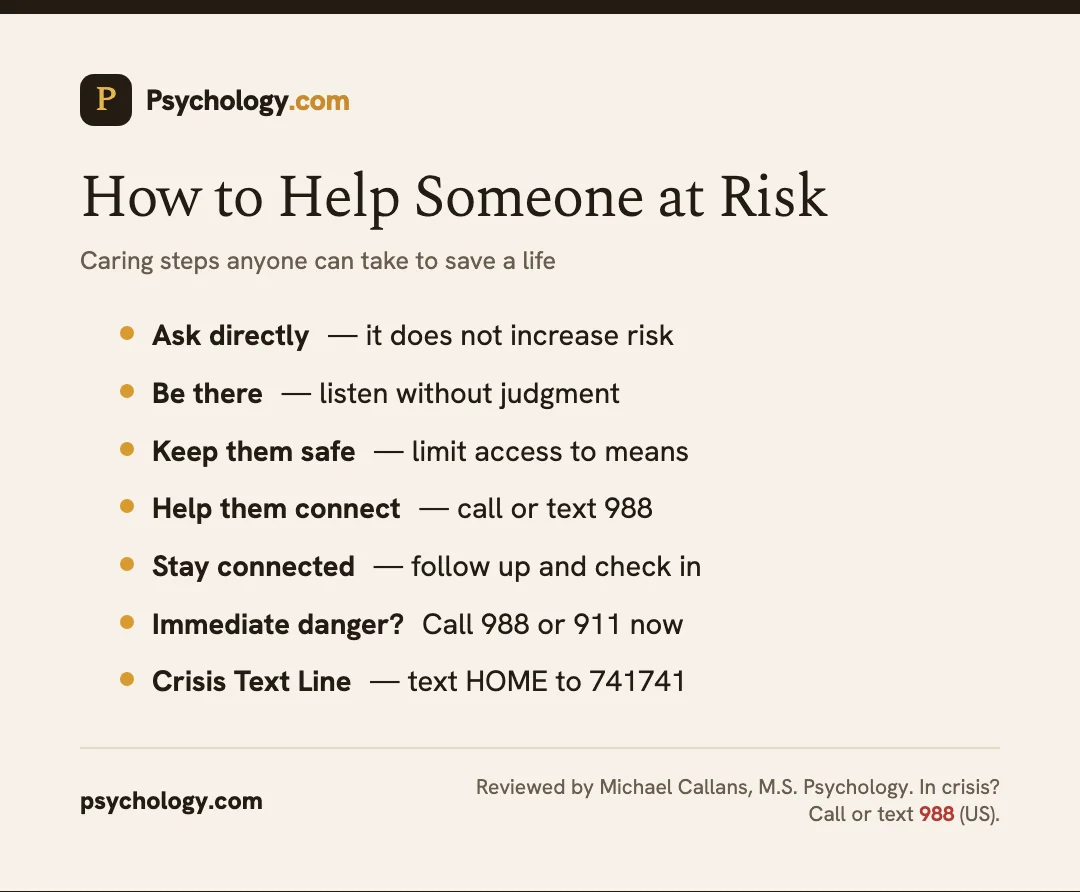
You do not need to be a professional to make a difference. Research-backed guidance, including the 988 Lifeline's action steps, points to a few caring things anyone can do:
- Ask directly: calmly ask whether they are thinking about suicide. Research shows that asking does not plant the idea or increase risk; it shows you care and gives them permission to be honest.
- Be there: listen without judgment, let them talk, take them seriously, and avoid arguing, lecturing, or minimizing their pain.
- Keep them safe: do not leave a person at immediate risk alone, and help put time and distance between them and anything they could use to harm themselves.
- Help them connect: encourage them to call or text 988, save the number in their phone, contact a professional, or go with them to get support.
- Stay connected: follow up and check in afterward. Studies suggest that supportive contact in the days and weeks after a crisis can help keep people safe.
If someone is in immediate danger, do not wait. Call or text 988, or call 911 or your local emergency number.
If you are struggling
If you are having thoughts of suicide, please know that you are not alone and that this pain can ease. Reaching out is a sign of strength, not failure. The 988 Suicide & Crisis Lifeline offers free, confidential support from caring, judgment-free counselors, 24 hours a day, every day. You can call or text 988 any time, or chat online at 988lifeline.org, to talk with someone who understands. You can also text HOME to 741741 for the Crisis Text Line.
In the moment, try to keep yourself safe: stay with someone you trust or ask them to come to you, put distance between yourself and anything you could use to harm yourself, and focus on getting through the next hour rather than solving everything at once. Intense suicidal feelings are often temporary, even when they feel permanent, and they tend to ease with support and time. Most people who experience suicidal thoughts do not truly want to die; they want the pain to stop, and there are ways to make it more bearable. Conditions like depression, anxiety, and bipolar disorder are treatable, and effective help is available.
Myths about suicide
Misunderstandings about suicide can stop people from reaching out or from helping someone they are worried about. Clearing up a few common myths makes it easier to respond with confidence and compassion:
- Myth: Talking about suicide makes it more likely. Asking openly and with care does not plant the idea. It can bring relief and open the way to help.
- Myth: People who talk about suicide are not serious. Talking about it is often a cry for help and should always be taken seriously.
- Myth: There is nothing you can do. Support, treatment, and connection genuinely help. Many people who survive a crisis go on to live full lives.
- Myth: Suicidal people want to die. Most want the pain to end, not life itself. With help, the pain can become bearable.
- Myth: Only people with a diagnosed mental illness die by suicide. Many people who die by suicide were living with a mental health condition, but not all, and a crisis can be set off by overwhelming stress, loss, or pain. Anyone in distress deserves support.
Where to get help
Help is available, and it is free and confidential:
- 988 Suicide & Crisis Lifeline: call or text 988, or chat at 988lifeline.org, any time, day or night.
- Crisis Text Line: text HOME to 741741 to connect with a trained crisis counselor.
- Emergency services: call 911 or go to the nearest emergency room if there is immediate danger.
- A mental health professional: a therapist or doctor can provide ongoing treatment and support.
Outside the US, contact your local emergency number or a national crisis line in your country. Help is available in most countries, and reaching out is always worth it.
Reducing access to means
One of the most effective ways to prevent suicide, supported by public health research, is to put time and distance between a person at risk and the things they might use to harm themselves during a crisis. Because suicidal crises are often brief, making the environment safer, for example by securing medications and firearms, can save a life until the moment passes and support arrives. If you are worried about someone, asking a trusted person to help with this is a practical, caring step.
Free tools and worksheets
Practical, printable exercises from our free library that people managing suicide prevention often find useful. No signup needed.
Frequently asked questions
What should I do if someone tells me they are suicidal?
Stay calm, listen without judgment, and take them seriously. Do not leave them alone if they are at immediate risk, help remove access to anything dangerous, and connect them with the 988 Lifeline or a professional right away.
Is it okay to ask someone directly if they are thinking about suicide?
Yes. Research shows that asking directly does not increase risk. It often brings relief and opens the door to honest conversation and help.
Can suicidal thoughts go away?
Yes. Suicidal thoughts are usually tied to pain that feels unbearable in the moment but can be treated. With support and treatment, the thoughts often ease, and many people recover and go on to live full lives.
How can I support someone after a suicide attempt?
Keep showing up. Steady connection is one of the strongest protective factors, and recovery after an attempt is common. Listen without judgment, avoid demanding reasons or promises, and help with ordinary things like meals, appointments, and follow-up care. Ask what feels supportive rather than guessing. Many people who survive an attempt go on to live full, meaningful lives, and your patient presence helps make that possible.
What is a safety plan and how do we make one?
A safety plan is a short written list made during a calm moment: personal warning signs, coping steps that help, people and places that offer comfort or distraction, trusted contacts, and professional numbers, including the 988 Suicide & Crisis Lifeline. You can build one for yourself or alongside someone you are supporting. Crises tend to pass, and a plan helps you get through until they do.
How do I look after myself while supporting someone at risk?
Supporting someone through a suicidal crisis is heavy, and caring for yourself is part of caring for them. Share the load with other trusted people so you are not the only source of support, protect your own sleep, meals, and routines, and consider talking with a therapist yourself. You do not have to do this perfectly. With shared support, people come through crises, and so do their helpers.
Related conditions
Therapists who specialize in suicide prevention
Connect with a licensed therapist on Psychology.com who works with suicide prevention.
Finding the right help
When you are ready to take the next step, these guides walk you through finding and starting with the right therapist.
- Getting started with therapy
- How to find the right therapist
- Find a therapist who takes insurance
- Free & low-cost therapy
References
- 988 Suicide & Crisis Lifeline. Free, confidential 24/7 support and how to help.
- National Institute of Mental Health (NIMH). Suicide Prevention.
- World Health Organization (WHO). Suicide (fact sheet).
- Centers for Disease Control and Prevention (CDC). Suicide Prevention.
- 988 Suicide & Crisis Lifeline: How we can all prevent suicide
