In short
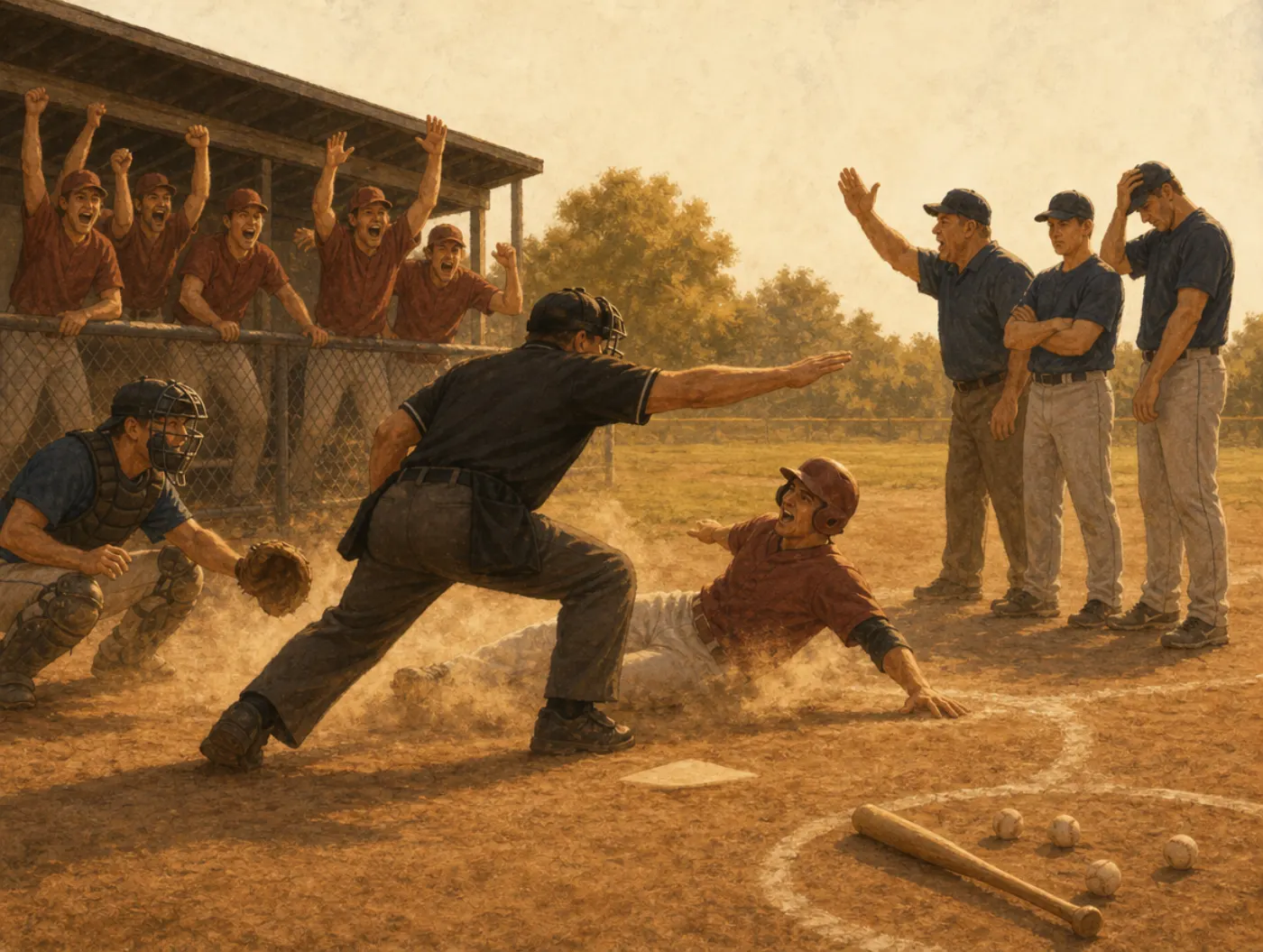
In-group favoritism is the tendency to treat members of your own group better than members of other groups, in judgments, in trust and in the division of rewards, even when the group boundary is arbitrary and nothing is at stake for you personally. It shows up in hiring and grading, in how referees are judged by each side's fans, in the trust extended to people who share a hometown or a team, and in the laboratory within minutes of being told you belong to the Klee group rather than the Kandinsky group.
How in-group favoritism works
In-group favoritism is what people do with a boundary once they are on one side of it. The boundary can be deep, a nationality or a faith held from childhood, or it can be a coin flip performed a minute ago, and the behavior that follows is the same in kind: members of the in-group are rated more warmly, trusted more readily and given more of whatever is being divided. Henri Tajfel's minimal group experiments of 1971 established the second case. Before them, discrimination was explained by conflict over resources or a history of hostility; after them, categorization alone was enough.
Tajfel and John Turner's social identity theory, set out at the end of the 1970s, gave the mechanism. Part of a person's sense of who they are comes from the groups they belong to, and people want that part to compare well. A group with no history offers nothing to compare except the next division of points, so the division becomes the comparison. That is why the second 1971 experiment found that the size of the gap pulled harder than the size of the gain: the gap is what the comparison runs on.
Marilynn Brewer argued in 1999 that in-group favoritism is mostly in-group love rather than out-group hate: people extend trust, cooperation and generosity preferentially to their own, and the out-group suffers by omission more than by attack. In minimal groups there is nothing to hate, and the favoritism appears anyway; hostility needs more, usually threat or competition.
The effect is robust and moderate. Daniel Balliet, Junhui Wu and Carsten De Dreu reviewed over 200 studies of cooperation in 2014 and found that people cooperate more with in-group than with out-group members across experimental games, by a moderate margin; the effect was the same size for real groups as for groups created in the laboratory, and larger when people knew that the partner knew their group. The bias is strong enough to matter in hiring, grading, lending and refereeing, and weak enough that a person who knows about it can usually override it on a given decision.
The original study
Tajfel, Michael Billig, Robert Bundy and Claude Flament published the minimal group experiments in the first volume of the European Journal of Social Psychology in 1971; Tajfel had described the same experiments for a general audience in Scientific American the year before. The participants were boys aged 14 and 15 from one Bristol school, 64 in the first experiment and 48 in the second.
The first experiment began with a task of estimating the number of dots flashed on a screen. The boys were then told they had been grouped as overestimators or underestimators, or as more and less accurate; in fact the grouping was random. Each boy then went alone to a cubicle with a booklet of matrices: rows of 14 boxes, each holding a number for one person and a number for another, the people identified only by code number and group, the points worth a tenth of a penny each. Some matrices divided points between two members of the boy's own group, some between two members of the other group, and some between one of each. In the intergroup choices a large majority of the boys gave more to their own group's member; the mean choices were significantly above rank 7.5, the point of maximum fairness on a 14-box matrix, while choices between two members of the same group clustered around that point.
Read the diagram and evidence as text
An allocator carrying a round badge divides points between otherwise identical strangers. Across a round-versus-diamond boundary, the route to the matching badge is emphasized; with matching recipients, neutral routes indicate choices near fairness. Badge shapes and point trays are illustrative; route weight is not an allocation amount or ratio.
Same points, same strangers, different label
64 boys, groups assigned on a pretext; equal panels show direction, not amounts
Each boy divides the same points between two people he knows only by code number and group
One from his own group, one from the other: More points to his own group's member; mean choices above the fair point
Both from the same group: Choices clustered around the fair point, rank 7.5
| Condition | Value and unit | Evidence quote |
|---|---|---|
| Participants, first experiment | 64 boys | 64 boys aged 14 and 15 from a Bristol school |
| Point of maximum fairness | 7.5 matrix rank | mean choices significantly above rank 7.5, the point of maximum fairness |
| One in-group and one out-group member | More points to his own group's member; mean choices above the fair point ordinal allocation | gave more points to members of their own group in a large majority of intergroup choices, with mean choices significantly above rank 7.5 |
| Two members of the same group | Choices clustered around the fair point ordinal allocation | their choices between two in-group or two out-group members clustered around that fair point |
The second experiment replaced the dots with paintings. The boys viewed slides of works by Klee and Kandinsky, shown without signatures, expressed preferences, and were told they were in the Klee group or the Kandinsky group; again the assignment was random. New matrices were built so that three motives pulled in different directions: maximum joint profit, the most points for both people together; maximum in-group profit, the most for the in-group member regardless of the other; and maximum difference, the largest gap in the in-group member's favor. Maximum joint profit had little effect on the choices. Maximum in-group profit mattered. The clearest effect came from maximum difference: the boys sacrificed points for their own group's member in order to widen the gap, and their choices between two in-group members were closer to joint profit than their choices between two out-group members, even though generosity to two outsiders cost the in-group nothing.
Tajfel called the result gratuitous discrimination: nothing in the setup gave the boys a reason to favor one group, and the categories were, in his word, flimsy. The effect has been reproduced many times with adults and other arbitrary labels.
Everyday examples
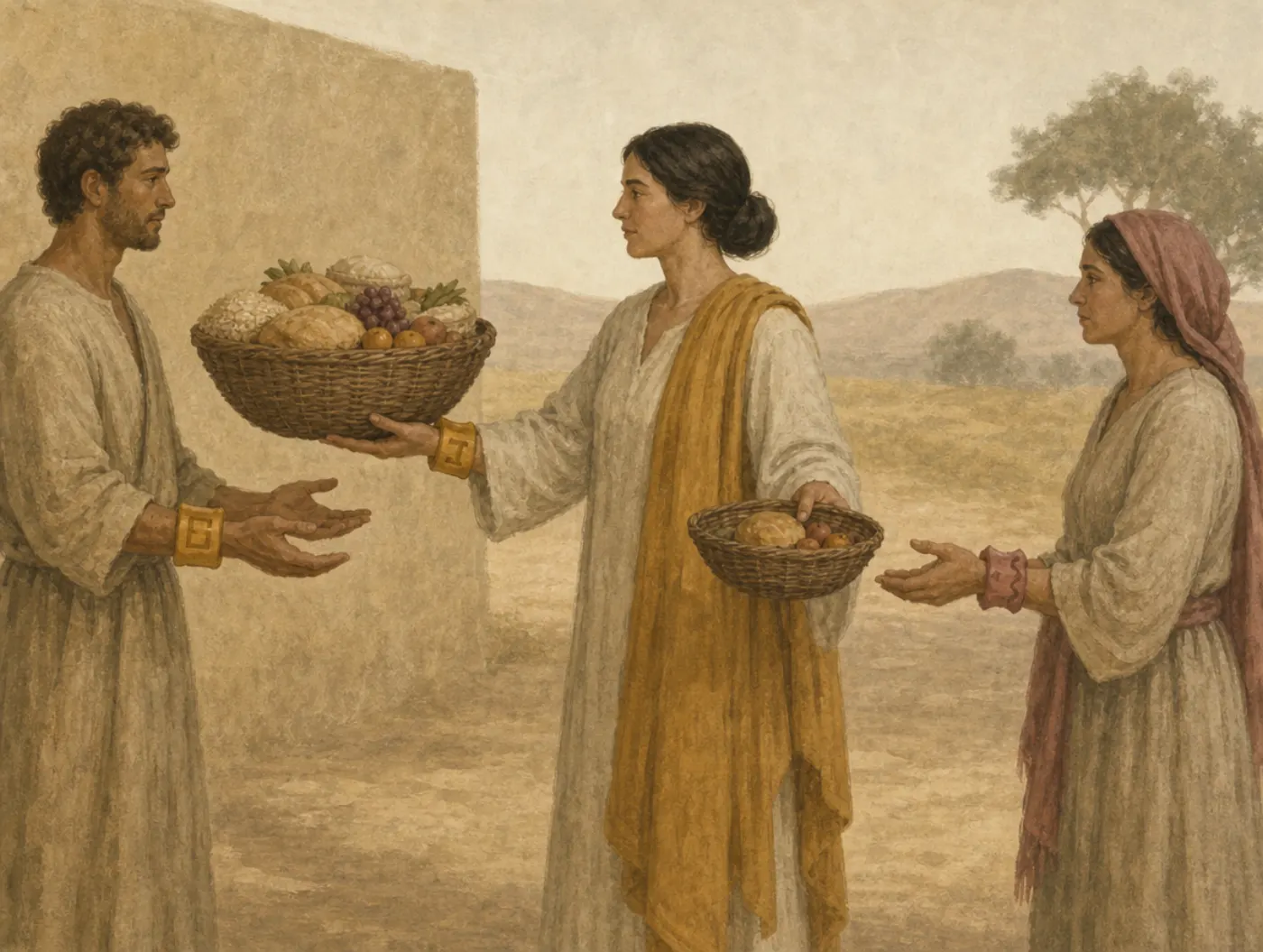
The pattern appears wherever a boundary is visible and something is being divided or judged. The rows are illustrations, not findings.
| Situation | What the bias does | What helps |
|---|---|---|
| A hiring manager interviews a candidate from their own university | Shared membership reads as competence and fit | Structured interviews scored on fixed criteria before the background is discussed |
| Fans of both teams watch the same contested call | Each side sees the referee as biased against them | Review the footage with the team names covered, or ask a neutral viewer |
| A teacher grades essays from a class they coach | Students known to the teacher receive the benefit of the doubt | Blind grading, with names removed until the marks are set |
| A manager allocates a bonus pool across two departments | The manager's former department receives the larger share for the same results | Fix the allocation formula before the results are in |
| A neighborhood group decides who may use a shared space | Longtime residents are trusted; newcomers are asked for guarantees | Write the rule once and apply it to everyone, including the people who wrote it |
How to counter it
In-group favoritism is fast and does not feel like favoritism from the inside, so the counters are procedures that remove the group label from the decision or widen the group.
- Blind the decision where you can. Names, schools and team colors off the page until the judgment is made. Blind review and blind grading exist because this bias is reliable.
- Fix the rule before you know the groups. An allocation formula, a scoring rubric or a selection criterion written in advance cannot be bent toward the in-group after the fact.
- Ask the swap question. Would you make the same call if the two people exchanged groups? If the answer changes, the group is doing the deciding.
- Notice the matrix in front of you. Many real decisions are the first kind of choice in the demo: a step that gives everyone more is available, and the only reason not to take it is that the other group would gain faster.
- Widen the circle on purpose. A shared goal that puts both groups in one larger category reduces the pull; the boundary that matters is the one that is salient at the moment of the decision.
What it is not
In-group favoritism is a bias in how groups are treated, and it is worth separating from biases in what groups are believed to be like.
- It is not out-group homogeneity bias, the belief that members of another group are more alike than members of your own. That is a judgment about variety; favoritism is a judgment about worth and a decision about rewards, and Park and Rothbart found the homogeneity effect without any sign that it depended on preferring one's own group.
- It is not stereotyping, which is the content of beliefs about a group. Minimal groups have no content to stereotype, and the favoritism appears anyway; stereotypes are one route to it in groups with a history, not its source.
- It is not prejudice, in the psychological sense of a negative attitude toward a group and its members. Brewer's distinction applies: minimal-group favoritism is mostly in-group love, and out-group hostility requires conditions, such as threat or competition, that the matrices do not supply.
Tests and tools that use this
Related biases
In-Group Favoritism FAQ
What is in-group favoritism?
It is the tendency to treat members of your own group better than members of other groups, in judgments, in trust and in the division of rewards, even when the group boundary is arbitrary. Tajfel and colleagues showed in 1971 that boys assigned to groups on a pretext gave more points to their own group's members in a large majority of intergroup choices and chose to widen the gap between the groups even when it cost their own group points.
What is the minimal group paradigm?
It is the experimental method Tajfel and colleagues introduced in 1971 for studying group behavior with the usual causes removed. People are divided into groups on a trivial or random basis, such as a stated preference between paintings by Klee and Kandinsky, they never meet the other members, their own rewards are unaffected, and they divide points between anonymous people known only by group. Favoritism toward the in-group appears anyway, which shows that categorization alone can produce it.
Does in-group favoritism mean people dislike outsiders?
Usually not. Marilynn Brewer argued in 1999 that the bias is mostly in-group love rather than out-group hate: people extend trust and generosity preferentially to their own, and outsiders lose by omission. In minimal groups there is nothing to dislike about the other side, and the favoritism appears regardless. Active hostility toward an out-group needs more, typically a sense of threat or competition, and it is a separate finding from the one the matrices measure.
How does the demo on this page work?
Every visitor is placed in the Klee group by a label, then divides points in three choices modeled on Tajfel's matrices. In the first, moving right gives both people more but the Kandinsky member gains faster; in the second the total is fixed. An option that puts the Klee member ahead at a cost to someone, in either scored choice, counts as favoritism; any other option, the even split included, counts as resisting. The third choice, between two Kandinsky members, is not scored.
Why did the boys in Tajfel's study give their own group fewer points?
Because the gap mattered more than the total. In the second 1971 experiment the matrices were built so that getting the most for one's own group, getting the most for everyone, and making the largest difference between the groups pointed in different directions. Maximum difference had the clearest effect: boys accepted fewer points for their own group's member in order to leave the other group's member with fewer still. Social identity theory reads this as the group comparison that the choice was really about.
How can I reduce in-group favoritism in my own decisions?
Remove the group label from the decision where possible, by blind review or blind grading, and fix the rule or formula before you know which groups are involved. Ask whether you would make the same call if the two people swapped groups. Notice when an option that gives everyone more is available and the only reason to refuse it is that the other group would gain faster. Where you can, put both groups inside a larger shared goal.

References
- Tajfel, H., Billig, M. G., Bundy, R. P., & Flament, C. (1971). Social categorization and intergroup behaviour. European Journal of Social Psychology, 1(2), 149-178. doi.org
- Tajfel, H. (1970). Experiments in intergroup discrimination. Scientific American, 223(5), 96-102. doi.org
- Brewer, M. B. (1999). The psychology of prejudice: Ingroup love and outgroup hate? Journal of Social Issues, 55(3), 429-444. doi.org
- Balliet, D., Wu, J., & De Dreu, C. K. W. (2014). Ingroup favoritism in cooperation: A meta-analysis. Psychological Bulletin, 140(6), 1556-1581. doi.org
- Park, B., & Rothbart, M. (1982). Perception of out-group homogeneity and levels of social categorization: Memory for the subordinate attributes of in-group and out-group members. Journal of Personality and Social Psychology, 42(6), 1051-1068. doi.org
Cite this source
Psychology.com. (2026, October 23). In-Group Favoritism. Psychology.com. https://psychology.com/biases/in-group-favoritism