In short
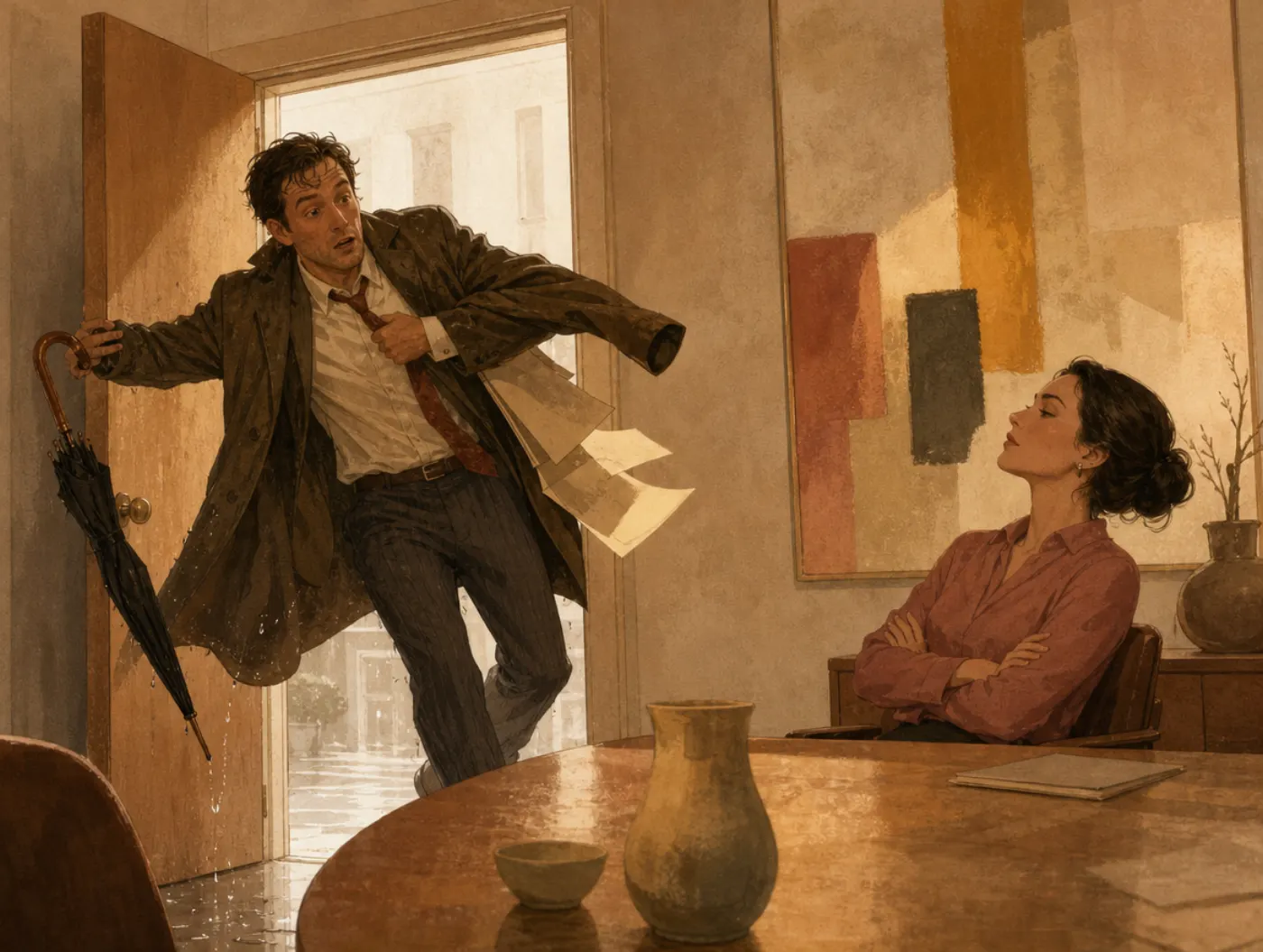
The actor-observer bias is the tendency to explain your own behavior by the situation you were in, the deadline, the offer, the traffic, while explaining other people's behavior by the kind of people they are. It shows up in how you account for your own lateness and a colleague's, in the reasons you give for your career and your friend's, and in arguments where each side sees itself responding to circumstances and the other side acting out of character.
How the actor-observer bias works
Jones and Nisbett proposed the asymmetry in 1971 and gave it two sources. The first is information. You know your own history: the jobs you considered, the mood you were in, the reasons the obvious choice was closed. For a friend you have a few scenes and a general impression, and when the situation is thin the person fills the gap. The second source is perspective. When you act, your attention is on the task and the room; the situation is literally what you see. When you watch someone else act, the person is in the foreground and the situation is the backdrop, and the foreground tends to be read as the cause.
Both sources predict the 1973 pattern: a student gives more reasons about the subject for his own choice of major than for his friend's, while reasons about the chooser stay about the same. Storms showed in the same year that the perspective part can be reversed mechanically: actors shown a videotape of themselves from the observer's angle shifted their explanations toward their own dispositions, and observers who saw the scene from the actor's angle shifted toward the situation. Where the camera points is a large part of what gets blamed.
The textbook version of the bias is stronger than the evidence. Malle's 2006 meta-analysis gathered 173 published tests of the classic asymmetry and found average effect sizes between d = -0.016 and d = 0.095, close to zero. The asymmetry did appear under particular conditions: an actor portrayed as highly idiosyncratic, hypothetical events, intimates explaining each other, and free-response explanations coded as they were in 1973. Its strongest moderator was valence. For negative events the classic pattern held; for positive events it reversed, with people claiming their own successes and crediting others' to circumstances. Averaged across good and bad events, the asymmetry disappeared.
That result changes what the bias is: not a general law that actors see situations and observers see traits, but a pattern that shows up most clearly when the behavior being explained is unflattering, where it overlaps with self-serving explanation. The demo on this page uses a positive or neutral event, a career, the kind of case where the 2006 analysis found the classic pattern weak or reversed, so its live split is a test of that as much as of the 1973 finding.
The original study
Edward Jones and Richard Nisbett set out the hypothesis in a 1971 essay, "The actor and the observer: Divergent perceptions of the causes of behavior," published as a General Learning Press monograph. The first experimental tests came two years later, from Nisbett, Craig Caputo, Patricia Legant and Jeanne Marecek, in a 1973 Journal of Personality and Social Psychology paper reporting three studies.
In the first, 33 pairs of female students at Yale took part in a session in which one, the actor, was asked to volunteer time as a weekend hostess for a fundraising event while the other watched. Observers who saw the actor agree expected her to volunteer for an unrelated cause later more than the actors themselves did, treating one act of compliance as a trait.
The second study is the one the demo reproduces. Male Yale undergraduates wrote short paragraphs explaining why they liked the woman they had dated most in the past year and why they had chosen their major, then wrote the same two paragraphs about their best friend. Each reason was coded as an entity reason, a feature of the woman or the subject, or a dispositional reason, a feature of the chooser. The 23 students gave 1.52 entity reasons on average for their own choice of major and 0.43 for their friend's, while dispositional reasons were about equally common in both, 1.83 against 1.70. The difference was relative rather than a majority either way: even for their own major the students gave slightly more dispositional than entity reasons. A follow-up ruled out a quirk of writing by having fresh participants rate ready-made sentences, with the same result.
Read the diagram and evidence as text
Matched chooser silhouettes retain identical person boundaries. Subject books send emphasized arrows into the self explanation and quiet arrows into the friend explanation. Mean subject reasons are labels: 1.52 for self and 0.43 for friend. Trait reasons were about equally common. Icons and emphasis are illustrative, not counts.
Why did you pick your major? Why did your friend?
Mean reasons per student, shown as labels; reasons about the chooser were about equally common for both
Same behavior to explain: why a major was chosen
Explaining your own choice: 1.52 reasons about the subject itself
Explaining your best friend's choice: 0.43 reasons about the subject itself
| Condition | Value and unit | Evidence quote |
|---|---|---|
| Own choice of major, reasons about the subject | 1.52 reasons per student | they gave an average of 1.52 reasons about the subject itself, which the authors called entity reasons, for their own choice against 0.43 for their friend's |
| Best friend's choice of major, reasons about the subject | 0.43 reasons per student | they gave an average of 1.52 reasons about the subject itself, which the authors called entity reasons, for their own choice against 0.43 for their friend's |
In the third study, students filled in a trait questionnaire for themselves, their best friend, their father, an acquaintance and the television newscaster Walter Cronkite, with the option of answering "depends on the situation." They chose that option most often for themselves and ascribed the fewest fixed traits to themselves and the most to Cronkite. The authors were careful to say that the evidence did not establish the hypothesis in general, a caution that Malle's 2006 meta-analysis bore out.
Everyday examples
The rows below are illustrations, not findings from the studies cited on this page.
| Situation | What the bias does | What helps |
|---|---|---|
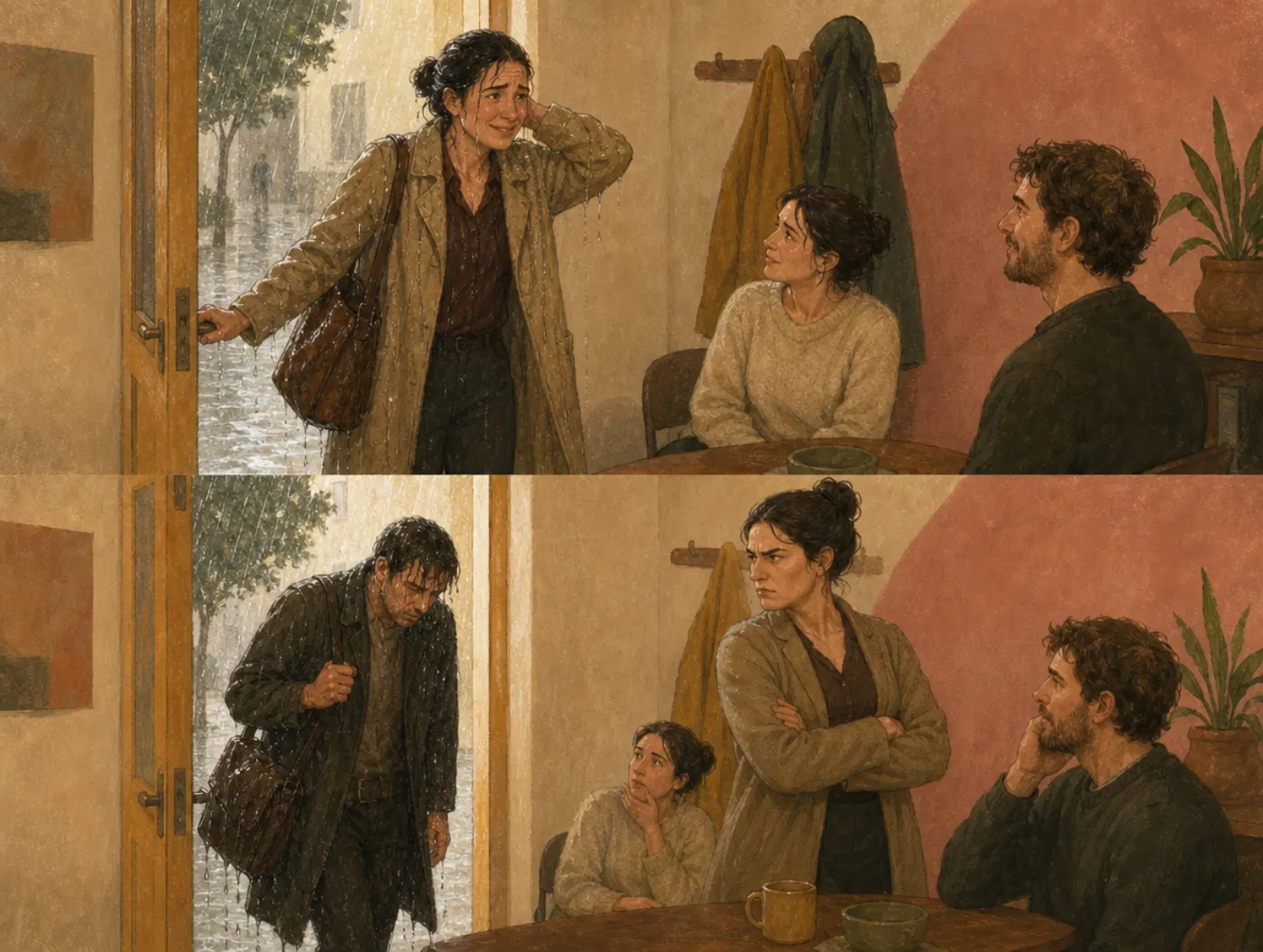
| You are late to a meeting; a colleague is late to the next one | Your lateness was the traffic; theirs is disorganization | Ask what the traffic was like for them; your excuse is usually available to them too |
| A driver cuts you off; you cut someone off | They are reckless; you had to make the exit | Notice that the other driver has an exit to make too |
| A friend's career looks like destiny while yours looks like luck | Their choices express who they are; yours were the openings that were there | Write down the openings in their story and the choices in yours |
| A partner forgets an errand after a hard week; so do you | Their lapse shows carelessness; yours shows how hard the week was | Use the explanation you would accept for yourself as the first hypothesis for them |
| Two sides in a dispute | Each sees itself reacting to provocation and the other acting from hostility | Have each side state the situation the other was in before stating what the other is like |
How to counter it
The bias runs on what you can see and what you know, so the counters add information and change the angle.
- Ask the situational question first. Before concluding that someone is rude or careless, ask what was happening around them, and answer as fully as you would for yourself.
- Borrow your own excuse. If you would explain the act by circumstance had you done it, try that explanation for the other person before reaching for a trait.
- Change the camera angle. Storms's 1973 videotape study showed that watching yourself from outside shifts your explanations toward disposition; imagining the scene from the other person's seat does the reverse.
- Check the valence. The asymmetry is strongest for failures and reverses for successes, so expect trait explanations to come too easily for others' bad behavior and credit too easily for your own good behavior.
- Collect the history. For people you know only slightly, the situational record is thin. Asking about it is the cheapest correction.
- Hold the trait theory loosely. The students in 1973 answered "depends on the situation" most often about themselves and least about a newscaster they knew only from television. Everyone's behavior depends on it.
What it is not
The actor-observer bias compares two points of view on the same behavior. Its neighbors describe one point of view, or a different comparison.
- It is not the fundamental attribution error, which is the observer's half on its own: explaining other people's behavior by their character and underweighting their situation. The actor-observer bias is the gap between that and how the same people explain themselves.
- It is not the self-serving bias, which credits your successes to yourself and your failures to circumstances. The two overlap for failures and diverge for successes, which is why the pattern reverses for positive events.
- It is not trait ascription bias, the finding from the third 1973 study that people see their own behavior as more variable across situations than other people's. That concerns how many fixed traits are ascribed, not how a particular act is explained.
- It is not naive realism, the conviction that you see the world as it is and that others who disagree are biased or uninformed. Naive realism is about perception of facts; the actor-observer bias is about explanation of behavior.
Tests and tools that use this
Related biases
Actor-Observer Bias FAQ
What is the actor-observer bias?
It is the tendency to explain your own behavior by the situation and other people's by their personal characteristics. Jones and Nisbett proposed it in 1971, and Nisbett and colleagues found in 1973 that students gave 1.52 reasons about the subject itself for their own choice of major against 0.43 for their best friend's, with reasons about the person about equally common in both. A 2006 meta-analysis of 173 studies found the general asymmetry close to zero, holding mainly for negative events and reversing for positive ones.
What is the difference between the actor-observer bias and the fundamental attribution error?
The fundamental attribution error is about observers only: the tendency to explain another person's behavior by their character while underweighting the situation. The actor-observer bias is a comparison, the difference between how people explain others and how they explain themselves. You can study the first without ever asking actors about themselves. The second requires both views, and when both are measured the gap turns out to be small and dependent on whether the behavior was good or bad.
How does the demo on this page work?
When the page loads it assigns you one of two versions of the same question, about your own choice of field or about a close friend's. You pick whether the field or the person was the main reason, and the result screen shows the other version in full. Once each version has 50 or more answers the page shows the split for both. One answer from one person cannot show an asymmetry; the comparison is between the two groups of visitors.
Is the actor-observer bias real?
As a general law, no; as a conditional pattern, yes. Malle's 2006 meta-analysis of 173 published studies found average effect sizes from d = -0.016 to d = 0.095, close to zero. The classic asymmetry appeared for negative events, in intimate relationships, when actors were portrayed as unusual, when events were hypothetical, and when explanations were written freely and coded, as in the 1973 study. For positive events the pattern reversed. The honest summary is that the direction of explanation depends on what is being explained.
Why do people explain their own behavior differently from others'?
Jones and Nisbett gave two reasons. Actors know their own history and the pressures they faced, while observers see a few scenes and fill the gaps with character. And attention points outward: the actor is looking at the situation, the observer is looking at the actor, and whatever is in view tends to be named as the cause. Storms showed in 1973 that turning a camera around, so that actors saw themselves from outside, moved their explanations toward disposition, which supports the perspective account.
How can I avoid the actor-observer bias?
Ask about the situation before deciding about the person, and give the other person the explanation you would give yourself for the same act. Imagining the scene from their seat, as Storms's videotape study suggests, shifts the explanation toward circumstances. Be most careful when the behavior is bad, since that is where the trait explanation for others comes easiest and the situational excuse for yourself is most tempting. For people you barely know, ask for the history you lack rather than inferring a character from one act.

References
- Nisbett, R. E., Caputo, C., Legant, P., & Marecek, J. (1973). Behavior as seen by the actor and as seen by the observer. Journal of Personality and Social Psychology, 27(2), 154-164. doi.org
- Jones, E. E., & Nisbett, R. E. (1971). The actor and the observer: Divergent perceptions of the causes of behavior. General Learning Press. openlibrary.org
- Malle, B. F. (2006). The actor-observer asymmetry in attribution: A (surprising) meta-analysis. Psychological Bulletin, 132(6), 895-919. doi.org
- Storms, M. D. (1973). Videotape and the attribution process: Reversing actors' and observers' points of view. Journal of Personality and Social Psychology, 27(2), 165-175. doi.org
Cite this source
Psychology.com. (2026, October 21). Actor-Observer Bias. Psychology.com. https://psychology.com/biases/actor-observer-bias