 By
By Reviewed by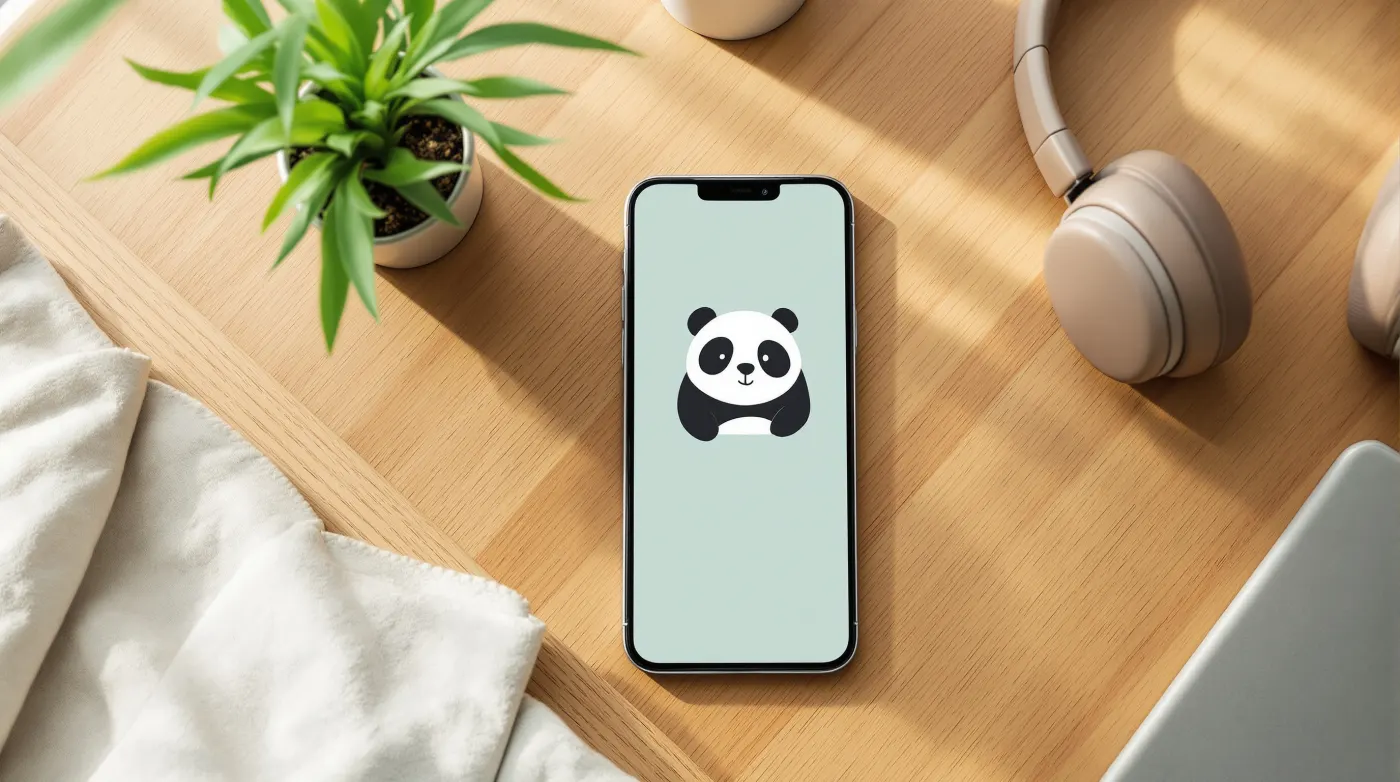
In short
The phrase panda AI therapist points to two unrelated products. One possibility is Earkick, the mood tracking app whose customizable cartoon panda acts as your chat companion. The other is Panda, a South African mental health app founded in 2021 that rebranded to October Health and now sells to employers, pairing live group audio sessions and human counselors with an AI companion named Luna. Their AI companions provide self-help support. Human services within a platform need to be evaluated separately by the professional's qualifications and the service offered; urgent help belongs with a crisis service.
Which panda are you looking for?
The search term can lead to different products, so check the developer name before downloading. If you saw a cartoon panda in a mental health app on TikTok or in an app store screenshot, you are possibly looking at Earkick. Earkick is a mood and anxiety tracking app whose signature feature is a customizable panda character you chat with, and press coverage has described people talking to that panda as if it were a therapist. We cover it in depth in our full Earkick review.
The second product is literally named Panda. It launched in South Africa in late 2021 as a consumer mental health app, built by Alon Lits, a former general manager of Uber in South Africa, and Allan Sweidan, a clinical psychologist who co-founded the Akeso group of psychiatric hospitals. That company has since rebranded to October Health and now focuses on workplace mental health, selling to employers rather than directly to individuals. Its Android app still carries the joinpanda package name, and business directories still list the company as October Health, previously Panda.
October Health is the rebranded Panda platform; Earkick has its own review. A panda avatar identifies a chat interface, not a clinical credential. Within a broader platform, separate automated conversation from any service delivered by a human professional, and check that person's role, qualifications, and availability before relying on the service for care.
If you are comparing apps because work feels overwhelming, the stress level test can help you reflect on demands without creating a diagnosis. A mood tracker offers a way to organize observations before speaking with a professional. The AI therapy guide explains how consumer support features differ from professional services.
When I dug into the panda search, I expected one app and found two. Testing October's app, the live Forest sessions impressed me more than the AI did. Hearing other people name the same struggle does something a chatbot cannot.
From Panda to October Health: what the company is
Panda was covered by South African technology publications in 2021, including IT-Online in October and Disrupt Africa in December. Those launch reports describe an access problem: people may struggle to find or afford mental health support and may hesitate to seek it because of stigma. The Disrupt Africa piece cited a figure often used in that access argument, that more than 75 percent of people with a mental health condition have no access to care at all, and reported that Panda was self-funded at launch. Founders Allan Sweidan and Alon Lits positioned the app as a way to bring peer support, professional contact, and mental health education together with options for anonymous participation.
The original app centered on a few distinctive pieces. The Bamboo Forest offered live, audio-only group sessions where users could join anonymously and listen or talk with peers dealing with similar struggles, with sessions led by experts. Alongside it sat one-on-one chat with registered counselors, screening assessments, and a library of life skills content.
October Health's app listing describes a performance psychology and employee well-being platform. The app, now listed as October Health in both major app stores, keeps the Forest live sessions and assessments, and adds Luna, an AI companion the company describes as a guide for everyday mental fitness, habits, and goals. The shift matters if you are an individual searcher: this is now primarily a workplace benefit product, and you should check which features your employer or organization actually covers.
What the app actually offers
The October Health app organizes its experience around a handful of features. The Forest runs live group sessions through the day on stress, burnout, focus, sleep, and related topics, which keeps the original Panda idea of showing up alongside other people instead of working through content alone. Assessments give you a structured read on where you stand and let you track changes over time. A content and training library covers skills practice, coaching, and sleep audio.
Luna is the AI layer. The company frames Luna as an intelligent companion that helps you build habits, check in on your wellbeing, and work toward goals. That framing is worth taking at face value: Luna is a coaching-style chatbot inside a broader platform, and the platform leans on humans, including registered counselors and live session hosts, for the heavier lifting. Compared with apps where the chatbot is the entire product, the AI here plays a supporting role.
That balance is arguably the most interesting thing about the product. Reviews of standalone chatbots keep finding the same ceiling: an AI can reflect and prompt, but it cannot carry clinical responsibility. October Health's design routes people toward humans, whether that is a group session or a counselor chat, with the AI handling the everyday layer in between. If you are comparing approaches across the market, our roundup of AI therapy apps shows how unusual that mix still is.
Evidence and limits
Be clear about what is unproven. The sources cited here do not establish peer-reviewed clinical effectiveness for Panda, October Health, or Luna, and the company's marketing claims about improved performance and reduced turnover are vendor claims, not independent research. The broader evidence base for app-based mental health support is mixed, and the strongest results tend to come from structured programs with human involvement, which still does not establish an outcome for this particular app.
The limits are the standard ones. Luna is a chatbot, and no chatbot can diagnose a condition, manage treatment, or respond safely to every crisis. Group audio sessions can be supportive, and hearing peers describe similar struggles may help someone feel less alone, but a Forest session is a facilitated conversation, and it is not group therapy in the clinical sense. For counselor chat, verify the professional's registration, the scope of the service, and what happens if ongoing treatment is needed. Its suitability depends on those details and your needs.
If you are in crisis or thinking about suicide, call or text 988 (US Suicide & Crisis Lifeline), available 24/7. In South Africa, the South African Depression and Anxiety Group provides suicide crisis support; check its current local contact information. No app, panda-themed or otherwise, is a crisis service.
Privacy and data
Panda made anonymity a founding feature, with anonymous signups and anonymized care designed to lower the stigma barrier, and that heritage is a point in its favor. The workplace pivot adds a wrinkle worth checking, though. When a mental health app arrives through your employer, you should understand exactly what your employer can see. Reputable platforms in this category report only aggregated, de-identified trends to companies, and October Health's marketing describes organizational insights at the aggregate level.
Before using it through work, read the current privacy policy and confirm three things: what individual data is collected, what your employer receives, and how long conversation data with Luna is retained. Our guide to AI therapy privacy covers the questions worth asking of any app in this space. As with every AI tool, assume anything you type may be stored, and keep the details you would only share under clinical confidentiality for a licensed professional.
Pricing and availability
The US Apple App Store lists October Health as free to download. That listing does not establish which sessions, human services, or employer features are included for an individual account. Workplace access depends on the arrangement with an employer, insurer, or other organization. Ask the benefits administrator which services are covered, whether you owe anything, and what remains available if employment or coverage ends. Confirm individual eligibility before sharing sensitive information during signup.
Availability skews toward South Africa, where the product launched and where most of its reviews and coverage originate, though the company has stated ambitions to expand across Africa and beyond and maintains US app store listings. For individual searchers in the US, the practical takeaway is simple: if you wanted the panda character app, that is Earkick, and if you want structured self-help you can buy yourself, our guide to the most affordable AI therapy tools compares the options.
Verdict
As a workplace product, October Health is a credible offering with a design philosophy we like: humans at the center, AI at the edges, live peer sessions instead of content libraries alone, and founders with real clinical and operational backgrounds. If your employer offers it, check the Forest session schedule, human support options, and employer privacy terms before activating. As a consumer search result for panda AI therapist, though, it is probably a case of mistaken identity. The cartoon panda companion appears in Earkick, and the app once called Panda has grown up, changed its name, and gone to work. Whichever panda you meant, treat it as support alongside professional care, and talk to a licensed therapist when things are heavy.
Questions to ask before using a workplace account
Ask the benefits administrator which organization operates the account and which features are included. Establish whether a live session is peer support, coaching, psychoeducation, or a clinical appointment. If a clinician is involved, check registration in the relevant jurisdiction and whether the service can provide continuing care or only a referral.
Ask whether managers receive individual activity, assessment results, journal text, or only group-level reporting. Also ask what happens with small teams, where supposedly anonymous information may be easier to infer. An aggregate reporting claim does not explain who inside the service can access raw data or how long it is retained.
Try a general, non-identifying question before adding sensitive details. Check how to delete a conversation, request a data copy, and leave the service. Keep copies of useful personal notes outside an employer-linked account if you want to retain them after a job change, subject to the service's export options.
