In short
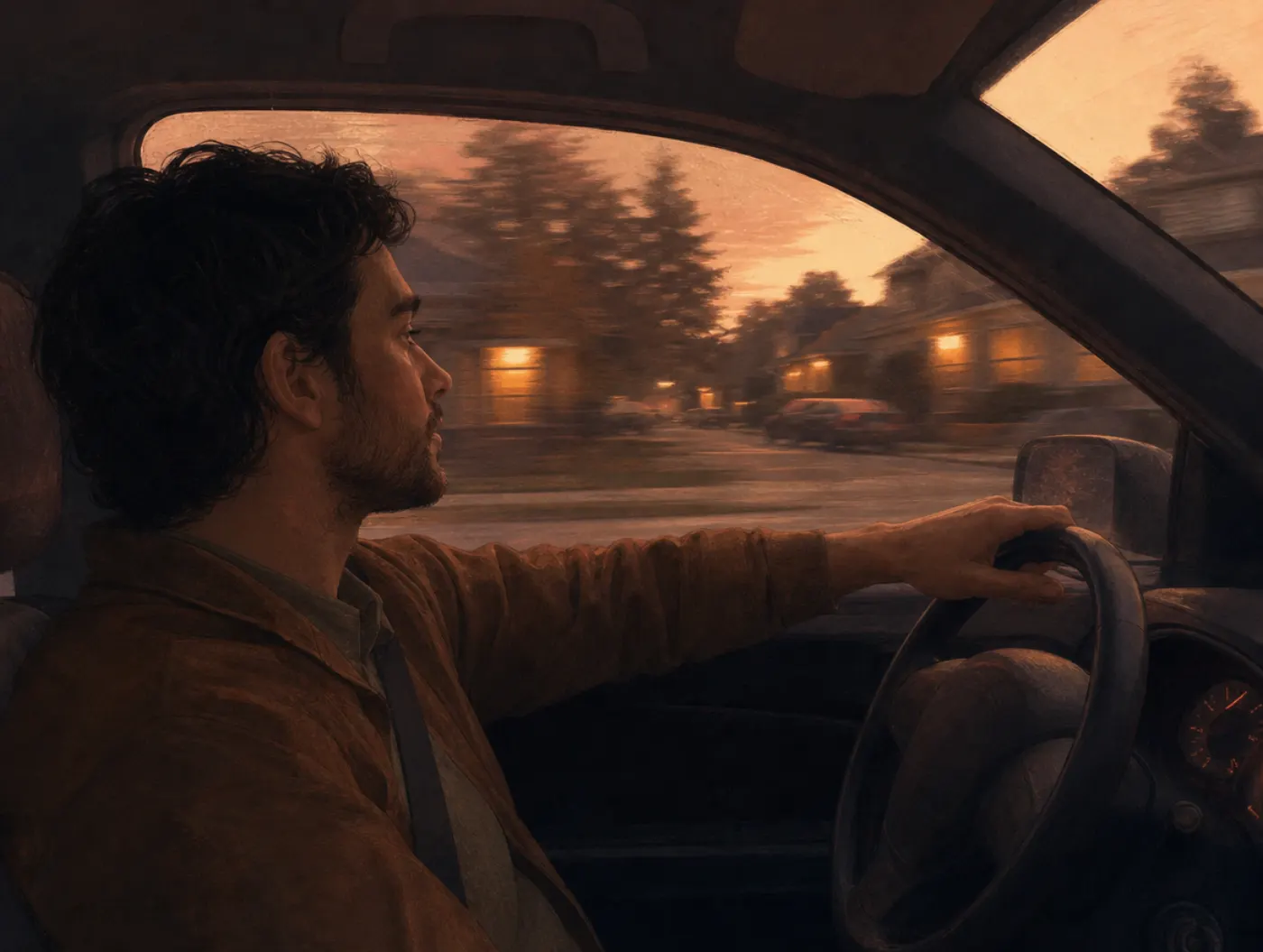
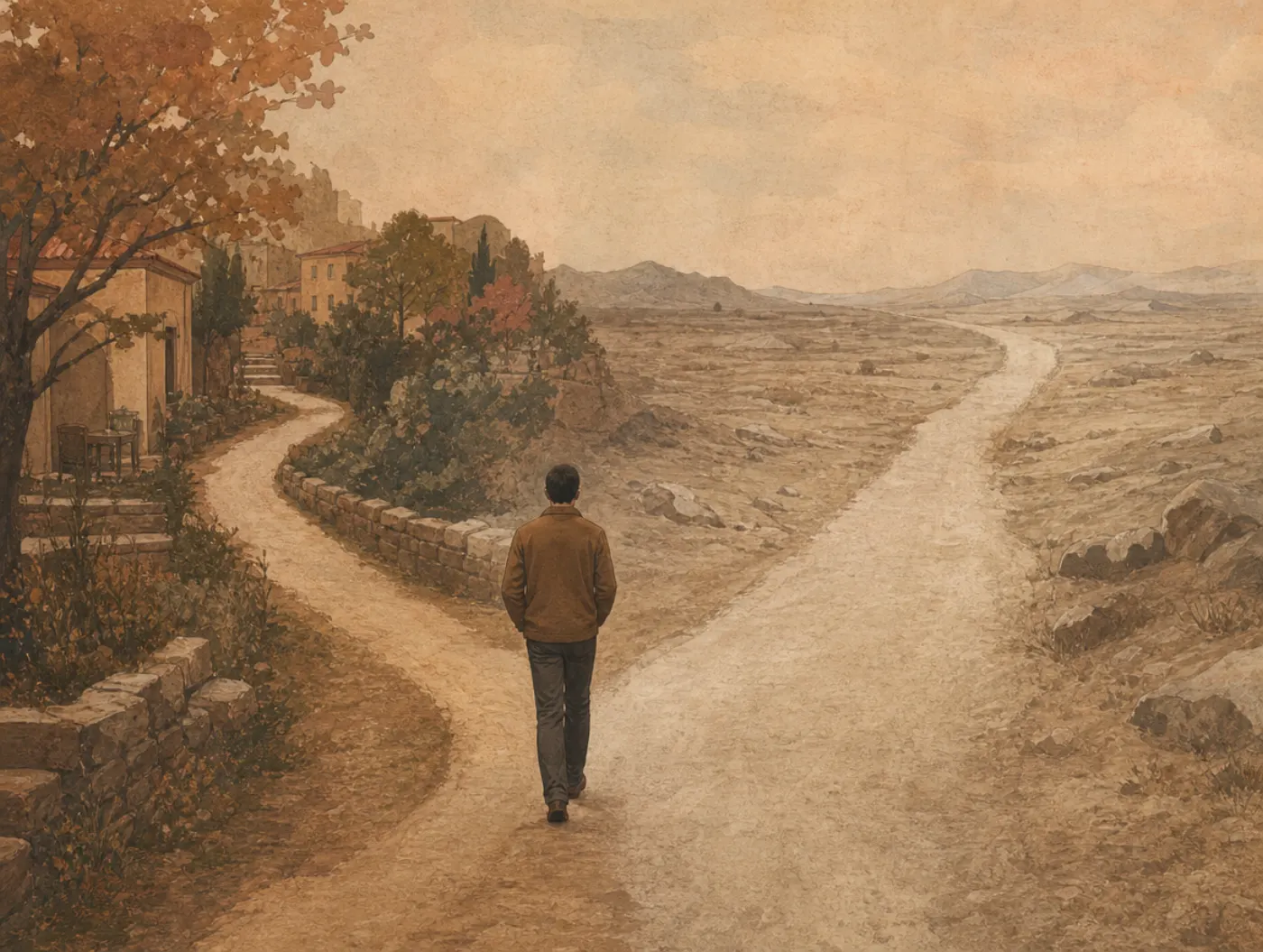
The well-traveled road effect is the tendency to judge a route you travel often as taking less time than an equally long route you rarely take, so the familiar trip is underestimated and the unfamiliar one overestimated. It is looked for in commuters' travel-time reports and in the way a regular drive feels shorter than the clock says, and it rests on a broader, better-tested finding: time spent on routine is remembered as shorter than the same time spent on something new.
How the well-traveled road effect works
The effect is a special case of how remembered duration is built. When you judge how long something took after the fact, you are not reading a clock that ran during the event; you are reconstructing the duration from what is stored about it. Block and Zakay's 1997 meta-analysis of duration judgments separated this retrospective case from the prospective one, in which a person knows in advance that time will have to be judged and attends to it as it passes. Retrospective judgments depend on memory, and in particular on how many distinct changes of context the interval left behind. An interval full of new events is remembered as long; an interval of sameness is remembered as short.
Routine produces sameness. Avni-Babad and Ritov tested this directly in 2003, establishing routine in the laboratory by repeating a sequence of markers, by holding a task constant instead of varying it, and by adding repetitive blocks, and in the field by asking vacationers about the parts of a holiday and kibbutz members about their regular and irregular work. In every case the time spent in routine was remembered as shorter than the same time spent in non-routine conditions. The one reversal is instructive: when participants were told in advance that they would judge the duration, so that the judgment became prospective, routine made the time seem longer. The well-traveled road is a routine, and in memory it shrinks.
A familiar route also offers fewer features to encode. Spatial memory research has long found that routes with more intersections or more remembered segments are judged longer, as in Sadalla and Staplin's 1980 experiments on traversed distance, and a route you no longer notice has, in effect, fewer segments. Parthasarathi, Levinson and Hochmair found in 2013 that commuters' perceived travel times varied systematically with the structure of the street network along their route, which says that what the route contains shapes the judgment, not only how long it took.
What the effect is not driven by is also known. Van de Ven, van Rijswijk and Roy found in 2011 that the return leg of a trip is judged shorter than the outward leg even when the return takes a different, equally long road, so the return trip effect is about violated expectations rather than familiarity with the particular route. Familiarity acts over repetitions, in memory. Direct studies that compare travel-time estimates for familiar and unfamiliar routes of equal length are scarce, and the effect's name comes from popular summaries rather than from a founding experiment, so the mechanism is better established than the specific claim about roads.
The original study
There is no single experiment behind the name. The two sources usually cited for it are Jackson and Jucker's 1982 study in Transportation Science and Lorraine Allan's 1979 review of time perception in Perception and Psychophysics, and neither tests the claim directly. Jackson and Jucker surveyed commuters with hypothetical choices and estimated how each person traded a longer average journey against a less variable one, which is a study of how travel time is valued, not of how it is estimated. Allan's review covers the psychophysics of judging short durations, not travel.
The study this page leans on instead is Dinah Avni-Babad and Ilana Ritov's "Routine and the perception of time," published in the Journal of Experimental Psychology: General in 2003. They tested the hypothesis that duration is remembered as shorter when the time was spent in a routine activity. Four experiments created routine in different ways: a repeated sequence of markers, variation or constancy of the task, and the number of repetitive blocks. Two field studies asked vacationers to compare the parts of a holiday and kibbutz members to judge the passage of time in their regular job and in work they did only occasionally. In the experiments and in the field, time spent in routine was remembered as shorter, and the trend reversed when participants had been warned in advance that they would be judging the duration, which turns the judgment from a remembered one into an experienced one.
Read the diagram and evidence as text
Matched brackets mark equal objective intervals filled with repeated or varied illustrative activities. Dashed proposed-memory routes lead to thought windows: routine detail is dashed, while varied detail stays distinct. Inward arrows around a symbolic clock under routine memory indicate shorter remembered duration relative to non-routine activity; arrow length is not an effect size and no duration ratio is drawn.
A routine interval shrinks in memory
Direction only, from four experiments and two field studies. A single return trip (36.9 against 44.3 minutes estimated) shrank for a different reason: expectation, not familiarity.
Same length of time; only what filled it changes
Spent on a routine activity: Afterward, remembered as shorter
Spent on something non-routine: Afterward, remembered as longer
| Condition | Value and unit | Evidence quote |
|---|---|---|
| Same stretch of time spent on a routine activity | remembered as shorter ordinal remembered duration | the same stretch of time was remembered as shorter when it had been spent on a routine activity than on a non-routine one |
| Same stretch of time spent on a non-routine activity | remembered as longer ordinal remembered duration | the same stretch of time was remembered as shorter when it had been spent on a routine activity than on a non-routine one |
| Estimated outward bicycle trip, van de Ven and colleagues 2011 | 44.3 minutes | riders estimated the outward trip at 44.3 minutes |
| Estimated return trip of the same length, same or different road | 36.9 minutes | the equally long return at 36.9 |
The best-controlled test of a related travel claim came from Niels van de Ven, Leon van Rijswijk and Michael Roy in 2011. A pretest found that 73 percent of people said the return trip usually feels shorter. In their bicycle experiment, riders estimated the outward trip at 44.3 minutes and the return at 36.9, and the gap appeared whether the return used the same road or a different one of the same length, so familiarity with the road was not what shrank it. The authors attributed the return trip effect to expectations: the outward trip felt longer than expected, and the return was judged against that. The two findings fit together. A route becomes shorter in memory as it becomes routine, and a single repetition is not yet routine.
Everyday examples
The rows below are illustrations of where a familiar route or routine is judged from memory, not findings from the studies cited on this page.
| Situation | What the bias does | What helps |
|---|---|---|
| Leaving for the daily commute at the last minute | The usual drive is remembered as 15 minutes when the clock says 20, so the day starts late | Time the trip for a week and plan from the measured figure |
| Telling a visitor how long the drive from the station takes | The host's estimate for a route they know by heart is too low for someone who will be reading signs | Add time for an unfamiliar driver, or send the navigation estimate |
| Scheduling back-to-back meetings in a building you know well | The walk between rooms is remembered as shorter than it is, and every meeting starts late | Schedule from a measured walking time |
| Estimating a new client's journey to your office | A route you have never taken is imagined in detail and overestimated | Use a map's estimate rather than a feeling |
| Judging how long a routine week at work took compared with a week of travel | The routine week shrinks in memory and the eventful week stretches | Trust the calendar over the feeling when comparing periods |
How to counter it
The remedy is to stop estimating familiar durations from memory, since memory is where the compression happens.
- Measure the routes you take most. A week of timings, or a navigation app's history, gives a figure that does not shrink with repetition.
- Plan departures from the measured figure, not from how long the trip feels. The gap between the two is largest for the trips you make most often.
- When you give someone else an estimate for a route you know well, assume they will experience it as a new route and add time.
- When you compare two periods of your life, a routine stretch and an eventful one, expect the routine one to feel shorter in memory and check the calendar before drawing conclusions about how time was spent.
- Treat the unfamiliar route's apparent length as a property of its novelty. It will feel long the first time and shorter the fifth, while the clock reads the same.
What it is not
The well-traveled road effect is about remembered duration and familiarity. Several neighbors concern estimates of time in other ways.
- It is not the planning fallacy, the general tendency to underestimate how long a task will take. A commuter who leaves late because the familiar drive feels short is making a planning error, but the planning fallacy also appears for tasks that are entirely new, where familiarity cannot be the cause.
- It is not duration neglect, where the length of an experience barely affects how good or bad it is judged to have been in retrospect. That concerns evaluation of an experience, not estimation of its length.
- It is not the telescoping effect, where past events are dated too recently or too remotely. Telescoping is an error about when something happened; this page is about how long it took.
Tests and tools that use this
Related biases
Well-Traveled Road Effect FAQ
What is the well-traveled road effect?
It is the tendency to judge a route you travel often as taking less time than an equally long route you rarely take: the familiar trip is underestimated and the unfamiliar one overestimated. It rests on a better-tested finding about remembered duration, shown by Avni-Babad and Ritov in 2003, that time spent on routine is remembered as shorter than the same time spent on something new. Direct studies of familiar and unfamiliar routes of equal length are scarce.
Why does a familiar route feel shorter?
Because remembered duration is reconstructed from what the interval left in memory, especially how many distinct changes it contained. A route driven for the hundredth time leaves few new traces, so in retrospect it seems short. Avni-Babad and Ritov found in 2003 that routine shortened remembered duration in four experiments and two field studies, and that the effect reversed when people knew in advance they would be judging the time, which is when a dull interval feels long.
Is this the same as the return trip effect?
No. The return trip effect is the feeling that the trip home is shorter than the trip out. Van de Ven, van Rijswijk and Roy found in 2011 that it appears even when the return takes a different road of the same length, so familiarity with the route is not its cause; violated expectations about the outward trip are. The well-traveled road effect concerns routes that have become routine over many repetitions, which is a matter of memory rather than of a single trip.
Does the well-traveled road effect have a founding study?
Not really. The sources usually cited for the name are Jackson and Jucker's 1982 commuter study, which measured how people trade average travel time against its variability, and Allan's 1979 review of time perception, which covers the psychophysics of judging short durations. Neither compares familiar with unfamiliar routes. The mechanism, routine compressing remembered duration, is well established; the specific claim about roads is better described as an application of it than as a separate finding.
How did the demo on this page decide my result?
It compared your two answers with each other. Giving the rarely traveled route more minutes than the familiar one is the direction the effect predicts; the reverse is the opposite; answers within two minutes count as the same. The page cannot know how long either route takes, so the 20-minute reference line, 10 miles at 30 mph, only anchors the chart. Your result infers nothing about your accuracy, and two routes of equal distance can genuinely take different times, so a gap between your answers may be real.
How can I estimate familiar journeys more accurately?
Measure them. A week of timings or a navigation app's trip history gives a figure that does not shrink with repetition, and planning departures from that figure removes the gap between the remembered drive and the clock. When giving an estimate to someone who does not know the route, add time, since they will experience it as new. And when an unfamiliar route feels long, expect that feeling to fade with repetition while the actual time stays the same.

References
- Avni-Babad, D., & Ritov, I. (2003). Routine and the perception of time. Journal of Experimental Psychology: General, 132(4), 543-550. doi.org
- van de Ven, N., van Rijswijk, L., & Roy, M. M. (2011). The return trip effect: Why the return trip often seems to take less time. Psychonomic Bulletin & Review, 18(5), 827-832. doi.org
- Block, R. A., & Zakay, D. (1997). Prospective and retrospective duration judgments: A meta-analytic review. Psychonomic Bulletin & Review, 4(2), 184-197. doi.org
- Jackson, W. B., & Jucker, J. V. (1982). An empirical study of travel time variability and travel choice behavior. Transportation Science, 16(4), 460-475. doi.org
- Allan, L. G. (1979). The perception of time. Perception & Psychophysics, 26(5), 340-354. doi.org
- Sadalla, E. K., & Staplin, L. J. (1980). The perception of traversed distance: Intersections. Environment and Behavior, 12(2), 167-182. doi.org
- Parthasarathi, P., Levinson, D., & Hochmair, H. (2013). Network structure and travel time perception. PLoS ONE, 8(10), e77718. doi.org
Cite this source
Psychology.com. (2026, October 24). Well-Traveled Road Effect. Psychology.com. https://psychology.com/biases/well-traveled-road-effect