In short
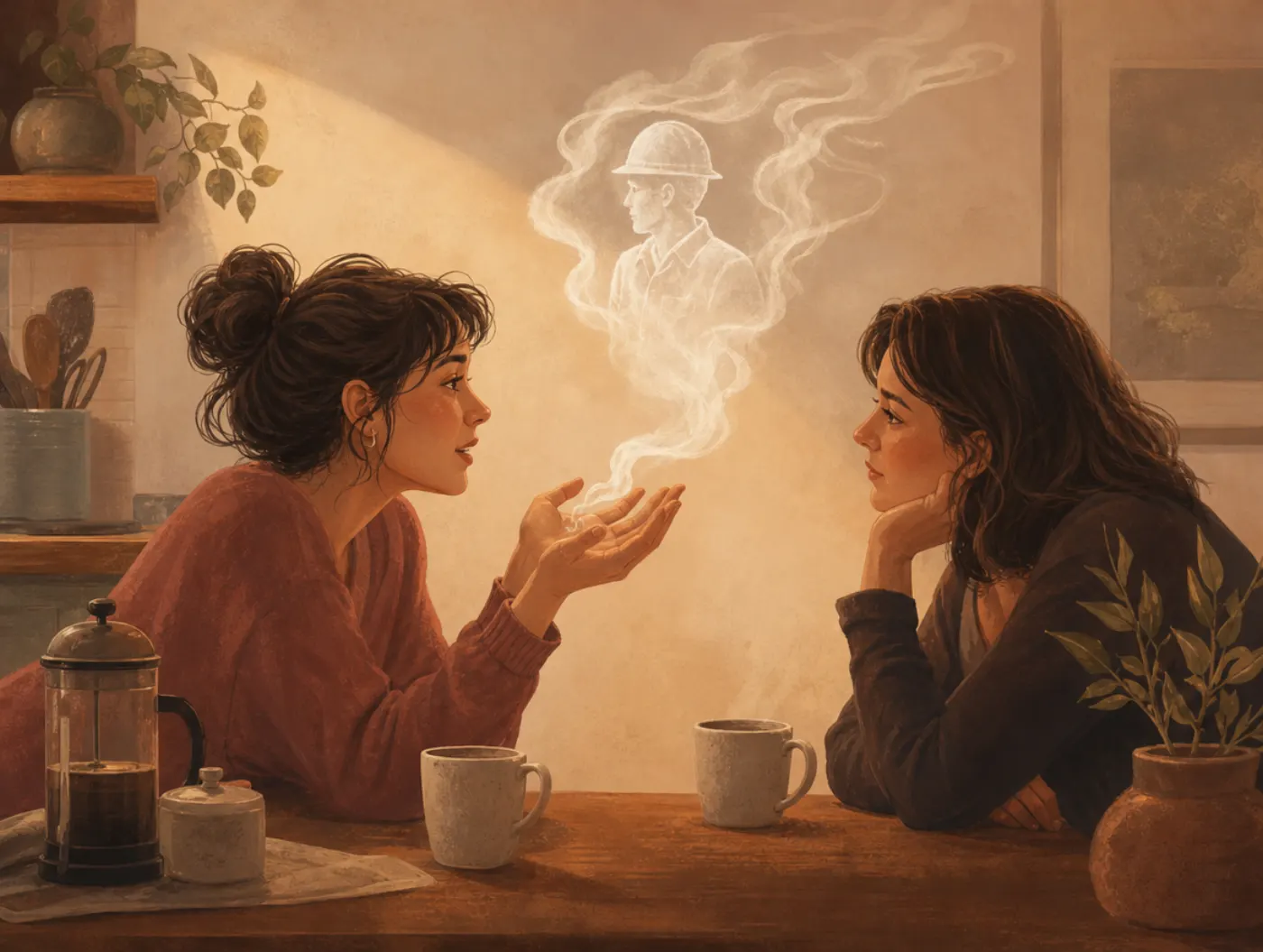
Stereotypical bias is the tendency for memory to favor details that fit a stereotype of a person or group and to lose, alter or reassign the details that do not, so that what is recalled later sits closer to the stereotype than what was actually seen or heard. This page is about that memory distortion in particular; the related entries on stereotyping and implicit stereotypes cover the judgment made about a person in the moment and the learned pairings a culture repeats, and this one covers what happens to the record afterward.
How stereotypical bias works
A stereotype is a ready-made description of what members of a group are like, and once attached to a person it does two jobs in memory. At encoding it decides what gets attention: a detail that fits goes in easily, as another instance of what was expected, while a detail that does not fit either gets extra attention because it is surprising or gets skimmed past. At retrieval the stereotype fills gaps. When a detail cannot be recalled, the mind supplies the likeliest one, and the likeliest one is the one that fits. Frederic Bartlett described this in 1932 as remembering by schema: people reproduce a story not as it was told but as it ought to have gone.
The gap-filling is what makes the bias hard to see from the inside. A reconstructed detail does not come labeled as a guess. It arrives with the same feeling of memory as a detail that was actually stored, so the person remembering a librarian who drank wine, when she drank beer, is not aware of having corrected anything. Allport and Postman called the process assimilation: items in a retold story are leveled or sharpened until they fit the expectations of the teller, and the result is more coherent than the original, and less true.
The evidence is less one-sided than the popular version suggests. Stangor and McMillan reviewed 54 experiments in 1992 and found that people often remember expectancy-inconsistent information better than consistent information, especially when they have time to process it and a strong expectation to violate, because the inconsistent item draws attention and gets thought about. Where the stereotype wins is in recognition judgments and guesses: when people decide whether they saw something, or reconstruct what they cannot quite recall, their errors run toward the consistent version. The bias lives mostly in reconstruction and in false alarms rather than in a simple failure to store what did not fit.
That is also why it grows with distance from the event. A detail recalled a minute later can be checked against a trace; a detail recalled a week later, or passed through three tellers, is mostly reconstruction. The subway razor did not move in the first description, given while looking at the picture. It moved down the chain, among people who had only heard about it.
The original study
Gordon Allport and Leo Postman reported their rumor experiments to the New York Academy of Sciences in 1945 and published the full program as The Psychology of Rumor in 1947. The method was a chain. Six or seven people left the room; a picture with many details was projected, and a member of the audience described it, while looking at it, to the first person called back in, who could not see the screen. That person repeated the description from memory to the second, the second to the third, and so on, with every teller instructed to report as exactly as possible what they had heard.
One of the pictures showed a subway car. A white man holding a straight razor is arguing with a Black man; other passengers, including a woman with a baby and a rabbi, sit nearby. Allport and Postman reported that in over half of the chains that used this picture, at some stage in the chain the Black man rather than the white man was said to be holding the razor. They described the shift as assimilation to the expectations of the mostly white tellers, who filled a gap in a half-remembered story with the detail their stereotype supplied.
Read the diagram and evidence as text
The same two neutral figures retain their positions and clothing cues across a picture account and a later report. A distinctive razor moves from the white man’s hand to the Black man’s hand. Race is identified with labels, not caricature or skin-tone coding. The drawing represents a change in the reported owner, not a change in the original scene or a measured proportion.
A subway argument, retold down a chain
Retold from memory; order of events only, no counts drawn
White man: arguing, holding the razor: White man: arguing, no razor
Black man: arguing, empty-handed: Black man: said to be holding the razor
| Condition | Value and unit | Evidence quote |
|---|---|---|
| The drawing as shown to the first describer | holding the razor report of the picture | a white man holds a razor while arguing with a Black man |
| Later tellers, over half of the chains that used the picture | said to be holding the razor report of the picture | the razor was reported in the Black man's hand at some point in the chain in over half of the chains that used that picture |
The finding has been misreported often enough that the misreporting has its own paper. Treadway and McCloskey documented in 1987 that the eyewitness testimony literature had turned it into a study in which people who saw the picture misperceived the razor, with the Black man holding it in most or all cases. Neither is what happened: only the first describer saw the picture, and described it while looking at it; the razor moved among later tellers who had never seen it, and in over half of the chains rather than all.
Later experiments measured the same tendency in single viewers rather than chains. In Claudia Cohen's 1981 study, 96 participants watched a videotape of a woman having dinner with her husband after being told she was a librarian or a waitress. The tape contained details that fit each label: glasses and classical music for the librarian, beer and pop music for the waitress. On a later recognition test participants were more accurate for details that fit the label they had been given than for details that did not, and the difference held at every delay tested.
Everyday examples
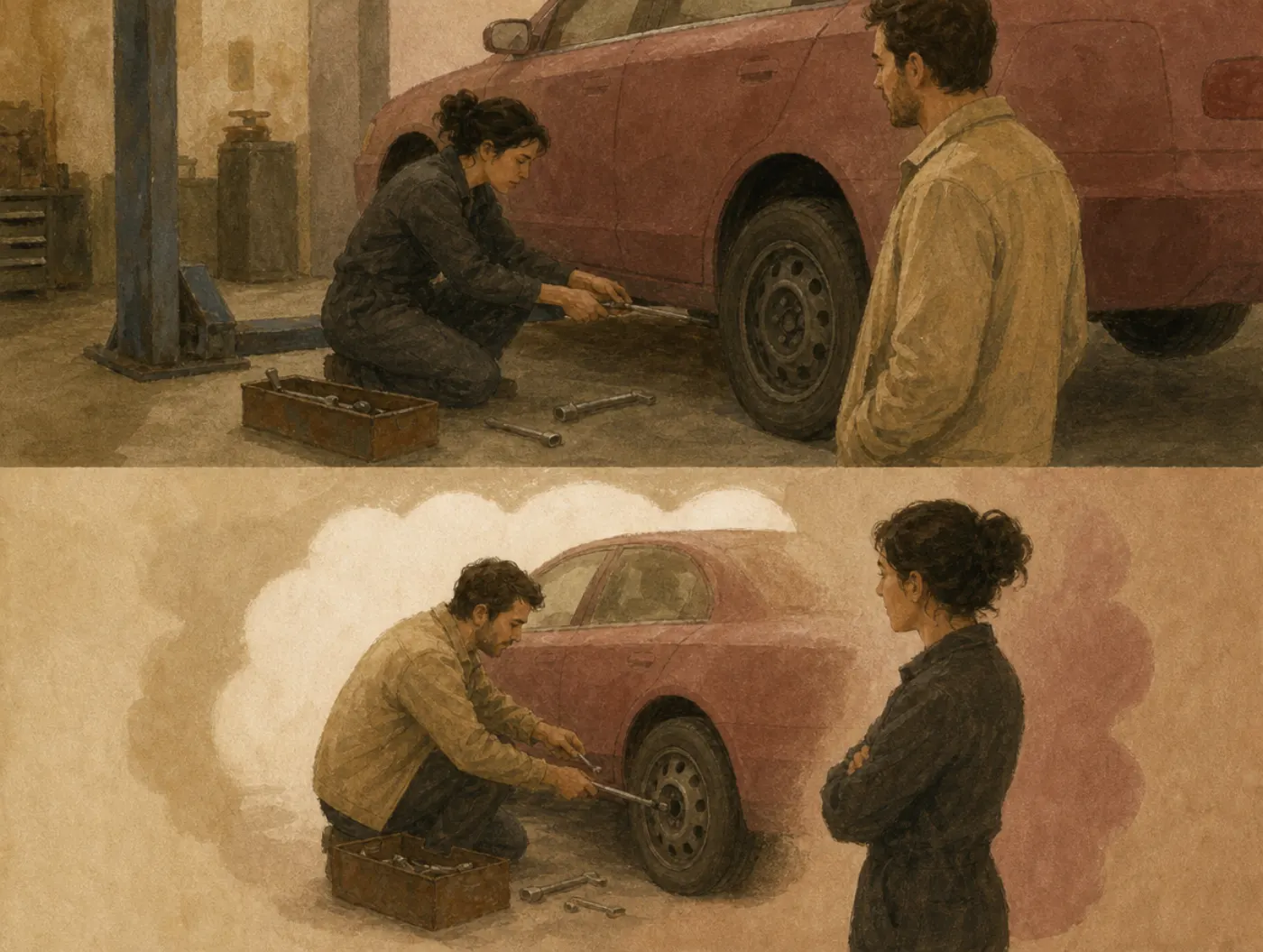
The pattern shows up wherever a person is remembered through a category. The rows below are illustrations, not findings from the studies cited on this page.
| Situation | What the bias does | What helps |
|---|---|---|
| A witness describes an argument between two strangers a week later | Who shouted, who pushed and who held what drift toward the witness's expectations about each person | Take the statement as early as possible, in the witness's own words, and record uncertainty rather than resolving it |
| A performance review written from memory at year end | The quiet colleague's forceful presentation is remembered as a good team contribution; the forceful colleague's quiet support is remembered as leading | Keep dated notes through the year and write the review from the notes |
| Retelling a story about a doctor, a nurse and a mistake | By the third telling the mistake has moved to whichever role the listeners expect to make it | Go back to the first account before passing a story on |
| Recalling a meeting with a new team | The engineer is remembered as having raised the technical objection that the marketer actually raised | Minutes that attribute each point to a named person |
| A teacher recalling which student started a disruption | The student with a reputation is remembered in the role, whether or not they were in it that day | Ask what was seen rather than who it must have been, and check with another adult who was present |
How to counter it
The bias does its work in reconstruction, so the counters all aim at the same thing: give memory less to reconstruct, and notice when it is doing so.
- Record early. A note written within minutes preserves the detail that cut against expectation; a week later the mind will have tidied it.
- Separate what you saw from who it fits. When you catch yourself remembering that a particular person did something, ask whether you remember the act or only that it would be like them.
- Treat confidence as a weak signal. A reconstructed detail feels as certain as a stored one; the feeling does not tell you which kind you have.
- Go back to the first account. In a chain of retellings, every link adds assimilation, and the original is the only version that has not been through it.
- Look for the surprising detail on purpose. People remember violations of expectation well when they attend to them; a habit of noting what did not fit protects exactly the details that would otherwise be reassigned.
- When the stakes are high, use procedures rather than recollection: attributed minutes, dated notes, recorded statements.
What it is not
Three entries on this site deal with stereotypes from different angles, and two more describe the general processes this bias runs on.
- It is not stereotyping, the judgment made about an individual from the traits assigned to a group, in the moment and with the person in front of you. Stereotypical bias is what the stereotype does to the record afterward.
- It is not an implicit stereotype, the learned pairing between a group and a trait that a culture repeats until it is fluent. Those pairings are the material this bias draws on when it fills a gap; the bias is the filling.
- It is not leveling and sharpening, the general loss of detail and exaggeration of what survives in any retold story. Allport and Postman described those alongside assimilation; stereotypical bias is the assimilation, the direction the surviving details move in.
- It is not false memory in general, which covers any confident recollection of something that did not happen. A stereotype is one source of false memories among several.
Tests and tools that use this
Related biases
Stereotypical Bias FAQ
What is stereotypical bias?
It is the tendency for memory to favor details that fit a stereotype of a person and to lose, change or reassign the details that do not, so that a later recollection sits closer to the stereotype than the original event did. The classic demonstration is Allport and Postman's rumor chain, in which a razor held by a white man in a drawing was reported in a Black man's hand at some point in over half of the chains that used the picture.
Did people in the Allport and Postman study see the Black man holding the razor?
No, and this is the most common misreport, documented by Treadway and McCloskey in 1987. Only the first describer saw the picture, and described it while looking at it. The razor moved later in the chain, among people who had only heard the description, and in over half of the chains rather than all of them. The finding is about memory and retelling, not about perception.
How did the demo on this page work?
You read a short account of two people, each given three details that fit a common stereotype of their job and three that did not. After one impression question, four memory questions asked about details that did not fit. Each had two options, the person who actually had the detail and the person the stereotype would predict, so any wrong answer was a detail moving toward the stereotype. The demo cannot tell whether your memory does this in general.
Do people remember stereotype-consistent or inconsistent details better?
Both, under different conditions. Stangor and McMillan's 1992 review of 54 experiments found that inconsistent details are often recalled better, because they are surprising and get attention, especially when people have time and a strong expectation. Consistent details win in recognition errors and guesses: when a detail cannot be recalled, the one supplied fits the stereotype. The bias is mostly a matter of reconstruction.
Is stereotypical bias the same as stereotyping?
They are two stages of the same process. Stereotyping is the judgment made about a person from their group in the moment; stereotypical bias is what happens to the memory of that person afterward, as details that fit are kept and details that do not are reshaped. A person can judge someone fairly at the time and still remember them later in a way that fits the stereotype.
How can I protect a memory from this bias?
Write it down early, in your own words, including the details that surprised you, because those are the ones that will later be reassigned. When you recall who did something, ask whether you remember the act or only that it would be like that person. Go back to the first account rather than a retelling. Where the stakes are high, rely on dated notes and attributed records rather than recollection.

References
- Allport, G. W., & Postman, L. (1945). The basic psychology of rumor. Transactions of the New York Academy of Sciences, 8(2), 61-81. doi.org
- Treadway, M., & McCloskey, M. (1987). Cite unseen: Distortions of the Allport and Postman rumor study in the eyewitness testimony literature. Law and Human Behavior, 11(1), 19-25. doi.org
- Cohen, C. E. (1981). Person categories and social perception: Testing some boundaries of the processing effects of prior knowledge. Journal of Personality and Social Psychology, 40(3), 441-452. doi.org
- Stangor, C., & McMillan, D. (1992). Memory for expectancy-congruent and expectancy-incongruent information: A review of the social and social developmental literatures. Psychological Bulletin, 111(1), 42-61. doi.org
- Bartlett, F. C. (1932/1995). Remembering: A study in experimental and social psychology. Cambridge University Press. doi.org
Cite this source
Psychology.com. (2026, October 24). Stereotypical Bias. Psychology.com. https://psychology.com/biases/stereotypical-bias