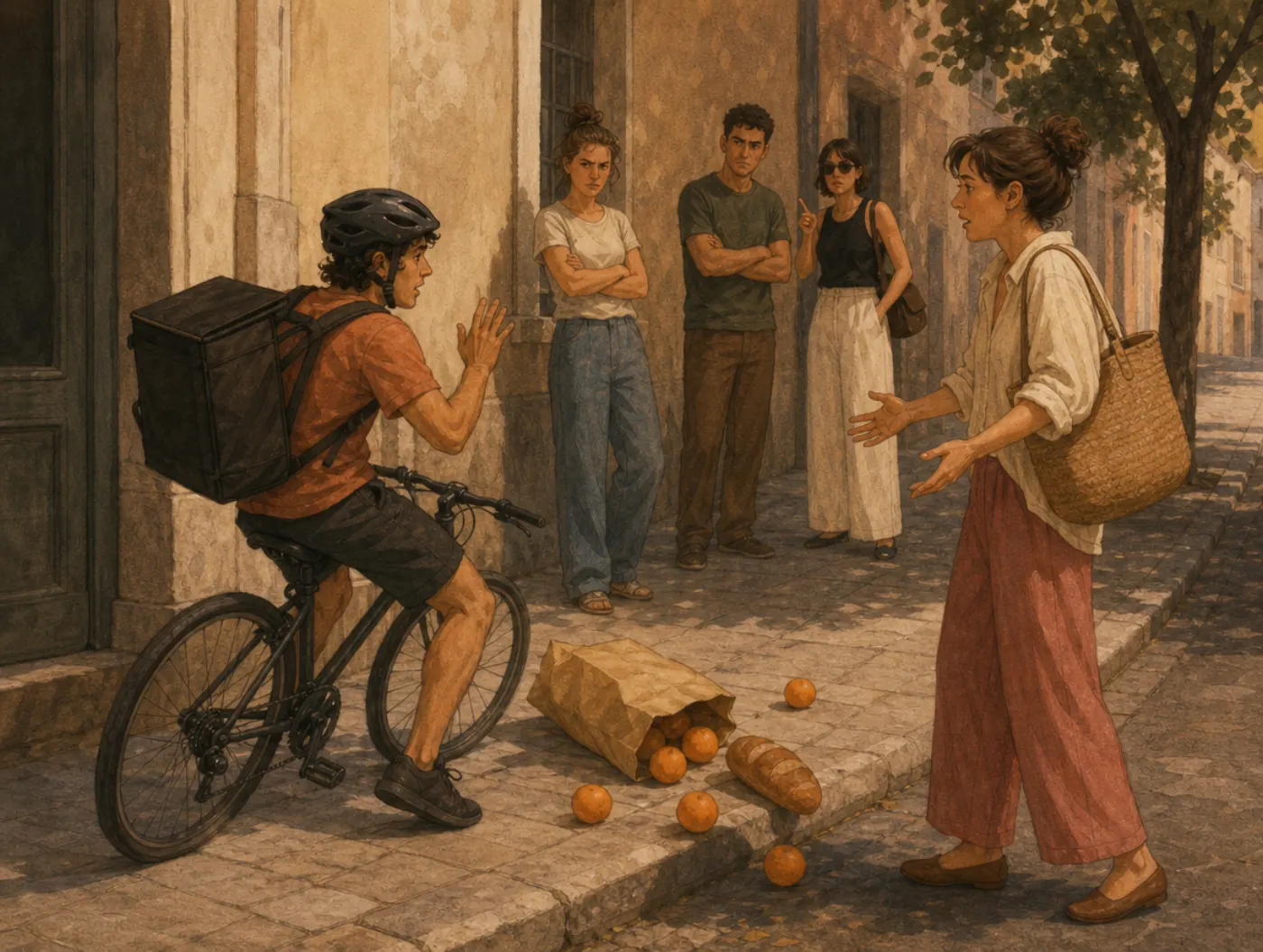
In short
Moral luck is the pattern in which an action is judged more harshly because it happened to turn out badly, even though the person's knowledge, intention and recklessness were the same whatever happened. It appears in blame for accidents, in sentences for identical reckless acts with different consequences, in performance reviews written after the result is known, and in a philosophical puzzle about whether anyone can deserve credit or blame for what luck decided.
How moral luck works
Two people can do exactly the same thing, with the same knowledge and the same disregard for the risk, and end up in different moral positions because of something neither controlled. The driver who gets home has done everything the driver who hits someone did. What separates them is whether a pedestrian happened to step off the curb. Most people nonetheless blame the one who hit somebody more, at least when that is the only case they see, and that gap is what philosophers call moral luck.
Bernard Williams introduced the term and Thomas Nagel replied to him; the two essays were reprinted in Nagel's Mortal Questions in 1979 and in Williams's Moral Luck in 1981. Nagel sorted luck into four kinds: luck in how an action turns out, luck in the circumstances a person faces, luck in the character they start with, and luck in the causes that produced them. The demo above is about the first kind, which later writers call resultant luck, because it is the kind an experiment can isolate: hold the person and the act fixed and vary only the result.
The psychological work suggests the gap is not simply a failure of logic. People who read only the version in which someone was hurt infer a riskier drive and a more careless driver than those who read the version in which nothing happened, though the two descriptions give the same facts. Kneer and Machery found that the effect of the outcome on all four of their measures was mediated by how negligent people judged the agent to be, and traced that in turn to differences in the probability people read into the case. The outcome works as evidence about the act, and from one case alone it is hard to see that the evidence was planted by the ending.
Judgments also come apart depending on what is being asked. Cushman found that questions about whether an action was wrong or permissible turn mainly on what the agent believed and wanted, while blame and punishment turn on the causal link to the harm as well. Kneer and Machery found the same split: shown both cases together, most people gave the two drivers the same blame and far fewer gave them the same punishment.
The original study
The empirical question is whether ordinary people really do judge the lucky and the unlucky agent differently, and Markus Kneer and Edouard Machery tested it in a paper published in Cognition in 2019. They used pairs of cases of the kind philosophers argue about, including a driver who has been drinking, and asked four questions: whether the action was wrong, how much blame the agent deserved, whether the action was permissible, and what punishment was appropriate. Some participants saw one case only, the design the demo above copies; others saw both cases together.
The two designs gave different answers. Between subjects, with each person reading one version, the outcome moved all four judgments. Within subjects, with both versions in front of the same reader, the asymmetry largely disappeared: in the authors' words, the vast majority judged the lucky and the unlucky agent equally blameworthy, and their actions equally wrong and equally permissible. Punishment was the exception, and was significantly more outcome-dependent than the other three. The authors concluded that the puzzle of moral luck, as a claim about what people reflectively believe, does not arise, and that the between-subjects effect is explained by participants reading different probabilities and different degrees of negligence into the two cases.
Read the diagram and evidence as text
Illustrative matched driving scenes hold recklessness fixed and change only whether a pedestrian is hit. Each ending passes through its own eye-shaped viewing aperture and loops back to an enclosure around the original driver: light for the lucky case, heavy for the unlucky case. A common viewing aperture then holds both endings and branches to equal driver-blame enclosures and a separate pair of gavel-marked punishment enclosures that remain unequal. Equal blame represents the vast majority response in the joint comparison, not identical mean scores or unanimity. Enclosure weight shows ordinal differences only; no rating values or effect sizes are drawn.
Two drivers, one difference: the ending
Side by side, most judged both the same; punishment excepted
Same driver, same drinking, same knowledge and the same risk taken
The drive ends with nobody hurt: Judged less harshly on wrongness, blame, permissibility and punishment, when this is the only case read
The drive ends with a pedestrian hit: Judged more harshly on all four, when this is the only case read
| Condition | Value and unit | Evidence quote |
|---|---|---|
| Lucky outcome, case seen alone | Judged less harshly ordinal judgment | the outcome moved judgments of wrongness, blame, permissibility and punishment when each person saw only one version of a case |
| Unlucky outcome, case seen alone | Judged more harshly ordinal judgment | the outcome moved judgments of wrongness, blame, permissibility and punishment when each person saw only one version of a case |
| Both outcomes shown side by side | Equally blameworthy, wrong and permissible ordinal judgment | when both versions were shown side by side, the vast majority judged the lucky and the unlucky agent equally blameworthy and their actions equally wrong and equally permissible |
| Punishment, side by side | Still more outcome-dependent ordinal judgment | with punishment the one judgment that stayed significantly more outcome-dependent |
Fiery Cushman's 2008 paper in the same journal takes the question apart from another direction. Across a series of experiments he varied four things independently: what an agent desired, what the agent believed, whether the agent caused the harm, and whether the harm occurred. Judgments of wrongness and permissibility followed the agent's mental states; judgments of blame and punishment followed the mental states and the causal connection to the harm as well.
Neither paper settles whether outcome-sensitivity is a mistake. Grading punishment by consequences is written into the law of most countries, and the arguments for it are about deterrence and the public role of punishment rather than about the driver's state of mind. What the experiments show is narrower: the size of the gap depends on whether you can see the other case.
Everyday examples
Outcome luck shows up wherever a decision is reviewed after its result is known. The rows below are illustrations, not findings from the studies cited on this page.
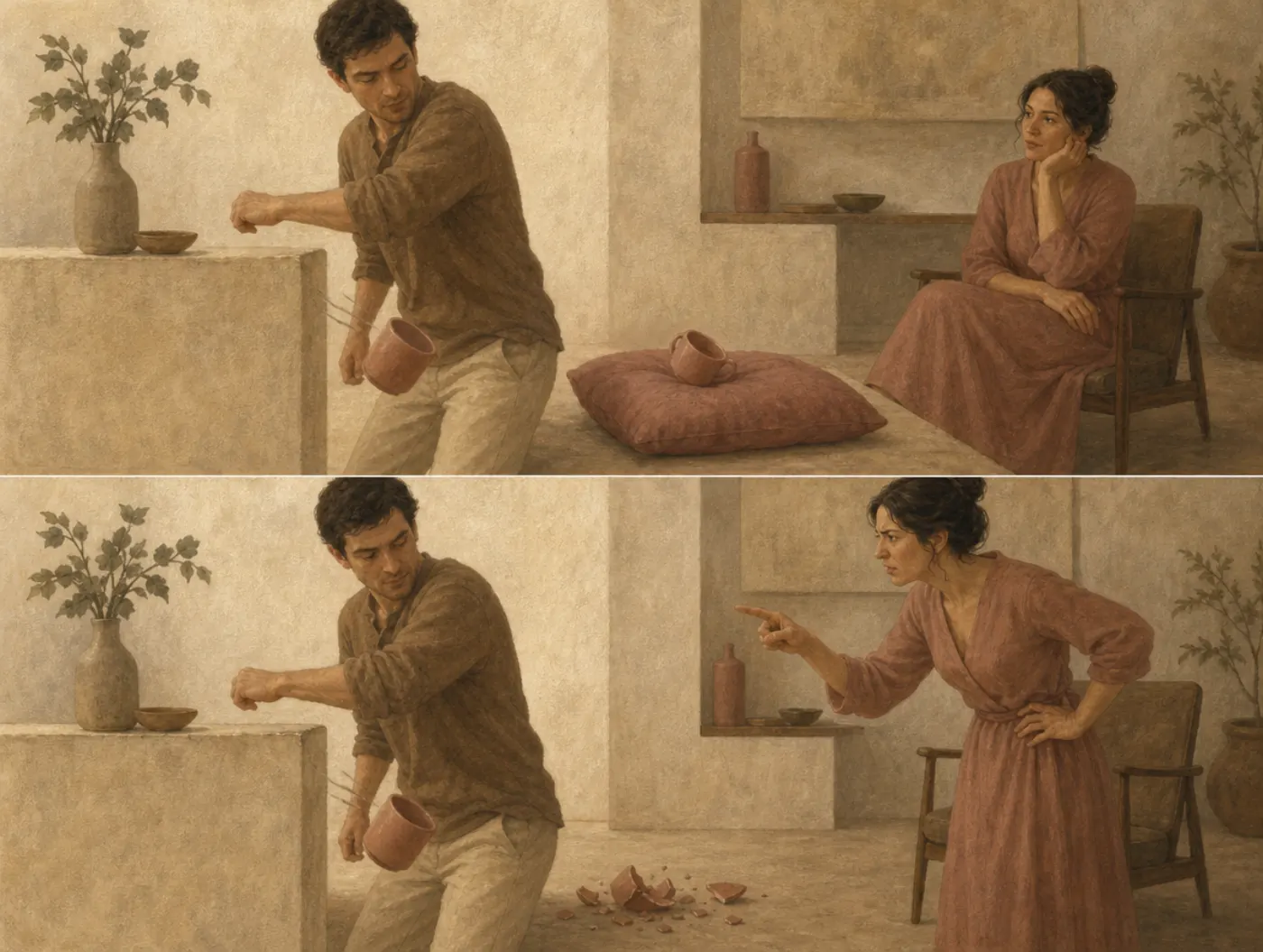
| Situation | What the bias does | What helps |
|---|---|---|
| Two drivers text at the wheel; one arrives safely, one causes a crash | The second is treated as a different kind of person rather than as the same person with worse luck | Judge the act by the risk it created, which was the same, and keep that judgment separate from the sentence |
| A manager approves a risky project that succeeds | The approval is remembered as bold judgment, and the same approval on a failed project is remembered as recklessness | Record the reasoning and the odds at the time of the decision and review that record, not the result |
| A surgeon's complication rate in a run of difficult cases | The surgeon who drew the harder cases looks worse on the same technique and the same care | Compare risk-adjusted rates and case mix before comparing surgeons |
| A parent leaves a child's bike unlocked and it is stolen | Family blame lands on the unlocked bike, where the same oversight on a day with no thief passes without comment | Ask whether the rule being enforced is one you would have stated before the theft |
| An investor picks one stock and it triples | The pick is read as skill, and a decision made the same way that fell by half is read as foolishness | Judge the process on many decisions rather than any single result |
How to counter it
The counters all come down to getting the other case in front of you.
- Put the two cases side by side. In Kneer and Machery's experiments the asymmetry mostly vanished when people could see both versions, so writing out the version in which the luck went the other way is the single most effective step.
- Write down the risk before the result is in. A decision log that records what was known, what the odds looked like and what the alternatives were gives you something to review that the outcome cannot rewrite.
- Ask what you would say if the ending flipped. If a near miss would have gone unmentioned, the act was being judged by the ending rather than by the act.
- Separate blame from consequences. You can hold that two reckless drivers were equally wrong and still think the one who caused an injury owes more; saying so out loud keeps the two questions from merging.
- Watch the probability you are reading in. Check whether your estimate of the risk came from the facts of the case or from knowing how it ended.
What it is not
Moral luck sits next to several biases about outcomes, and the differences are in what is being judged.
- It is not outcome bias, which is about the rated quality of a decision rather than about blame or desert. Outcome bias says a physician's choice looks worse when the patient dies; moral luck says the drunk driver who hurt someone is a worse person. They are measured with different questions and often move together.
- It is not hindsight bias, the sense once an outcome is known that it was predictable all along. Hindsight bias is one of the routes into moral luck, since an agent who should have seen it coming looks more negligent, but it also distorts memory where no blame is at stake.
- It is not the just-world hypothesis, the belief that people get what they deserve. That belief runs from the outcome to the person's character in general; moral luck is the narrower fact that one act gets judged by its result.
Tests and tools that use this
Related biases
Moral Luck FAQ
What is moral luck?
Moral luck is the pattern in which the same action is judged more harshly because it happened to turn out badly, though the agent's knowledge, intention and recklessness were identical either way. The standard case is two equally drunk drivers taking the same route, one of whom hits someone. Bernard Williams named the problem and Thomas Nagel set out four kinds of luck in reply; the demo on this page tests the kind that concerns how an act turns out.
What are Nagel's four kinds of moral luck?
Luck in how an action turns out, which is the kind the demo tests; luck in the circumstances a person is faced with, such as which country and decade they live in; luck in their constitution, meaning the character and inclinations they did not choose; and luck in the causes that produced their choices. Nagel's point was that once all four are taken seriously, very little of what people praise and blame is clearly within anyone's control.
Do people really judge lucky and unlucky agents differently?
It depends on the design. When each person reads only one version, as in the demo on this page, the outcome moves judgments of wrongness, blame, permissibility and punishment. When both versions are shown to the same reader, Kneer and Machery found that the vast majority gave the two agents equal blame and judged their actions equally wrong and equally permissible. Punishment was the exception, and stayed significantly more outcome-dependent.
How does the demo on this page work?
On loading, the page assigns you one of two versions using a value kept in your browser's session storage, so a reload shows the same one. You rate blame for a driver whose drive either ended in an injury or ended uneventfully. The result screen shows the other version in full so you can check that the drivers did the same thing, and once each version has 50 or more responses it shows the live split. Only the version and your choice leave your browser.
Is it wrong to punish the unlucky driver more?
The experiments do not answer that, and this page does not take a side. Almost every legal system grades punishment by consequences, and the arguments for doing so rest on deterrence, the response of victims and the public role of punishment rather than on the driver's state of mind. What the research shows is narrower: judgments of blame and judgments of punishment behave differently, and blame tracks the outcome less once you can compare the two cases.
Why does knowing the outcome change how negligent someone looks?
Because the outcome reads as evidence about the act. Kneer and Machery found that the effect of the outcome on their four measures ran through how negligent people judged the agent to be, and that this in turn reflected the probability they read into the case: told that somebody was hurt, people conclude the drive was more dangerous than it looked. From inside one case there is no way to see that the risk estimate came from the ending.

References
- Kneer, M., & Machery, E. (2019). No luck for moral luck. Cognition, 182, 331-348. doi.org
- Nagel, T. (1979). Moral luck. In Mortal Questions (pp. 24-38). Cambridge University Press. doi.org
- Williams, B. (1981). Moral Luck: Philosophical Papers 1973-1980. Cambridge University Press. doi.org
- Cushman, F. (2008). Crime and punishment: Distinguishing the roles of causal and intentional analyses in moral judgment. Cognition, 108(2), 353-380. doi.org
- Baron, J., & Hershey, J. C. (1988). Outcome bias in decision evaluation. Journal of Personality and Social Psychology, 54(4), 569-579. doi.org
Cite this source
Psychology.com. (2026, October 21). Moral Luck. Psychology.com. https://psychology.com/biases/moral-luck