Body Scan Meditation: A Guided Practice for Noticing Body Sensations Calmly
A guided mindfulness practice that moves your attention slowly through the body, noticing sensations without trying to change them.
 Reviewed byMichael Callans, MSW
Related tools & tests
Want help quieting a busy mind?
A therapist can teach mindfulness and stress skills tailored to you. Free to search our directory.
Therapists Who Work With Stress
A worksheet is a start. These licensed therapists work with the same problem; every member is matched to the federal NPI Registry and board checks are dated on the profile.
- View profile
-
View profile
Carol WilliamsLCSW
License verified, checked Oct 9, 2026
“Beyond Survival, Toward Living.”
Miramar, Florida Telehealth $125 to $200 per session
-
View profile
Charis ChaseLCSW, MSW
License verified, checked Oct 13, 2026
Hamilton, New Jersey Telehealth $140 per session


About this tool
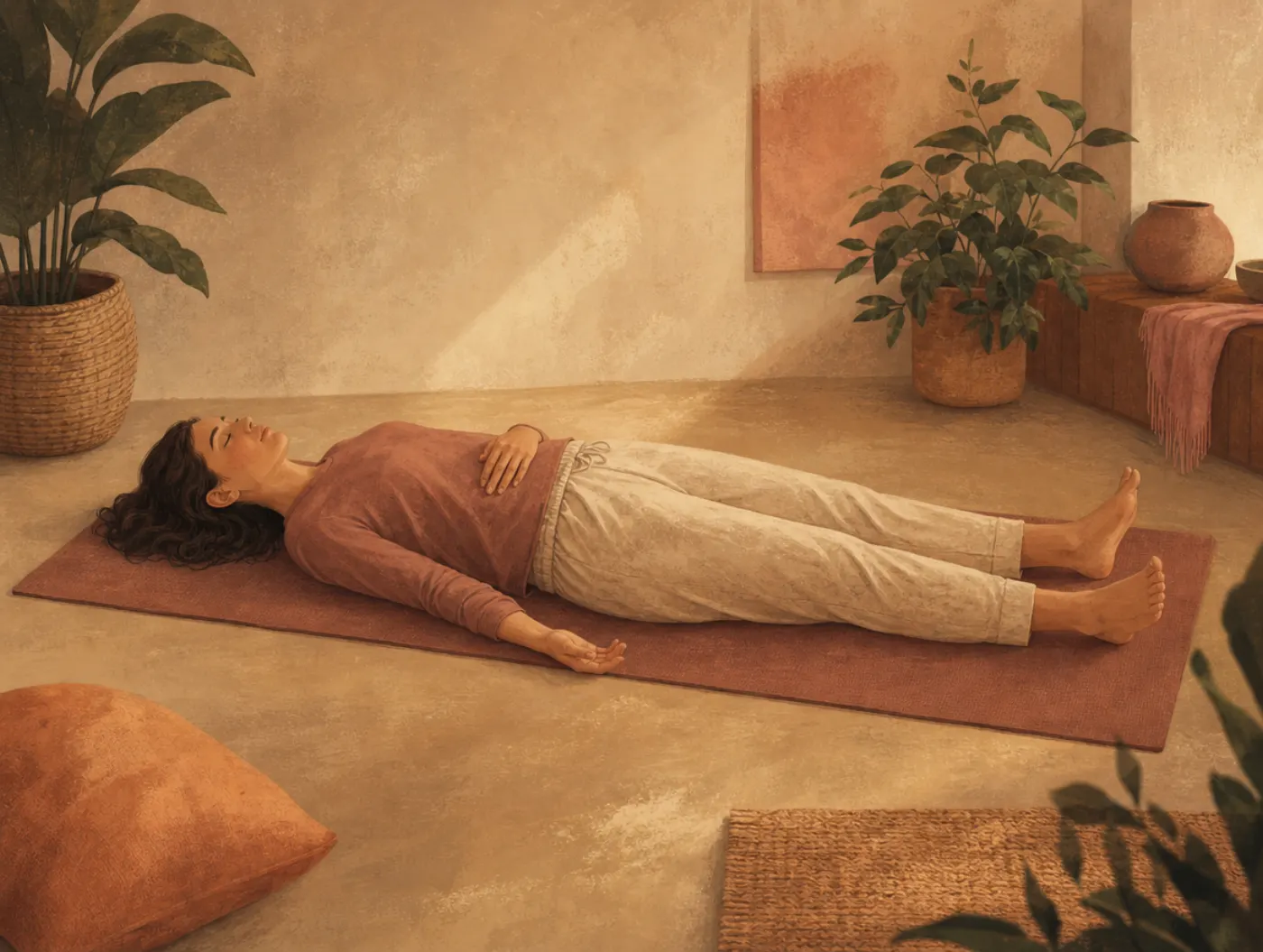
The body scan is a core mindfulness meditation, central to Mindfulness-Based Stress Reduction (MBSR), the program developed by Jon Kabat-Zinn. You move your attention slowly and deliberately through the body, from the feet to the head, simply noticing whatever sensations are present, whether tension, warmth, tingling, or nothing at all.
Unlike progressive muscle relaxation, you do not tense or change anything. The practice is one of curious, non-judgmental awareness. This trains a key mindfulness skill: observing experience as it is, rather than reacting to it. Often, tension softens on its own simply from being noticed.
Body scans are well studied for reducing stress, anxiety, and chronic pain, and for improving sleep and emotional regulation. Many people find the practice deeply calming, while some notice their mind wandering constantly. Both are normal. The skill is in gently returning your attention each time it drifts, without criticism.
If your mind races or you fall asleep, that is fine, especially at first. There is no way to do it wrong. The benefit comes from the repeated, gentle act of returning to the body in the present moment.
A single body scan usually takes 10 to 20 minutes, though shorter 5 minute versions and longer 30 to 45 minute versions are both common. Consistency tends to matter more than length: Kabat-Zinn's original MBSR program runs 8 weeks with near daily practice, which is where the calming effect tends to build rather than from any one session.
A meta-analysis of mindfulness-based stress reduction in healthy adults found consistent, moderate reductions in stress, anxiety, and depressive symptoms, with the body scan as one of the three core MBSR exercises alongside sitting meditation and mindful movement.
If stress, anxiety, or racing thoughts feel constant rather than occasional, a body scan on its own may not be enough. A therapist who works with mindfulness-based approaches can build a fuller plan for you. You can search the Psychology.com therapist directory to find one.
References
- Kabat-Zinn J. Full Catastrophe Living. Revised ed. Bantam; 2013.
- Khoury B, et al. Mindfulness-based stress reduction for healthy individuals: a meta-analysis. J Psychosom Res. 2015;78(6):519-528.
Cite this source
Psychology.com. (2026, September 15). Body Scan Meditation. Psychology.com. https://psychology.com/tools/body-scan-meditation
Body Scan Meditation FAQ
What is a body scan meditation?
A mindfulness practice in which you move your attention slowly through the body, noticing sensations without trying to change them. It builds present-moment awareness and often releases tension along the way.
How is it different from progressive muscle relaxation?
In a body scan you only observe, you do not tense or release. PMR is more active, deliberately tensing and relaxing muscles. The body scan is a mindfulness practice; PMR is a relaxation technique.
What if my mind keeps wandering?
That is completely normal and expected. The practice is gently bringing your attention back each time it drifts, without judging yourself. The returning is the skill.
Is anything I type saved?
No. Everything stays in your browser. Nothing is uploaded or stored, and the PDF is created on your own device.
How long should a body scan meditation take?
Most guided body scans run 10 to 20 minutes, though shorter 5 minute versions and longer 30 to 45 minute versions both work. What matters more than length is consistency: practicing most days is what builds the calming effect over time, similar to the 8 week format used in Kabat-Zinn's original MBSR program.
Does body scan meditation help with sleep or anxiety?
Research on mindfulness-based stress reduction, which includes the body scan as a core exercise, has found consistent reductions in stress and anxiety symptoms in healthy adults, and many people also use it to unwind before sleep. It works best as a regular practice rather than a one time fix.