Progressive Muscle Relaxation: Release Tension Muscle by Muscle
Progressive muscle relaxation is a guided exercise for noticing and releasing physical tension. Gently tense and release muscle groups, using the free script or printable PDF.
 Reviewed byMichael Callans, MSW
Related tools & tests
Carrying a lot of tension and stress?
A therapist can help you address what is driving it. Free to search our directory.
Therapists Who Work With Anxiety
A worksheet is a start. These licensed therapists work with the same problem; every member is matched to the federal NPI Registry and board checks are dated on the profile.
- View profile
-
View profile
License verified, checked Sep 29, 2026
“**Trauma-informed therapy for individuals and couples who want to understand what’s happening and create something different.”
Austin, Texas Telehealth and in person $150 per session, sliding scale
-
View profile
License verified, checked Oct 20, 2026
“Welcome to Timberline Psychological Services”
Paonia, Colorado Telehealth and in person $200 per session



About this tool
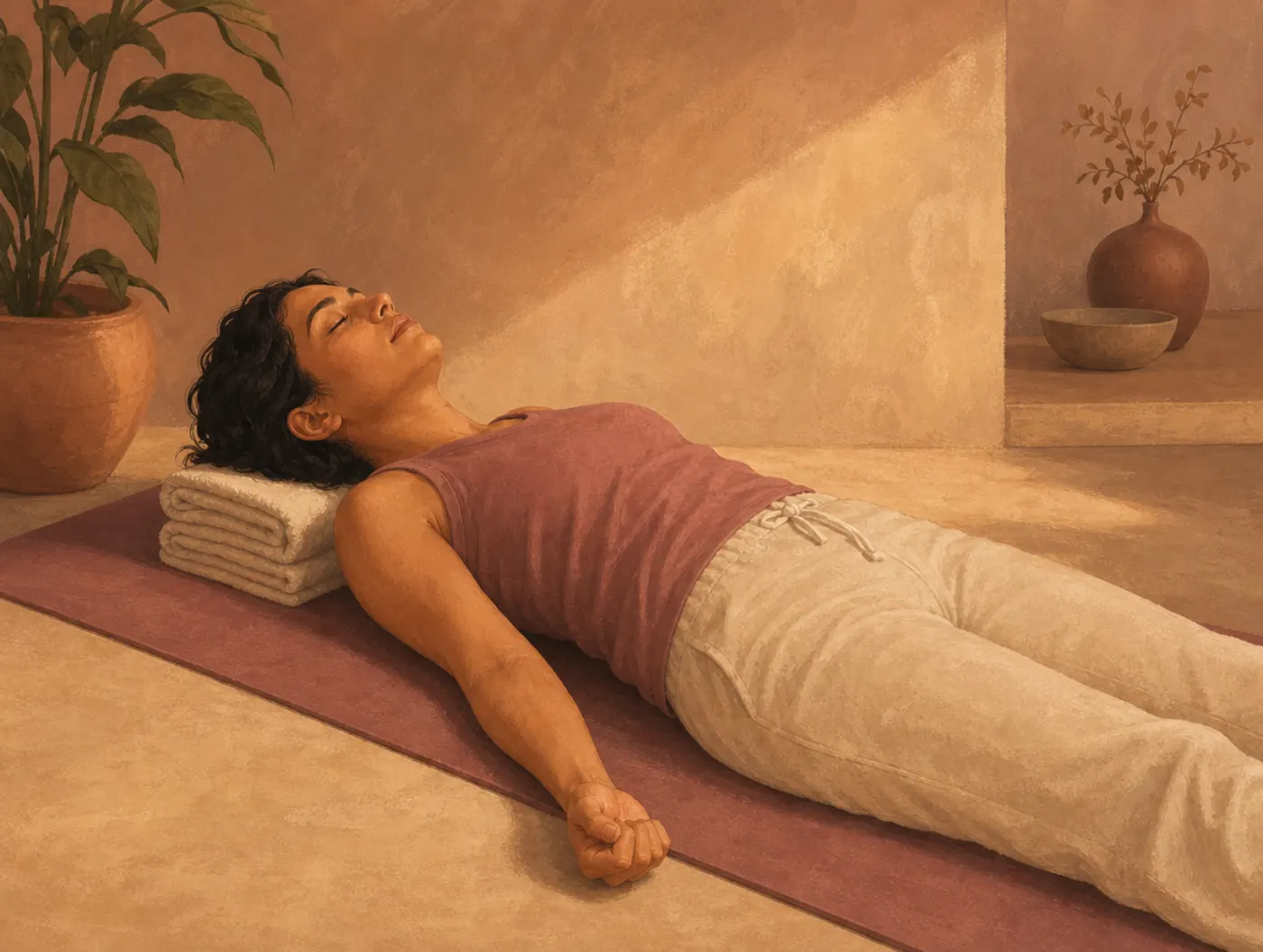
Progressive muscle relaxation (PMR) is an exercise that uses gentle muscle tightening and release to help you recognize physical tension. This free guided script addresses the clenched jaw, raised shoulders, or tight hands you may notice during stress, with space to compare how you feel before and afterward. Physician Edmund Jacobson developed the technique and described it in Progressive Relaxation.
The method teaches you to recognize the contrast between a tightened muscle and a released muscle. Many people notice held tension only when they deliberately pay attention to it. Practicing that contrast can help you identify tension earlier, although feeling physically looser does not always make anxious thoughts disappear. Let the exercise be a chance to observe what changes without requiring yourself to feel completely calm.
Research supports relaxation training as an option for reducing anxiety symptoms. The review by Manzoni and colleagues included progressive relaxation alongside other approaches, so its overall findings should not be read as a guarantee for this particular script. Relaxation is also used in care for sleep problems and tension headaches, although evidence differs by condition. The VA describes a full PMR practice lasting 10 to 15 minutes; a shorter version can focus on comfortable areas where you notice tension.
One caution: tense each muscle firmly but never to the point of pain or cramp. If you have an injury or chronic pain in an area, tense it only gently or skip it entirely.
PMR pairs well with other relaxation skills on Psychology.com, such as a Deep Breathing Exercise or Box Breathing before you start, or a Body Scan Meditation afterward to notice how your body feels after practicing. If you practice regularly and tension, anxiety, or poor sleep are still frequent or hard to manage, that is a sign the underlying cause needs more attention than a relaxation script alone can give. A licensed therapist can help you figure out what is driving the tension; you can search the Psychology.com therapist directory by specialty and location.
Use your before and after ratings as personal observations. A lower rating suggests you felt less tense at that moment; it does not measure whether an anxiety condition has improved. An unchanged rating is useful information too. Note whether you were uncomfortable, distracted, or trying too hard to create a strong muscle contraction, and adjust the next practice accordingly.
Try practicing when you have enough attention to notice the release, rather than saving the exercise only for overwhelming moments. Keep breathing comfortably and avoid holding your breath or forcing a stretch. If inward attention increases distress, stop and look around the room. Ask a health professional about adaptations if pain, injury, or a health condition makes muscle tightening uncomfortable.
The Relaxation Techniques collection offers other exercises to compare with PMR. An Anxiety Test can provide screening information if worry accompanies the tension, but it cannot establish a diagnosis or explain a physical symptom. New, persistent, or unexplained pain deserves medical attention rather than repeated attempts to relax it away.
If deliberately tightening muscles makes you feel more tense, consider passive relaxation: rest comfortably and notice whether a muscle can soften without squeezing it first. The VA describes this as an alternative when active tensing is uncomfortable. You can also keep your eyes open and choose a supported seated position. Before using muscle contractions with a history of serious injuries, muscle spasms, or back problems, ask your clinician whether passive practice or another exercise would be more suitable.
References
- Jacobson E. Progressive Relaxation. University of Chicago Press; 1938.
- Manzoni GM, et al. Relaxation training for anxiety: a ten-years systematic review with meta-analysis. BMC Psychiatry. 2008;8:41.
- U.S. Department of Veterans Affairs. Progressive Muscle Relaxation. https://www.va.gov/WHOLEHEALTHLIBRARY/docs/Progressive-Muscle-Relaxation.pdf
- National Center for Complementary and Integrative Health. Relaxation Techniques: What You Need To Know. https://www.nccih.nih.gov/health/relaxation-techniques-what-you-need-to-know
Cite this source
Psychology.com. (2026, September 16). Progressive Muscle Relaxation. Psychology.com. https://psychology.com/tools/progressive-muscle-relaxation
Progressive Muscle Relaxation FAQ
What is progressive muscle relaxation good for?
Progressive muscle relaxation is used to help people notice and release physical tension associated with stress and anxiety. Relaxation methods are also used for sleep difficulties and tension headaches, though evidence varies by condition. Treat this script as a self-help practice and observe whether it feels useful; it cannot identify the cause of persistent symptoms.
How long does it take?
The full sequence takes about 10 to 15 minutes. With practice, you can do a quicker version focused on the areas where you hold the most tension. The VA describes this length for a typical practice. Allow enough time to notice the release instead of rushing through the sequence. You can stop early if you become uncomfortable, and a longer session is not a requirement for a useful practice.
How hard should I tense each muscle?
Firmly enough to feel clear tension, but never to the point of pain or cramping. If an area is injured or painful, tense it gently or skip it. The goal is to notice a contrast between tension and release, so a stronger contraction is unnecessary. Keep breathing comfortably. Stop if the movement increases pain, and ask a clinician about adapting the exercise to an injury or ongoing health condition.
Is anything I type saved?
No. Everything stays in your browser. Nothing is uploaded or stored, and the PDF is created on your own device.
Does progressive muscle relaxation help with anxiety?
Progressive muscle relaxation may help with anxiety symptoms, and therapists sometimes include it in relaxation training. The Manzoni review supports relaxation training broadly; it does not establish that this online script will help every reader. If worry keeps interfering with sleep, work, or relationships, discuss it with a licensed professional who can assess what support fits your situation.
What is the difference between progressive muscle relaxation and a body scan?
Progressive muscle relaxation actively tenses and releases each muscle group, while a body scan meditation involves noticing sensations in each area without deliberately tensing anything. Both involve paying attention to the body, but the physical action differs. Choose the approach that feels comfortable, and skip active contractions when they cause pain. Neither practice requires every sensation to disappear before you finish.