 Reviewed by
In short
Gambling addiction, clinically called gambling disorder, is persistent gambling that becomes difficult to control and continues despite harm. Warning signs include chasing losses, hiding bets, and repeated failed attempts to stop. Treatment can include cognitive behavioral therapy, motivational interviewing, and practical safeguards, with support for recovery and any co-occurring mental health conditions.
Key facts
- Gambling disorder is the first behavioral addiction recognized in the DSM-5, alongside substance use disorders. APA: gambling disorder.
- It is driven by changes in the brain's reward system, not by a lack of discipline or self-respect. Biological, psychological, and environmental factors can contribute. APA: gambling disorder.
- Cognitive behavioral therapy is among the best-supported treatments; support groups offer additional recovery support. Motivational interviewing also has evidence, while peer support can complement clinical care. WHO: gambling.
- Tools like self-exclusion and treating co-occurring conditions strengthen recovery. Coverage and enforcement of self-exclusion vary across providers and jurisdictions. WHO: gambling.
What is gambling addiction?
Gambling addiction is a pattern of repeated, problem gambling that disrupts a person's finances, relationships, work, or wellbeing, and that the person cannot control despite wanting to. Clinicians diagnose it as gambling disorder, a term used in the Diagnostic and Statistical Manual of Mental Disorders (DSM-5), published by the American Psychiatric Association. The pattern of impaired control and continuing harm matters more than a particular amount lost. Help can be useful before the behavior meets the threshold for a formal diagnosis. WHO: gambling.
What makes this condition notable is that it is a behavioral addiction. As the American Psychiatric Association explains, gambling disorder was the first non-substance behavior to be grouped with addictions, because research shows it activates the brain's reward system in ways that resemble drugs and alcohol. In other words, a person can become addicted to the act of gambling itself, even though no substance is involved. This is closely related to other forms of addiction, and the same principles of treatment often apply.
Problem gambling exists on a spectrum. Many people gamble occasionally without harm, some develop mild patterns that strain their lives, and a smaller group meets the full criteria for gambling disorder. Recognizing where a pattern sits on that spectrum, rather than dividing people into gamblers and non-gamblers, helps a person and a clinician respond before a crisis. Like other conditions, gambling disorder is most treatable when it is caught early, which is one reason it helps to understand the signs.
| Recreational gambling | Gambling disorder | |
|---|---|---|
| Control | Can stop or walk away at any point | Repeated attempts to cut back keep failing |
| Money | Limits are set and losses stay affordable | Chasing losses and betting more for the same thrill |
| Place in life | One pastime among many | Preoccupation that crowds out work, family, and sleep |
| Mood | Entertainment, win or lose | Gambling to escape distress; restless or irritable when stopping |
| Honesty | Nothing to hide | Lying to cover the extent of gambling |
| Aftermath | Moves on easily | Guilt, secrecy, debt, or relying on others to cover losses |
Signs
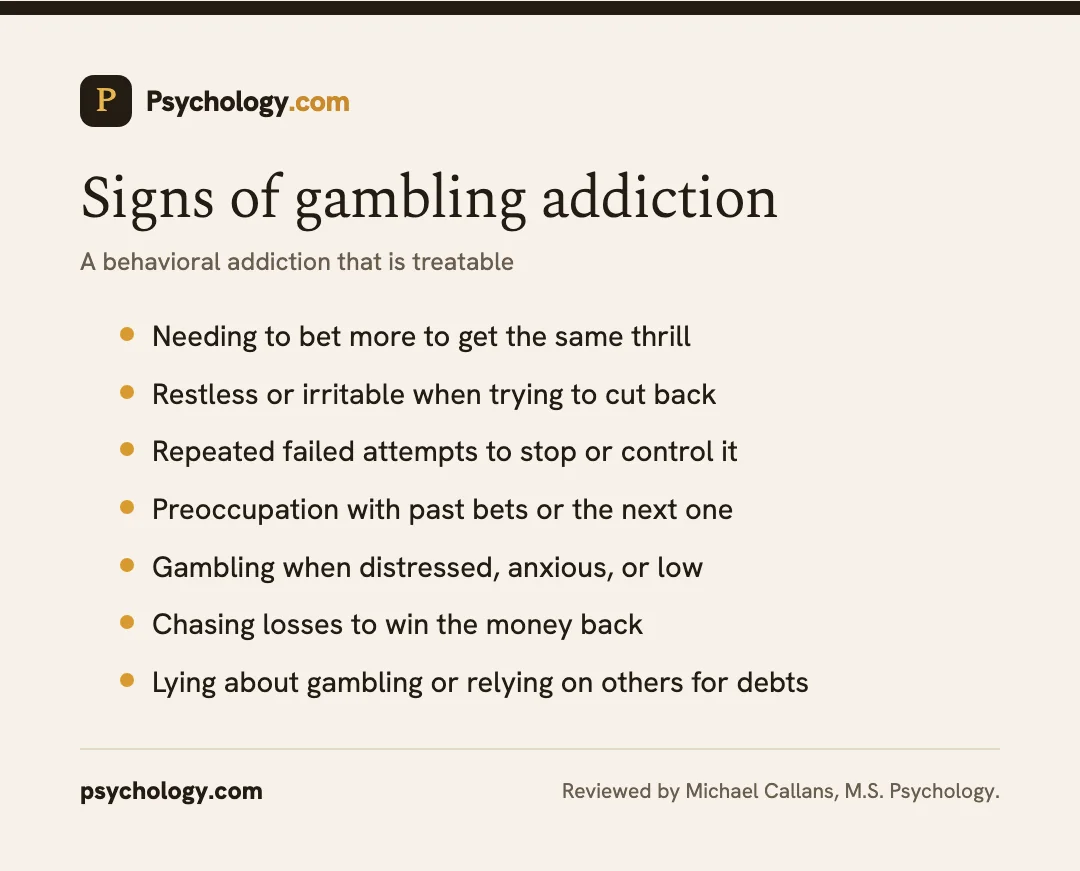
Gambling addiction often hides behind everyday activity, but several signs point to a problem:
- Needing to bet more money to get the same thrill
- Feeling restless or irritable when trying to cut back
- Repeated unsuccessful efforts to stop or control gambling
- Being preoccupied with gambling, reliving past bets or planning the next
- Gambling when feeling distressed, anxious, or low
- Chasing losses by gambling more to win the money back
- Lying to hide the extent of gambling
- Risking or losing relationships, jobs, or opportunities because of gambling
- Relying on others to cover gambling debts
A few of these signs over time is a reason to seek an assessment. Online and mobile betting have made gambling more constant and private, which can make these patterns harder to spot from the outside.
Impact
The effects of gambling addiction reach well beyond money. Financially, it can lead to serious debt, lost savings, and sometimes legal trouble. Emotionally, it is closely tied to depression, anxiety, shame, and in severe cases thoughts of suicide. Relationships often strain under secrecy and broken trust, and work or studies can suffer. Because the consequences build quietly, many people do not seek help until a crisis forces the issue. Recognizing the harm early, and understanding that it is a treatable condition rather than a personal failing, makes it easier to reach out.
1.2%of the world's adult population is estimated to have a gambling disorder, according to WHO's December 2024 fact sheet; global estimates remain limitedWorld Health Organization
11.9%of men and 5.5% of women worldwide experience some level of harm from gamblingWorld Health Organization
6 othersare affected, on average, for every person who gambles at high-risk levels, usually people who do not gamble themselvesWorld Health Organization
Causes and risk factors
Like other addictions, gambling disorder arises from a mix of factors rather than a single cause:
- Brain and biology: differences in the reward and impulse-control systems, with genetics playing a role.
- Mental health: depression, anxiety, and substance use disorders raise the risk and often occur together.
- Personality and behavior: high impulsivity or competitiveness can increase vulnerability.
- Environment: easy access to gambling, early exposure, and stressful life circumstances.
Gambling disorder can affect anyone, though it tends to begin earlier in men and later in women, and the risk is higher for people who already live with another mental health or substance use condition. Certain medications used for Parkinson's disease and restless legs syndrome can also increase compulsive gambling as a side effect, which is worth reviewing with a doctor. Understanding these factors does not assign blame; it helps identify who may need extra support and what may be driving the behavior.
How it is treated
“Most people who gamble don't have a problem, but some lose control of their gambling.”
Gambling addiction responds well to treatment, and most people benefit from combining approaches.
Cognitive behavioral therapy
CBT is among the best-supported treatments, alongside motivational interviewing. WHO: gambling. It helps people identify the beliefs that drive gambling, such as the illusion of control or the belief that a big win is overdue, and replace them with healthier thinking and coping strategies. Therapy also builds skills for managing urges and high-risk situations.
Support groups
Peer support programs such as Gamblers Anonymous offer community, accountability, and shared experience. Many people pair a support group with professional therapy for stronger results, and family support programs can help loved ones too.
Self-exclusion and practical safeguards
Self-exclusion programs let people voluntarily ban themselves from casinos and betting sites. Blocking software, handing financial control to a trusted person for a time, and limiting access to cash are practical tools that reduce opportunity and support recovery.
Treating co-occurring conditions
Because gambling disorder so often appears with depression, anxiety, or substance use, treating those conditions at the same time is essential. In the United States, there is no FDA-approved medication specifically for gambling disorder, but a clinician may prescribe medication for an underlying condition when appropriate.
Does this sound familiar? If you have been wondering about your own gambling, these honest check-in prompts can help you take stock. They are reflections, not a diagnosis.
Free, confidential, self-paced, with an instant plain-language result and a PDF you can bring to a professional. A screening is not a diagnosis.
Free tools and worksheets
Practical, printable exercises from our free library that people managing gambling addiction often find useful. No signup needed.
When to seek help
Reach out to a doctor or mental health professional if gambling is harming your finances, relationships, work, or mental health, or if you have tried to stop and could not. In the United States, the free, confidential National Problem Gambling Helpline (call or text 1-800-MY-RESET) offers support and referrals any time. If gambling losses lead to thoughts of suicide, call or text 988 right away.
Frequently asked questions
Is gambling addiction a real mental health condition?
Yes. Gambling disorder is recognized in the DSM-5 as a behavioral addiction. It is the first non-substance behavior to be classified alongside substance use disorders because it affects the brain's reward system in similar ways. A professional assessment considers both the pattern of gambling and its impact on everyday life.
What treatment works best for gambling addiction?
Cognitive behavioral therapy has the strongest evidence. It helps people change the thoughts and habits that drive gambling. Support groups such as Gamblers Anonymous, self-exclusion programs, and treatment for any co-occurring conditions also help. Motivational interviewing is another evidence-supported option. A clinician can tailor care to your goals.
Can you recover from a gambling addiction?
Yes. Many people stop gambling and rebuild their finances and relationships with treatment and support. Recovery is an ongoing process, and setbacks can be managed by adjusting the plan rather than giving up on it. Practical protection for essential spending and a plan for responding to urges can support that process.
How can I tell if my gambling is becoming a problem?
Look at control and consequences rather than the amount alone. Early signals include betting more than planned, returning to win back losses, thinking about gambling between sessions, and hiding it from others. Problem gambling sits on a spectrum, so you do not need to hit a crisis before taking stock. A brief screening or a conversation with a professional can bring clarity early.
Does someone have to gamble every day to have a gambling disorder?
No. Frequency is not the deciding factor. Someone who gambles only occasionally can still meet the criteria if they have lost control, chase losses, hide the behavior, or keep gambling despite real harm to finances, relationships, or work. Clinicians look at the pattern and its consequences, not the number of sessions, when assessing whether gambling has become a disorder.
What is self-exclusion and does it work?
Self-exclusion is a voluntary program that lets you ban yourself from casinos, betting shops, or gambling websites and apps for a set period. It works by removing easy opportunity while urges are still strong. It is most effective as one part of a plan that also includes therapy or a support group, since it limits access but does not by itself change the thoughts driving the urge to gamble.
Related conditions
Therapists who specialize in gambling addiction
Connect with a licensed therapist on Psychology.com who works with gambling addiction.
- Advance Thru Psychotherapy and Family Development
- Charles H. Browning
- Dr. Aron Tendler
- Dr. Edward J. Mike
- Dr. Joe A Baez
- Dr. SARA J CORNELL
Browse all therapists →
Finding the right help
When you are ready to take the next step, these guides walk you through finding and starting with the right therapist.
- Getting started with therapy
- How to find the right therapist
- Find a therapist who takes insurance
- Free & low-cost therapy
References
- American Psychiatric Association (APA): What Is Gambling Disorder?
- National Council on Problem Gambling: National Helpline
- Mayo Clinic: Compulsive gambling
- Cleveland Clinic: Gambling Disorder
- NHS: Help for problems with gambling
- MedlinePlus: Compulsivegambling
Taking a first step toward gambling support
Tell a trusted person what has been happening and contact a gambling support service. Ask about self-exclusion, blocking access to betting accounts, and options for protecting essential household spending. Agree on any financial safeguards collaboratively, including what the trusted person can access and when you will review the arrangement.
Before an appointment, note triggers, attempts to stop, effects on sleep and mood, and consequences for work or relationships. Discuss any new or changed medication with the prescriber if gambling urges increased after starting it; ask for a medication review before making changes yourself.
Our conditions hub and guides to internet addiction and dual diagnosis explain related concerns. The gambling addiction screening can organize observations for a clinician. Use the urge-surfing worksheet to practice responding to urges alongside your support plan.
