 Reviewed by
Key facts
- Infertility is common, affecting a meaningful share of couples and individuals trying to conceive. WHO: infertility
- The emotional impact is significant, with elevated rates of depression and anxiety. WHO: emotional impact
- Grief is a normal and often unrecognized part of infertility and pregnancy loss. ASRM: counseling and support
- Counseling, including specialized fertility counseling, helps individuals and couples cope and decide. ASRM: counseling and support
- WHO estimates that about one in six people of reproductive age experience infertility during their lifetime. This is a population estimate, not an individual's chance of pregnancy. WHO: lifetime prevalence
- ASRM recommends evaluation after 12 months of trying for women younger than 35, or after 6 months at age 35 or older; known fertility concerns warrant earlier assessment. ASRM: evaluation timing
What is infertility?
Infertility is generally defined as not achieving pregnancy after a year of regular, unprotected intercourse. Evaluation is recommended after six months for women age 35 or older, according to ASRM guidance. Recurrent pregnancy loss also deserves medical evaluation, with an assessment tailored to that history. The World Health Organization (WHO) recognizes infertility as a disease of the reproductive system and estimates that around one in six people worldwide are affected at some point in their lives.
Infertility is a medical condition with a heavy emotional weight. The grief, stress, and relationship strain it brings are real and widely shared, and support is available. You do not have to navigate it alone.
The causes are varied and can involve female factors, male factors, combined factors, or cases where no cause is found. NICHD groups combined and unexplained causes together, so these categories should not be read as equal shares of separate causes. This matters psychologically, because infertility is not a personal failing or anyone's fault, even though many people privately blame themselves. It is a medical condition, and seeking help for both its physical and emotional sides is a reasonable, healthy response.
By the numbers
1 in 6people of reproductive age worldwide experience infertility at some point in their livesWorld Health Organization
9% and 11%of U.S. men and women of reproductive age, respectively, have experienced fertility problemsNICHD
12% to 15%of couples are unable to conceive after one year of unprotected sexNICHD
The psychological impact
The emotional toll of infertility can be profound. Research has found that the distress experienced by people facing infertility can be comparable to that reported by people with serious illnesses such as cancer or heart disease. The American Psychological Association (APA) describes infertility as a major life stressor associated with grief, anxiety, depression, and reduced quality of life.
Several features make it especially hard. The experience is often invisible, carried in private while friends and family announce pregnancies. It tends to be cyclical, with hope rising and falling each month, which can feel like repeated small losses. Fertility treatment adds its own burden: hormone medications can affect mood, procedures are physically and emotionally taxing, the financial cost is high, and outcomes are uncertain. It is common to feel isolated, envious of others, ashamed, angry, or out of control, and all of these reactions are understandable. Anxiety and depression occur at elevated rates and deserve care in their own right.
| Common emotional responses | Signs you could use extra support |
|---|---|
| Sadness or envy when others announce pregnancies | Sadness that lingers most days and does not lift |
| Monthly cycles of hope and disappointment | Numbness or dread that has replaced hope entirely |
| Stress around treatment choices and costs | Decisions feel so overwhelming you cannot move forward |
| Needing distance from baby showers or announcements | Withdrawing from most of the people you care about |
| Occasional tension or mismatched coping with your partner | Feeling constantly alone, silent, or in conflict at home |
| Grief after a loss or a failed cycle | Relying on alcohol to cope, or thoughts of self-harm |
Grief and loss
Grief sits at the heart of the infertility experience, even when there has been no death in the usual sense. People may grieve the biological child they expected to have, the experience of pregnancy, a particular treatment cycle that did not work, or pregnancy losses along the way. Miscarriage and recurrent loss carry their own acute grief, which is often minimized by others who do not realize how deep the bond and the hope already were.
Because this grief is frequently unseen and unacknowledged, it is a clear example of what specialists call disenfranchised grief, loss that society does not fully recognize or support. That lack of recognition can make people feel they have no right to mourn, which compounds the pain. Allowing yourself to grieve, and finding people who understand, is part of healing. Our guide to grief and bereavement explores these responses in more depth.
Relationship strain
Infertility tests even strong relationships. Partners may grieve differently, cope at different speeds, or disagree about how far to pursue treatment, when to stop, or whether to consider donor conception, surrogacy, adoption, or living without children. Sex can become scheduled and clinical, which strains intimacy. Differences in how openly each partner wants to talk about the situation can leave one person feeling alone inside the relationship.
These strains are normal, not a sign that the relationship is failing. With communication and support, many couples report that going through infertility together ultimately deepened their bond. Couples counseling can be especially valuable for navigating the decisions and emotions involved, giving both partners a structured space to be heard and to make hard choices as a team.
Coping and counseling
“Infertility is a disease of the male or female reproductive system defined by the failure to achieve a pregnancy after 12 months or more of regular unprotected sexual intercourse.”
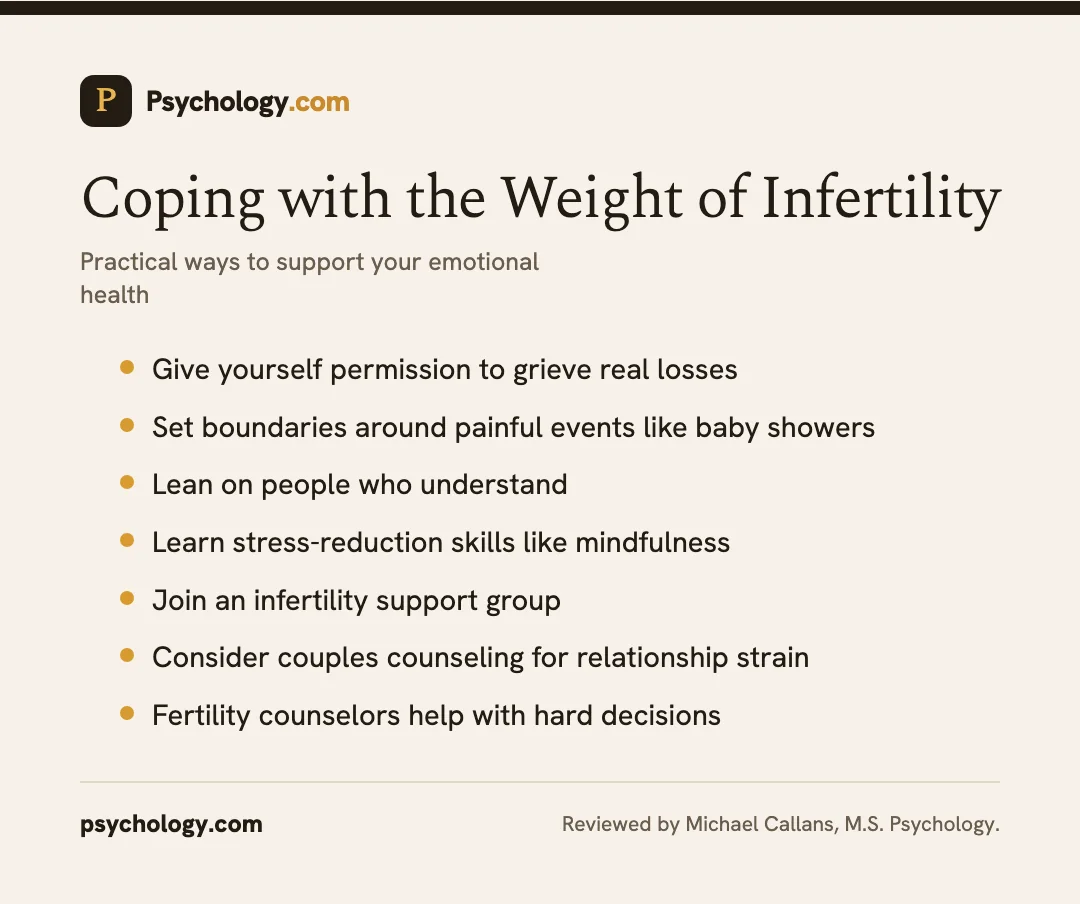
You do not have to manage the emotional side of infertility alone, and doing so can make the medical journey more bearable. Helpful coping strategies include giving yourself permission to grieve, setting boundaries around painful social situations such as baby showers, leaning on people who understand, and learning stress-reduction skills such as mindfulness and relaxation. Connecting with others through infertility support groups, including those offered by patient organizations, reduces isolation by surrounding you with people who truly get it.
Professional counseling adds another layer of support. Mental health professionals who specialize in fertility help with grief, depression, and anxiety, with decision-making about treatment options, and with the relationship and identity questions infertility raises. Many fertility clinics include or can refer you to such counselors, and organizations like RESOLVE: The National Infertility Association maintain directories of support groups and professionals. Counseling offers practical support for coping, communicating, and making decisions during a demanding medical experience.
Free tools and worksheets
Practical, printable exercises from our free library that people managing infertility and mental health often find useful. No signup needed.
Does this sound familiar? Infertility asks a lot of a heart. These prompts offer a gentle way to check in with yourself; they are reflections, not a diagnosis.
Free, with a plain-language result and a PDF you can bring to a professional. Check the site's privacy information before entering sensitive details. A screening is not a diagnosis.
When to seek help
Consider reaching out to a mental health professional if sadness or anxiety lingers, if you are losing interest in daily life, if infertility is straining your relationship or pulling you away from people, or if you are facing decisions that feel overwhelming. Also seek help if you are relying on alcohol or other substances to cope. Seek help immediately if you have thoughts of harming yourself. Support is effective, and there is no need to wait until things feel unbearable before asking for it.
Frequently asked questions
Is it normal to feel grief over infertility when there has been no death?
Yes. Infertility involves real losses, including the loss of an imagined child, a pregnancy, or the future a person hoped for. This grief is valid even though it is often unseen by others, and naming it as grief can be an important first step toward coping.
Does stress cause infertility?
The effect of stress on fertility remains uncertain, according to ASRM's patient guidance. Infertility and treatment can cause substantial distress, and telling someone to just relax can increase blame. Stress-management skills may improve quality of life during treatment. They cannot promise pregnancy, and a fertility evaluation remains appropriate even when you are also receiving emotional support.
When should we see a counselor about infertility?
Consider counseling if sadness or anxiety is persistent, if infertility is straining your relationship, if you are facing difficult decisions such as donor conception or stopping treatment, or simply if you want support. Many fertility clinics have or can refer you to a counselor who specializes in this area.
How can I cope with baby showers and pregnancy announcements?
Give yourself permission to protect your energy. It is okay to decline an invitation, arrive late, leave early, or send a gift instead of attending. A short, kind script helps, such as thanking the person and explaining you cannot make it. Feeling both happy for someone and sad for yourself at the same time is normal, and boundaries around painful events are a healthy coping tool, not a failure.
How does infertility affect men emotionally?
Men facing infertility may experience grief, guilt, shame, or a sense of failure, and some feel pressure to stay strong for their partner. Fertility problems can involve either partner, both partners, or unexplained causes. Each person's distress deserves attention. Counseling and support groups can offer space to discuss identity, sexual concerns, relationship strain, and treatment decisions, including feelings that are difficult to share at home.
Should we take a break from fertility treatment?
Sometimes, yes. Treatment is physically, emotionally, and financially demanding, and a planned pause can restore energy, perspective, and connection as a couple. A break is not giving up; it is a legitimate part of many people's journey. Talk with your fertility team about timing so a pause fits your medical picture, and consider a counselor to help you decide together what comes next.
Related
- Grief and Bereavement
- Depression
- Couples Counseling
Therapists who specialize in infertility
Connect with a licensed therapist on Psychology.com who works with infertility.
- Advance Thru Psychotherapy and Family Development
- Amy Keller
- Barbara L Edwards
- Beth Britton
- Diana C. Sanabria
- Diana J. Goldstein
Browse all therapists →
Finding the right help
When you are ready to take the next step, these guides walk you through finding and starting with the right therapist.
- Getting started with therapy
- How to find the right therapist
- Find a therapist who takes insurance
- Free & low-cost therapy
References
- World Health Organization (WHO): Infertility fact sheet
- American Psychological Association (APA): Infertility and mental health
- American College of Obstetricians and Gynecologists (ACOG): Evaluating Infertility
- Mayo Clinic: Infertility
- RESOLVE: The National Infertility Association
- MedlinePlus: Infertility
- NICHD: Common

Planning emotional support around fertility care
Before a clinic appointment, note what is affecting daily life: sleep, concentration, conflict, social withdrawal, or dread around results. Ask who provides fertility counseling and whether individual and couple appointments are available. You can request support while deciding whether to pursue treatment, continue it, pause, or consider other paths.
Discuss a pause with your fertility clinician because age, diagnosis, and planned procedures can affect timing. A counselor can help you identify your emotional and financial limits without choosing the outcome for you. If you use the anxiety self-check, bring it as a conversation aid. It cannot assess fertility or explain the cause of difficulty conceiving. Try the relationship check-in worksheet to agree on how to share updates and when to take a break from fertility discussions.
ASRM's stress and infertility guidance describes coping as support for well-being during treatment. A pregnancy outcome is not a measure of how well someone managed stress.