

Key facts
- Couples counseling addresses communication, conflict, trust, intimacy, and life transitions. Gottman Method work includes assessment and interventions tailored to the relationship. The Gottman Institute.
- The Gottman Method focuses on relationship skills; emotionally focused therapy (EFT) works with attachment needs and the cycle between partners. The Gottman Institute. ICEEFT.
- Research supports improvement with EFT for many distressed couples, but individual outcomes and lasting gains depend on the situation and response to treatment. ICEEFT.
- Joint work gives partners a chance to practice together. When abuse or fear is present, seek individual support and safety guidance before considering joint sessions. National Domestic Violence Hotline.
What is couples counseling?
Couples counseling, also called couples therapy or marriage counseling, is a form of psychotherapy in which two partners work with a trained therapist to improve their relationship. Unlike individual therapy, the relationship itself is the client. The therapist helps both partners feel heard and focuses on the patterns between them, while addressing harmful behavior and assessing whether joint work is safe.
At the start, describe a recurring problem and what a better outcome would look like for each of you. Ask how the therapist checks safety, handles private disclosures, and decides whether joint sessions are appropriate. These agreements make it easier to understand the purpose and boundaries of the work.
The aim is practical: to interrupt the cycles that lead to conflict and disconnection, and to replace them with healthier ways of communicating, repairing, and staying close. Some couples come to resolve a specific crisis, others to strengthen an already good relationship, and others to decide whether to stay together. All of these are valid reasons. Couples counseling is one form of the broader relationship counseling that supports people in their closest connections.
Evidence-based methods
Modern couples therapy is grounded in research, and a few approaches stand out for their evidence base.
The Gottman Method
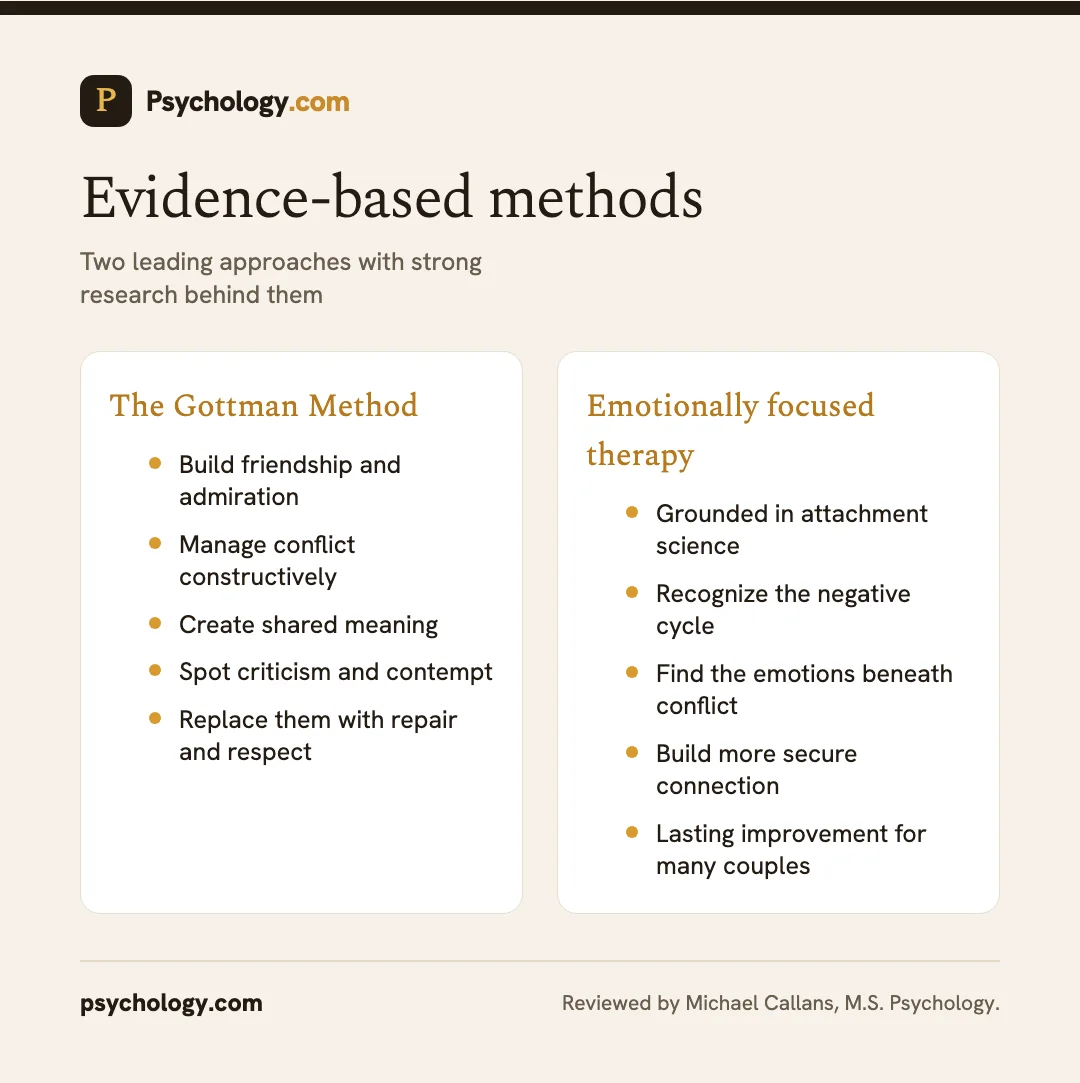
Developed by Drs. John and Julie Gottman from decades of studying what makes relationships succeed or fail, the Gottman Method focuses on building friendship and admiration, managing conflict constructively, and creating shared meaning. The Gottman Institute identifies specific behaviors that predict trouble, such as criticism, contempt, defensiveness, and stonewalling, and teaches couples to replace them with repair and respect.
Emotionally focused therapy (EFT)
Emotionally focused therapy, developed by Dr. Sue Johnson, draws on attachment science. It helps partners recognize the negative cycle that drives their conflict, identify the deeper emotions and needs beneath it, and create new, more secure ways of reaching for each other. EFT is one of the most thoroughly researched couples approaches, with studies showing lasting improvement for many couples.
Other approaches
Therapists may also draw on cognitive behavioral couples therapy, the developmental model, or integrative approaches tailored to a couple's needs. What matters most is that the method is evidence-informed and the therapist is properly trained in it.
What it helps with
Couples seek counseling for a wide range of reasons, including:
- Frequent arguments or the same conflict on repeat
- Communication that has broken down or turned hostile
- Recovering trust after infidelity, dishonesty, or financial betrayal
- Loss of emotional or physical intimacy
- Disagreements about parenting, money, or future plans
- Navigating transitions like marriage, a new baby, relocation, or illness
- Deciding whether to continue the relationship or separate
Counseling can also help couples who are doing well but want to deepen their connection or prepare for a major step. Premarital counseling, for instance, gives partners a head start on the skills that protect a relationship over time.
What to expect in sessions
The opening phase usually includes an assessment. The therapist learns your history, what brought you in, and what each of you hopes to change, sometimes meeting with each partner alone before working together. From there, the therapist recommends a meeting schedule and session length based on the approach and your needs. Confirm the timing and fees before you begin.
In session, you can expect to talk openly with the therapist's guidance, practice new ways of communicating, and slow down conversations that usually escalate. The therapist may point out unhelpful patterns in real time and coach you toward repair. Many couples are given exercises or conversations to try between sessions, because lasting change happens in daily life, not only in the room. Progress is rarely a single breakthrough. It tends to come from small, repeated shifts that add up.
A good therapist works to understand both perspectives, makes space for each partner to speak, and addresses intimidation or harmful behavior directly. Early on you will usually set shared goals, whether that is reducing the frequency of fights, rebuilding trust, reconnecting emotionally, or reaching a thoughtful decision about the future. Those goals give the work direction and a way to measure progress. It is normal for sessions to feel uncomfortable at times, since you are talking about hard things, but a skilled therapist keeps the conversation safe and constructive rather than letting it turn into the same argument you have at home.
When to go
There is no need to wait until a relationship is in crisis. In fact, research from the Gottman Institute suggests many couples wait years after problems begin before seeking help, which can make issues harder to resolve. Consider couples counseling when conflict keeps repeating, communication feels tense or has stopped, trust has been damaged, intimacy has faded, or you are facing a decision you want to navigate together. Reaching out early, while goodwill remains, gives therapy the best chance to help.
Finding a qualified provider
Look for a licensed clinician with specific training in couples work, such as a licensed marriage and family therapist (LMFT), psychologist, or counselor trained in a recognized method like Gottman or EFT. It is reasonable to ask about their training, approach, and experience with your particular concern. A good fit is essential: both partners should feel the therapist is fair and easy to talk to. If the broader family system is involved, marriage and family therapy may be a better fit, and if you are moving toward separation, divorce counseling offers focused support.
Frequently asked questions
How long does couples counseling take?
The length of couples counseling depends on your goals, the concerns involved, and how the work progresses. ICEEFT describes emotionally focused therapy as a structured approach often delivered over eight to twenty sessions. That range is a description of the model, not a promise for every couple. Ask when your therapist will review progress and adjust the plan. ICEEFT.
Can couples counseling help after infidelity?
Couples counseling can help partners address the impact of infidelity through accountability, honest discussion, and rebuilding trust over time. The therapist helps each person clarify needs and decide whether repair is a shared goal. Progress depends on the situation and both partners' choices. Counseling may also help people reach a thoughtful decision about separation.
What if only one of us wants to go?
If your partner declines couples counseling, individual therapy can help you clarify your needs, boundaries, communication, and decisions about the relationship. Your work may change how you respond to conflict, although it cannot control your partner's behavior or willingness to participate. You can explain what you hope joint sessions would help with and leave room for an honest response.
Where can I find couples communication exercises in PDF format?
The couples communication worksheet offers exercises you can print or save as a PDF for practicing listening and expressing needs. Use a manageable topic and pause if the conversation becomes overwhelming. Bring difficult moments to your therapist for guidance. If you fear retaliation or feel controlled by your partner, seek individual support before attempting joint exercises.
Can a relationship satisfaction test tell us if we need counseling?
A relationship satisfaction test can help you describe concerns and identify topics to discuss together or with a therapist. It cannot decide whether you should stay together or assess the full context of conflict. You can seek counseling whenever a recurring issue matters to you, even if a quiz result looks reassuring.
Related conditions
- Relationship Counseling
- Marriage and Family Therapy
- Divorce Counseling
Therapists who specialize in couples counseling
Connect with a licensed therapist on Psychology.com who works with couples counseling.
- 180 Wellness
- A FAMILY MATTER
- Advance Thru Psychotherapy and Family Development
- Amy Keller
- Arlyn P. Stern LCSW
- Asktheinternettherapist.com
Finding the right help
When you are ready to take the next step, these guides walk you through finding and starting with the right therapist.
- Getting started with therapy
- How to find the right therapist
- Find a therapist who takes insurance
- Free & low-cost therapy
When joint sessions may be unsafe
If a partner threatens, intimidates, controls, or harms you, discuss safety privately with a qualified professional or domestic violence advocate. The National Domestic Violence Hotline advises against couples counseling in abusive relationships because disclosures can lead to retaliation and abuse can be misrepresented as a shared communication problem. Joint exercises should never require you to risk your safety.
For related guidance, visit the Life & Relationships hub, marriage and family therapy, and divorce counseling. If joint counseling is appropriate, agree on a practical goal, such as discussing a recurring disagreement without interrupting, and ask how your therapist will assess progress.
References
- The Gottman Institute: The Gottman Method
- American Psychological Association (APA): Relationships
- American Association for Marriage and Family Therapy (AAMFT): Couples and family therapy
- Mayo Clinic: Marriage counseling overview
- HelpGuide: Relationship help and building healthy relationships
- ICEEFT: What is Emotionally Focused Therapy?
- National Domestic Violence Hotline: Should I Go To Couples Therapy With My Abusive Partner?