

Key facts
- Divorce counseling provides emotional support through separation, grief, and rebuilding. Psychotherapy can address stress connected to family and relationship changes. NIMH on psychotherapy.
- Grieving a divorce is normal, even when ending the relationship was the right choice. People can experience mixed emotions during a family separation. American Academy of Pediatrics.
- Reducing conflict between parents is one of the strongest protections for children. Consistent routines and warm, reliable parenting also support adjustment. AAP guidance for parents.
- Counseling is different from legal divorce mediation, which handles the practical settlement. Agree on the purpose of sessions and the counselor's role before beginning. NIMH questions for a therapist.
What is divorce counseling?
Divorce counseling is a form of therapy focused on the emotional experience of separation and divorce. It gives you a supportive, confidential space to process what is happening, manage the stress and uncertainty, and make decisions from a steadier place. Depending on your situation, it can involve one person working through the end of a marriage, both partners learning to separate with less conflict, or a parent figuring out how to support their children. At the first appointment, explain whether you are considering separation, already separating, or adjusting afterward. Ask how the counselor handles privacy and whether the proposed work is individual support or joint sessions.
It is worth distinguishing this from the legal side. A divorce mediator or attorney handles the practical matters of dividing assets and arranging custody. A divorce counselor tends to the emotional work: grief, anger, fear, and the slow process of building a new life. The two often go hand in hand, and counseling can actually make the legal process smoother by helping you stay grounded.
Grief and the emotions of divorce
Divorce is a profound loss, and it is normal to grieve it, even if you are the one who chose to leave. You may be mourning the relationship, shared routines, family structure, friendships connected to your spouse, and the future you once pictured. Grief after divorce often moves through familiar stages: shock, denial, anger, sadness, and eventually acceptance, though rarely in a tidy order.
Alongside grief, people commonly feel guilt, relief, loneliness, anxiety about the future, and a shaken sense of identity. All of this is a natural response to a major life change. Because the feelings can mirror other forms of bereavement, our guide to grief and bereavement can help you understand what you are experiencing. Counseling gives these emotions space and support, helping you manage them as you adjust to changes in daily life.
How counseling helps
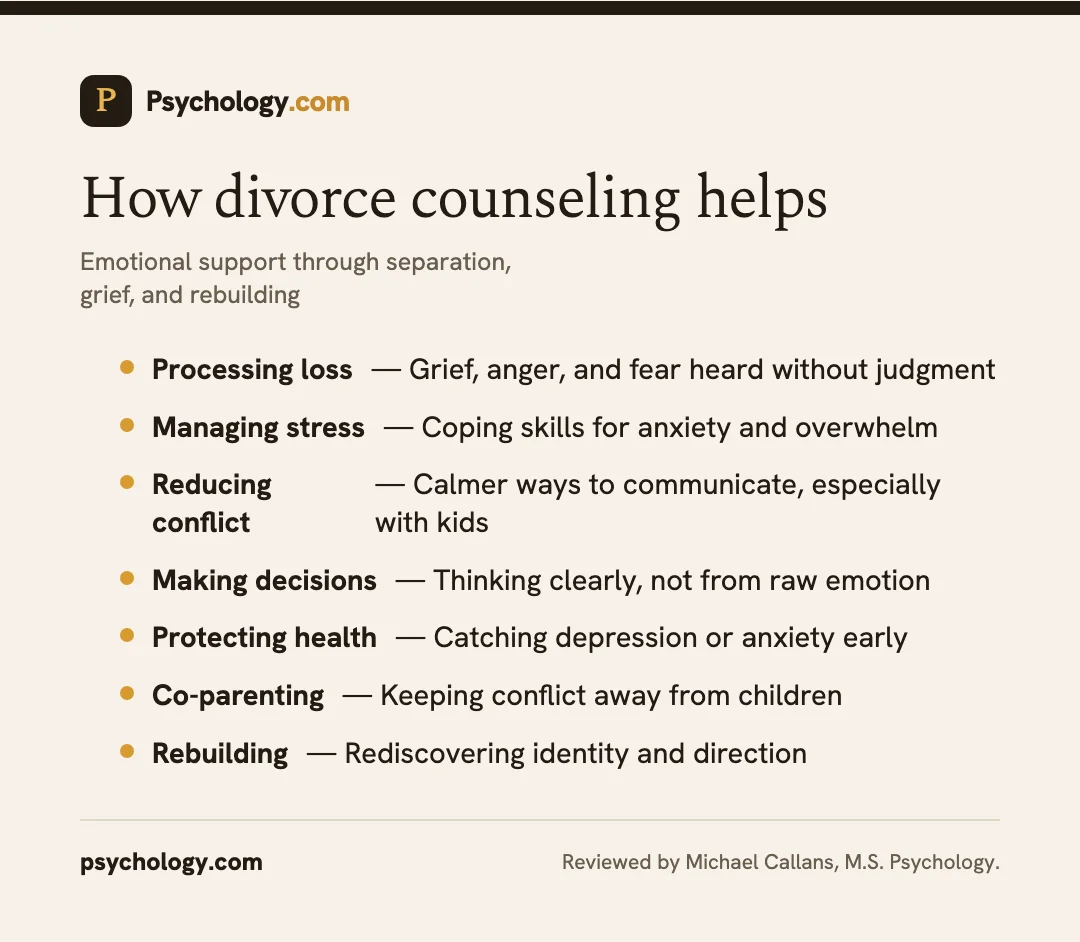
A divorce counselor offers both emotional support and practical tools. The work often includes:
- Processing the loss: giving your grief, anger, and fear a place to be heard without judgment.
- Managing stress: learning coping skills for the anxiety, sleeplessness, and overwhelm that often accompany divorce.
- Reducing conflict: finding calmer ways to communicate with a former partner, especially when children are involved.
- Making decisions: thinking clearly about important choices rather than acting from raw emotion.
- Protecting your health: recognizing when stress is tipping into depression or persistent anxiety, and getting help early.
The end of a marriage can take a real toll on physical and mental health. Research summarized by the American Psychological Association (APA) notes that while divorce is stressful for the whole family, support and reduced conflict help adults and children adjust over time.
Wondering where you stand? Take the divorce test (should I stay or go?) or the relationship satisfaction test (CSI-16): free, confidential, with an instant plain-language result and a PDF you can bring to a professional. A quiz is a starting point for reflection, not a verdict.
Co-parenting and helping children cope
When children are involved, divorce counseling often turns to co-parenting. An important protective step parents can take is to keep conflict away from their children. Ongoing parental conflict is associated with children's distress, and reducing exposure to conflict supports adjustment. A counselor can help you and your former partner build a workable co-parenting relationship: clear communication, consistent routines across two homes, and a united front on the things that matter.
Children of all ages need reassurance that the divorce is not their fault and that both parents still love them. Keep their routines as stable as you can, avoid putting them in the middle or asking them to carry messages, and make space for them to express their feelings honestly. Some children benefit from talking to a counselor of their own, and our parenting resources offer further guidance on supporting them through the change.
Rebuilding after divorce
Divorce is an ending, but it is also a beginning. As the acute grief eases, counseling helps you rebuild: rediscovering who you are outside the marriage, reconnecting with your values and interests, strengthening friendships, and setting goals for the next chapter. For many people, this becomes a period of real growth and renewed self-understanding.
Rebuilding takes time, and there is no fixed timeline. Some days will feel like progress and others like setbacks, and both are part of healing. With support, recovery can include moving forward with a clearer sense of who you are and what you want. Working on self-worth and on healthier relationships often becomes part of that forward path.
Finding the right support
Look for a licensed therapist or counselor with experience in divorce, separation, grief, or family transitions, such as a psychologist, licensed counselor, clinical social worker, or marriage and family therapist. If you have children, a clinician experienced in co-parenting and child adjustment is especially valuable. Support groups for people going through divorce can also help you feel less alone. There is no shame in needing help through one of life's hardest passages, and reaching out is a sign of strength.
Frequently asked questions
Is it normal to grieve a divorce even if I wanted it?
Yes. Divorce is a major loss, and grief is a natural response even when ending the relationship was the right choice. You may grieve the marriage, shared plans, routines, and the future you imagined. Counseling gives you a place to process those feelings without judgment.
How can I help my children cope with divorce?
Reassure children that the divorce is not their fault and that both parents still love them. Keep routines stable, avoid putting them in the middle of conflict, and let them express their feelings. A counselor or child therapist can offer extra support, and reducing conflict between parents is one of the strongest protective factors. Ongoing involvement from each parent should depend on that parent being a safe caregiver.
What does a divorce counselor actually do?
A divorce counselor provides emotional support and practical guidance through separation. They help you process grief, manage stress and conflict, develop healthy co-parenting, support your children, and rebuild a sense of identity and direction. This is different from a divorce mediator or attorney, who handle the legal and financial side.
Can a should I get a divorce quiz tell me whether to leave?
A should I get a divorce quiz can help you name concerns and prepare for a conversation about your marriage. Its score cannot decide whether separation is right for you or evaluate legal consequences. The divorce quiz is a reflection aid. Discuss your priorities, children, finances, and safety with appropriate professionals. If you fear your partner, seek private support from a domestic abuse advocate before considering joint counseling.
Can I go to divorce counseling without my spouse?
You can attend divorce counseling on your own before, during, or after separation. Individual sessions can focus on grief, sleep, stress, boundaries, and decisions within your control. Your spouse does not have to participate for you to seek support. Ask a prospective counselor about experience with separation and whether they also provide joint sessions, since the roles and expectations around privacy can differ.
Related conditions
Therapists who specialize in divorce counseling
Connect with a licensed therapist on Psychology.com who works with divorce counseling.
- A FAMILY MATTER
- Advance Thru Psychotherapy and Family Development
- Amanda P Bailey
- Amy Keller
- Anne Ciota
- Arlyn P. Stern LCSW
Finding the right help
When you are ready to take the next step, these guides walk you through finding and starting with the right therapist.
- Getting started with therapy
- How to find the right therapist
- Find a therapist who takes insurance
- Free & low-cost therapy
References
- American Psychological Association (APA): Divorce and child custody
- American Association for Marriage and Family Therapy (AAMFT): About marriage and family therapists
- HelpGuide: Coping with a breakup or divorce
- HelpGuide: Children and divorce, helping kids cope
- MedlinePlus: Divorce
- American Academy of Pediatrics: Supporting children after separation or divorce
- NIMH: Psychotherapies
- National Domestic Violence Hotline: Couples therapy with an abusive partner
Planning support during separation
Bring a current concern to the first session, such as sleep, an upcoming handoff, or telling your children about the separation. Agree on a practical goal and ask how you will review progress. The circle of control worksheet can help separate your own choices from decisions that depend on your former partner.
If there is intimidation, surveillance, or violence, tell the counselor privately when it is safe. The National Domestic Violence Hotline advises against couples counseling in abusive relationships. An advocate can help with safety planning, while an individual therapist supports recovery. Our domestic abuse guide explains warning signs and support options. Joint communication exercises are appropriate only when participation is safe and voluntary.