

Key facts
- Adults seek therapy for stress, loss, relationship problems, and mental health symptoms. You can ask for help before concerns become a crisis. Source: NIMH.
- The American Psychiatric Association describes typical sessions as 30 to 50 minutes, held weekly or every other week. Your clinician should confirm the schedule and appointment length. Source: American Psychiatric Association.
- Evidence-based psychotherapies can reduce symptoms of anxiety, depression, and other mental disorders. Support can also address grief, stress, and troubling self-beliefs; the method should fit the concern. Source: NIMH.
- Confidentiality is a basic requirement of psychotherapy, and trust supports effective work. Ask the therapist to explain confidentiality limits and how they assess progress. Source: American Psychiatric Association.
Overview
Individual therapy, sometimes called talk therapy or psychotherapy, is a collaborative process between you and a licensed mental health professional. You meet privately, usually once a week or every other week, to talk through what is on your mind and work toward goals you set together. The therapist helps you understand yourself more clearly, build coping skills, and make changes that matter to you. Early conversations clarify what you want to work on, how the proposed approach may help, and how you will recognize progress.
Therapy is for adults at every stage of life and across every level of need. Some people come during a specific hard season, such as a divorce, a job loss, or a bereavement. Others come to address a diagnosable condition like anxiety or depression. And many come simply because they want to feel less stuck, communicate better, or understand patterns that keep repeating. According to the American Psychological Association (APA), psychotherapy helps people of all ages live happier, healthier, and more productive lives, and its benefits often last well beyond the end of treatment.
Common reasons adults start therapy
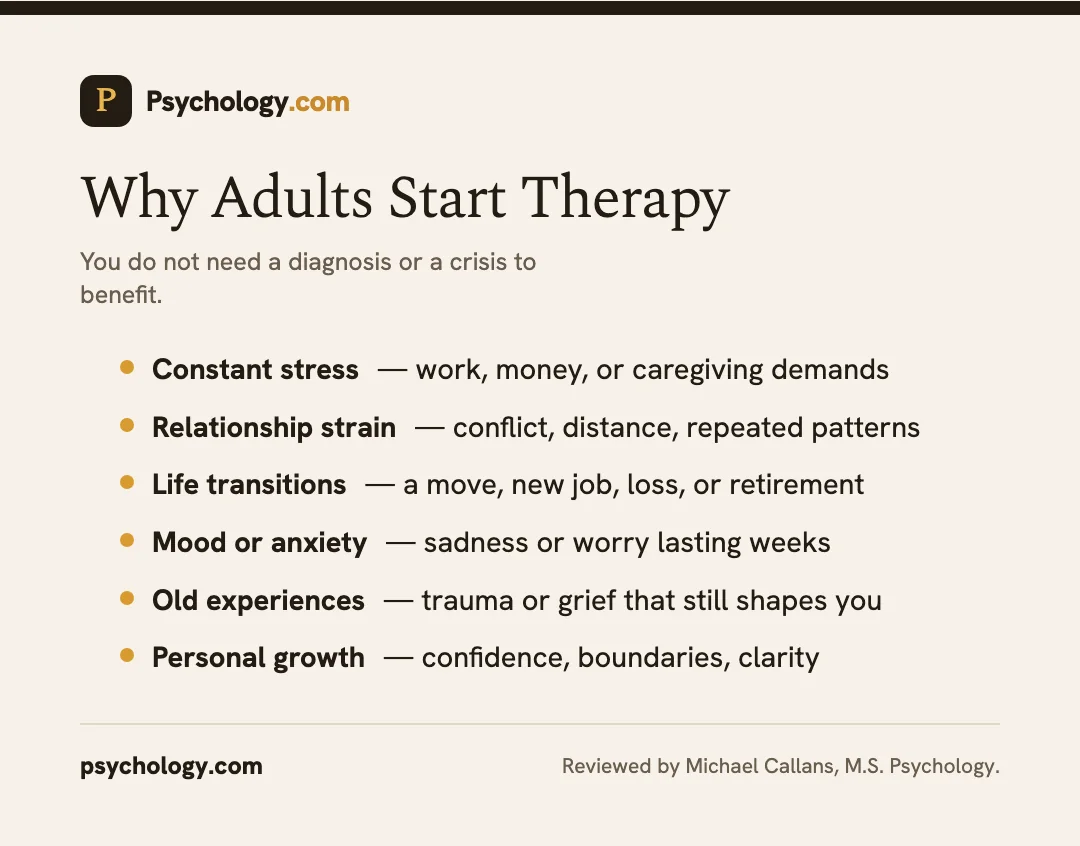
There is no single right reason to begin. People reach out when:
- Stress feels constant. Work pressure, financial worry, or caregiving demands start to affect sleep, mood, or health.
- A relationship is struggling. Conflict, distance, or repeated patterns leave you wanting to communicate or connect differently.
- A life transition hits. A move, a new job, becoming a parent, an empty nest, retirement, illness, or the loss of someone close.
- Mood or anxiety symptoms appear. Persistent sadness, worry, irritability, or loss of interest that lasts more than a couple of weeks.
- Old experiences resurface. Trauma, grief, or family history that still shapes how you feel and react today.
- You want personal growth. Greater self-awareness, more confidence, better boundaries, or clarity about what comes next.
You do not need to wait until things feel unmanageable. Many adults find that getting support earlier makes problems easier to work through, and there is no concern too small to bring to a first session.
Types of therapy
Therapists draw on different evidence-based approaches, and many blend several. The best approach depends on your goals and what fits you. Common forms include:
- Cognitive behavioral therapy (CBT): a structured, skills-based approach that helps you notice and reshape unhelpful thoughts and behaviors. Strong evidence for anxiety, depression, and stress.
- Psychodynamic therapy: explores how past experiences and unconscious patterns influence current feelings and relationships.
- Acceptance and commitment therapy (ACT): helps you accept difficult thoughts and feelings while taking action aligned with your values.
- Interpersonal therapy (IPT): focuses on relationships and life-role changes that affect mood.
- Trauma-focused therapy: approaches such as EMDR that help process distressing memories.
- Humanistic and person-centered therapy: emphasizes self-acceptance, growth, and feeling heard and understood.
You do not need to choose the method yourself. A good therapist will explain their approach and tailor it to you. If you also want to involve a partner or family, options like couples counseling exist alongside individual work.
How therapy helps
Therapy works by giving you a consistent, confidential relationship in which to understand and change what is troubling you. Over time it can help you recognize the thoughts and behaviors that keep you stuck, develop practical coping skills for stress and difficult emotions, process grief and past experiences, and improve how you relate to others. Many people also leave therapy with a stronger sense of who they are and what they want.
Decades of research support these benefits. The APA notes that psychotherapy is effective for a broad range of concerns and that, for many conditions, it is as effective as medication and can produce longer-lasting change. One of the most consistent findings is that the quality of the relationship between you and your therapist, sometimes called the therapeutic alliance, is associated with treatment outcomes, alongside the appropriateness of the specific technique. That is why finding a therapist you trust is worth the effort.
What to expect
The first session is mostly about getting to know each other. The therapist will ask what brought you in, a bit about your history, and what you hope to get out of therapy. You are in control of how much you share, and it is normal for early sessions to feel a little awkward before they feel familiar. Together you will set goals and agree on a rough plan, which can be revisited at any time.
Sessions commonly run about 30 to 50 minutes, often weekly or every other week, according to the American Psychiatric Association. Longer appointments may be offered for assessment or particular treatment methods; confirm the duration when booking. Therapy can be in person or online, and research from the NHS and others shows talking therapies are effective in both formats. What you discuss is confidential, with narrow legal exceptions that the therapist will explain, such as a serious risk of harm to yourself or others. Progress can feel uneven, and it is fine to tell your therapist if something is not working, since adjusting the plan is part of the process.
How to begin
Starting is simpler than it often feels. A few practical steps:
- Clarify what you want help with. It can be specific (panic at work) or open-ended (feeling stuck). Either is fine.
- Decide on logistics. Consider in person versus online, budget and insurance, and any preferences about the therapist.
- Search a trusted directory. Look for a licensed professional whose specialties match your concerns. You can learn how to find a therapist through our directory.
- Use a consultation call. Many therapists offer a brief free call so you can gauge fit before committing.
- Give it a few sessions. Fit matters, and if it is not right after a few meetings, it is okay to try someone else.
If you are unsure where to start or your symptoms feel serious, your primary care doctor can also help, evaluate your health, and refer you to the right kind of support.
Frequently asked questions
Do I need a diagnosis to start therapy as an adult?
No. Many adults start therapy without any diagnosis, simply because they want help with stress, a life change, relationships, or personal growth. A therapist can support you whether or not a formal condition is involved. Describe what feels difficult and what you hope will change. A therapy self-check can help you prepare, although it cannot determine a diagnosis or select a treatment.
How long does adult therapy usually last?
It varies. Some people meet a focused goal in a few months of weekly sessions, while others stay longer for deeper or ongoing work. You and your therapist review progress regularly and decide together when to wind down. Ask when you will review goals and whether sessions can become less frequent as you improve. The schedule should reflect your needs and the treatment approach.
How do I know if therapy is working?
Signs of progress include feeling more able to cope, noticing shifts in patterns you wanted to change, and a sense of being understood by your therapist. Progress is rarely a straight line, so it helps to track changes over weeks rather than single sessions. Choose concrete goals, such as returning to a valued activity or handling conflict more calmly. Discuss stalled progress openly so the therapist can reassess the plan with you. You can also ask whether another approach or referral would better fit your needs.
How do I find a psychologist near me for anxiety and depression?
Look for a licensed psychologist or other qualified therapist with experience treating anxiety and depression. Ask which approaches they use, how they assess symptoms, and whether they coordinate with a prescriber when needed. Confirm availability, fees, and insurance before booking. Our guide to finding a therapist can help you compare providers and prepare consultation questions.
What should I talk about in my first therapy session?
Start with what led you to book the appointment and how it affects daily life. You can bring notes about sleep, mood, relationships, health conditions, medications, and previous care. Share any goals or worries about therapy itself. Ask how sessions work and what privacy limits apply. You can discuss the pace of sharing sensitive experiences with the therapist.
Related
- Anxiety
- Depression
- General Counseling
Therapists who specialize in adult therapy
Connect with a licensed therapist on Psychology.com who works with adult therapy.
- 180 Wellness
- A. Nires
- Advance Thru Psychotherapy and Family Development
- Amy Keller
- Arlyn P. Stern LCSW
- Barbara L Edwards
Find a therapist for adult concerns →
Finding the right help
When you are ready to take the next step, these guides walk you through finding and starting with the right therapist.
- Getting started with therapy
- How to find the right therapist
- Find a therapist who takes insurance
- Free & low-cost therapy
How can I prepare to start therapy?
Write down what is hardest right now, what you have already tried, and a change you would like to notice. For example, a goal might be sleeping more consistently, speaking up during disagreements, or returning to activities you have stopped enjoying. The goal-setting worksheet can help turn a broad concern into topics for the first appointment.
Before booking, ask about the fee, cancellation policy, session format, and how to contact the practice between appointments. If using insurance, confirm coverage with the practice and your insurer. Explore the Life & Relationships hub, our general counseling guide, and the anxiety guide for related concerns. NIMH offers questions to ask a prospective therapist.
References
- American Psychological Association (APA): Understanding psychotherapy and how it works
- American Psychiatric Association: What is psychotherapy?
- NHS: About talking therapies
- National Institute of Mental Health (NIMH): Psychotherapies
- HelpGuide: Finding a therapist who can help you heal