 Reviewed by
Key facts
- Male sexual dysfunction includes erectile difficulties, low or absent desire, and problems with ejaculation or orgasm. MedlinePlus: sexual problems in men
- Psychological factors such as stress, anxiety, and relationship strain are common contributors, often alongside physical ones. NIDDK: symptoms and causes
- Sexual difficulties are common, and treatment depends on the cause; seeking help can identify medical contributors and appropriate options. NIDDK: treatment
- Medical care and therapy can be combined when physical and emotional contributors both need attention. NIDDK: treatment
What is male sexual dysfunction?
Male sexual dysfunction is an umbrella term for ongoing difficulties with any part of the sexual response: desire, arousal, erection, ejaculation, or orgasm. Occasional changes in sexual response can happen with fatigue, stress, or alcohol use. It becomes a concern worth addressing when the difficulty is persistent, causes distress, or affects a relationship. Describing which part of sexual response has changed helps a clinician choose the right questions, examination, and follow-up.
None of this reflects on a man's worth, masculinity, or attractiveness. Sexual difficulties are medical and psychological experiences that deserve respectful assessment and support. The Cleveland Clinic notes that erectile dysfunction alone affects a large share of men, with prevalence rising with age. Because so many men experience some form of sexual difficulty, you are in good company, and effective help is available.
Types and signs
- Erectile dysfunction (ED): trouble getting or keeping an erection firm enough for satisfying sex.
- Low sexual desire: reduced interest in sex that feels distressing or out of step with how you would like to feel.
- Premature ejaculation: ejaculation that happens sooner than wanted, often with little sense of control.
- Delayed or absent ejaculation: needing a long time to reach orgasm, or being unable to.
Many men experience more than one of these at the same time, and they frequently feed one another. Worrying about an erection, for example, can suppress desire and make the body less responsive, which is one reason it helps to look at the whole picture rather than a single symptom.
| Type | What it looks like | Common first-line help |
|---|---|---|
| Erectile dysfunction | Trouble getting or keeping an erection firm enough for sex | Medical evaluation, oral medications, therapy for performance anxiety |
| Low sexual desire | Reduced interest in sex that feels distressing or out of step | Hormone evaluation, treating mood, individual or couples therapy |
| Premature ejaculation | Ejaculation sooner than wanted, with little sense of control | Sex therapy techniques; medication review when appropriate |
| Delayed or absent ejaculation | Needing a long time to reach orgasm, or being unable to | Medication review, medical workup, sex therapy |
| Performance anxiety | Worry about sex that keeps the body from responding | CBT and sex therapy to interrupt the worry cycle |
The mind-body link
Sexual response is not purely mechanical. Arousal depends on a calm, engaged nervous system, and the brain is the most important sexual organ. When the mind is preoccupied with worry, pressure, or self-criticism, the body's stress response kicks in. Stress hormones narrow blood vessels and pull the body toward fight-or-flight, which is the opposite of the relaxed state arousal needs.
This is why performance anxiety is so central. A single disappointing experience can plant a fear of it happening again. That fear then activates the stress response during the next encounter, making difficulty more likely, which deepens the fear. Over time a self-reinforcing loop forms, and the original physical cause may matter far less than the anxiety now driving it. Our guide to anxiety explains how this kind of cycle takes hold and how it can be interrupted. The encouraging news is that because the mind is so involved, psychological treatment can be remarkably effective.
Causes and risk factors
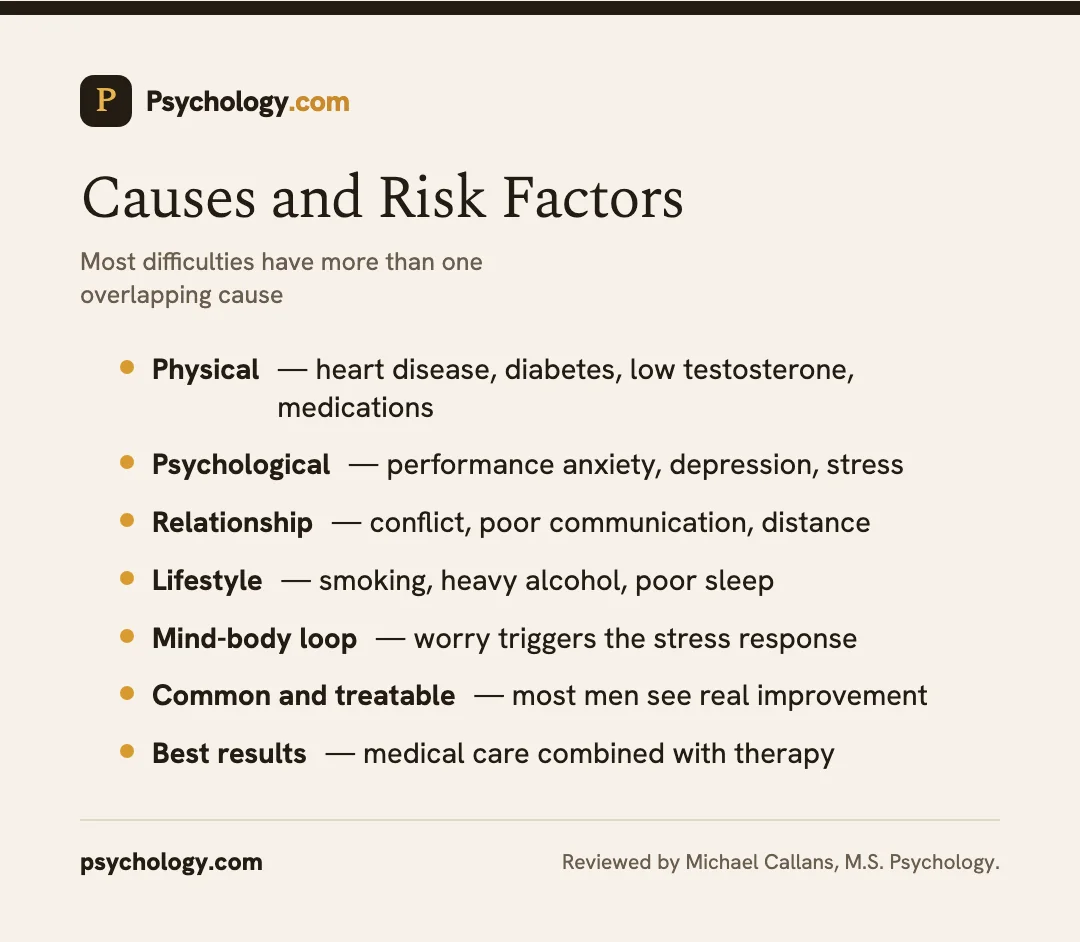
Most sexual difficulties have more than one cause, and physical and psychological factors usually overlap.
- Physical: cardiovascular disease, diabetes, high blood pressure, hormonal changes such as low testosterone, nerve conditions, and certain medications, including some antidepressants and blood pressure drugs.
- Psychological: performance anxiety, depression, general stress, low self-esteem, body image concerns, and past sexual trauma.
- Relationship: unresolved conflict, poor communication, or emotional distance with a partner.
- Lifestyle: smoking, heavy alcohol use, lack of exercise, poor sleep, and chronic overwork.
Because physical causes such as heart and vascular disease can show up first as erectile difficulties, a medical evaluation is important even when the issue feels mostly emotional. As the Mayo Clinic explains, ED can be an early warning sign of an underlying health condition, so getting checked protects more than your sex life.
How it is treated
“ED becomes more common as you get older. But it's not a natural part of aging.”
Sexual difficulties have several treatment options, and improvement depends on the cause, overall health, and whether the plan fits the person’s needs. The right plan depends on the cause, and the strongest results often come from addressing body and mind together.
Medical care
A doctor can identify and treat physical contributors. Depending on the cause, that may include oral medications that improve blood flow, hormone evaluation and treatment, adjusting a medication that is interfering with function, or managing conditions like diabetes and high blood pressure. A medical workup also rules out serious health issues that ED can signal.
Therapy and sex therapy
Psychological treatment is highly effective, especially when anxiety, stress, or relationship factors are involved. Cognitive behavioral therapy helps break the worry-and-avoidance cycle by reframing the thoughts that fuel performance pressure. Sex therapy, a specialized form of talk therapy without sexual contact between therapist and client, addresses desire, intimacy, and communication, often with practical at-home exercises that reduce pressure and rebuild connection. When a partner is involved, relationship work can ease the tension that difficulties create.
Lifestyle
Regular exercise, better sleep, stopping smoking, moderating alcohol, and managing stress all support healthy sexual function and complement medical and psychological care.
Free tools and worksheets
Practical, printable exercises from our free library that people managing male sexual dysfunction often find useful. No signup needed.
Does this sound familiar? If something about your sex life has been weighing on you, these private prompts can help you take honest stock. They are reflections, not a diagnosis.
Free, confidential, with an instant plain-language result and a PDF you can bring to a professional. A screening is not a diagnosis.
When to seek help
Reach out to a doctor or mental health professional if a sexual difficulty persists for several weeks, causes you distress, or is straining your relationship. Start with a medical evaluation to check for treatable physical causes, and consider a therapist or certified sex therapist if anxiety, mood, or relationship factors are part of the picture. There is no need to wait until things feel unbearable. Help is available, it is confidential, and it works.
Frequently asked questions
Is male sexual dysfunction usually psychological or physical?
It is often both. Physical factors like blood flow, hormones, and medications matter, and so do stress, anxiety, depression, and relationship strain. The mind and body work together, so the most effective care looks at both rather than assuming a single cause.
Can performance anxiety cause erectile difficulties?
Yes. Worry about performing can trigger a stress response that works against arousal, which then fuels more worry. Therapy can help address this cycle, especially when paired with medical care when needed. A clinician should also review physical contributors, because anxiety and medical causes can occur together.
Should I see a doctor or a therapist first?
A good first step is a medical evaluation to check for treatable physical causes. From there, many men also benefit from a therapist or certified sex therapist, since psychological and relationship factors are frequently involved. The two approaches work well together.
What actually happens in sex therapy?
Sex therapy is specialized talk therapy, and it never involves sexual contact with the therapist. A trained therapist helps you understand what is driving the difficulty, reduce performance pressure, and rebuild intimacy, often through structured conversations and private at-home exercises for you or you and your partner. Sessions are confidential, and people can attend alone or as a couple.
Can antidepressants or other medications cause sexual problems?
Yes. Some antidepressants, blood pressure medications, and other prescriptions can reduce desire, delay ejaculation, or contribute to erectile difficulties. If you suspect a medication is involved, do not stop taking it on your own. Talk with your prescriber, since adjusting the dose, considering a different schedule, or switching medication may help when clinically appropriate.
How do I talk to my partner about a sexual problem?
Choose a calm moment outside the bedroom, and frame it as something you want to solve together rather than a fault to assign. Being direct but warm, for example naming the stress or worry behind it, usually brings relief to both people. Silence tends to breed distance and assumptions, while an honest conversation is often the first step toward things improving.
Related conditions
Therapists who specialize in male sexual dysfunction
Connect with a licensed therapist on Psychology.com who works with male sexual dysfunction.
Finding the right help
When you are ready to take the next step, these guides walk you through finding and starting with the right therapist.
- Getting started with therapy
- How to find the right therapist
- Find a therapist who takes insurance
- Free & low-cost therapy
References
- Cleveland Clinic: Erectile Dysfunction
- Mayo Clinic: Erectile dysfunction
- NHS: Erection problems (erectile dysfunction)
- National Institute of Diabetes and Digestive and Kidney Diseases (NIDDK): Erectile Dysfunction
- MedlinePlus: Erectile Dysfunction
- American Psychological Association (APA): Sexuality
- NIDDK: symptoms and causes
- NIDDK: treatment
- MedlinePlus: sexual problems in men
- AASECT: sex therapy standards
Preparing for a sexual health visit
Describe the specific change: reduced desire, trouble maintaining an erection, ejaculation sooner than wanted, or difficulty reaching orgasm. Note when it began, whether it happens in every situation, and whether pain, illness, a new medication, or relationship stress appeared around the same time. Bring a list of prescriptions, supplements, and substances you use. NIDDK: symptoms and causes explains that medications, vascular disease, hormone problems, and emotional factors can contribute.
Ask which causes need testing, what each treatment aims to improve, and when to review progress. Continue prescribed medication until your prescriber advises otherwise. NIDDK: treatment recommends discussing medication changes with a health professional. A sex therapist can help with communication and performance pressure; AASECT: sex therapy standards prohibits sexual activity between therapist and client.
The Do I Need Therapy? self-check can help organize emotional concerns, and the Couples Communication Worksheet offers a structure for discussing intimacy. These resources do not assess the medical cause of sexual symptoms. Explore the conditions hub, anxiety guide, and sex therapy guide for related information.
