 Reviewed by
Key facts
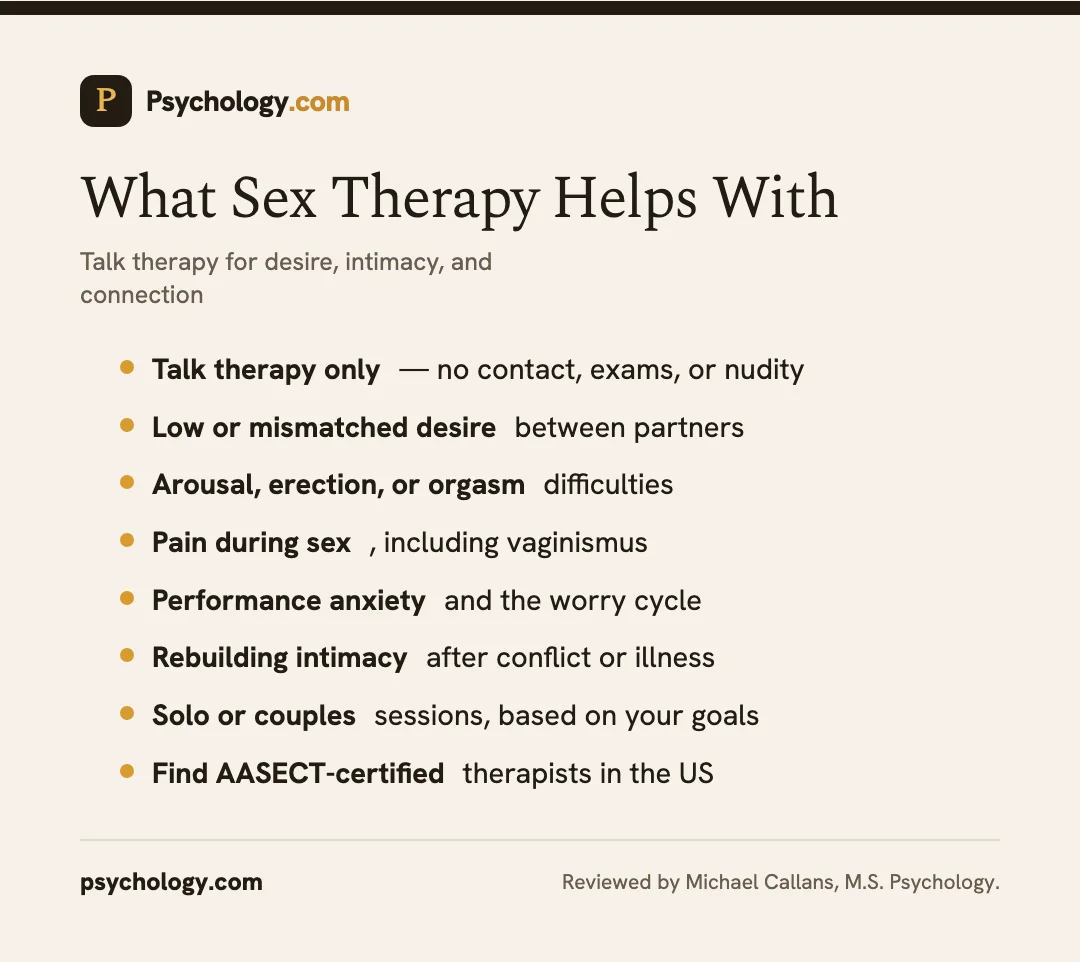
- Sex therapy is talk therapy. There is no physical contact, examination, or nudity in session.
- It helps with desire, arousal, function, pain, intimacy, and mismatched libido.
- You can attend alone or with a partner, depending on your goals.
- In the US, look for a licensed therapist certified by AASECT.
What is sex therapy?
Sex therapy is a specialized form of psychotherapy that helps people address sexual concerns and build a more satisfying intimate life. Despite the name, it works exactly like other talk therapy. You sit and talk with a licensed professional in a private, confidential setting. There is no physical examination, no nudity, and no sexual contact of any kind. A qualified sex therapist follows a clear professional code of ethics that prohibits any physical or sexual involvement with clients.
A sex therapist is a trained mental health professional, such as a psychologist, licensed counselor, or marriage and family therapist, who has additional education in human sexuality. They create a calm, nonjudgmental space to talk about topics many people find hard to raise anywhere else. As the Cleveland Clinic explains, sex therapy can help with a wide range of concerns and is appropriate for people of any age, gender, orientation, or relationship status.
What it helps with
Sex therapy addresses both the physical and emotional sides of sexuality. Common reasons people seek it out include:
- Low or absent sexual desire, and changes in desire over time
- Mismatched libido between partners, where one wants sex more often than the other
- Difficulty with arousal, erection, or orgasm, including male sexual dysfunction
- Pain during sex and conditions such as vaginismus
- Performance anxiety and the worry cycle it creates
- Rebuilding intimacy after conflict, illness, childbirth, or betrayal
- Differences in sexual interests or recovering connection in a long relationship
- Processing the effects of past sexual trauma on intimacy, often alongside trauma-focused care
Because sexual concerns rarely sit in isolation, sessions often touch on stress, self-esteem, communication, and the overall health of a relationship.
What to expect in sessions
Therapy usually begins with a thorough conversation about your history, your current concerns, and your goals. The therapist may ask about your physical health, medications, mood, stress, and relationship dynamics, since all of these shape sexual wellbeing. Nothing about this is graphic or intrusive beyond what is needed to understand and help.
From there, sessions are collaborative and goal-directed. The therapist may help you understand the cycle that maintains a problem, challenge unhelpful beliefs about sex, improve communication with a partner, and reduce the pressure that so often gets in the way of pleasure. A common feature is gentle at-home exercises, sometimes called sensate focus, which couples practice privately to rebuild touch, comfort, and connection without the demand of performance. All of this happens in your own time, never in the therapist's office. If a medical cause is suspected, the therapist will coordinate with a physician so the body and mind are treated together.
Does it work?
Sex therapy has good evidence behind it, particularly for concerns with a strong psychological or relational component, such as performance anxiety, desire differences, and intimacy after conflict. It draws on well-established techniques from cognitive behavioral therapy and couples work, which research has shown to be effective for sexual difficulties. Outcomes are best when both partners are engaged, when any physical contributors are also addressed medically, and when people give the process time. As with other forms of therapy, the relationship with a skilled, nonjudgmental therapist is itself part of what helps.
Finding a certified sex therapist
Sexuality is a specialty, so it is worth choosing someone with dedicated training rather than a generalist who lists it as one of many areas. In the United States, the clearest credential is certification through the American Association of Sexuality Educators, Counselors and Therapists (AASECT). AASECT certification means a licensed professional has completed advanced coursework and supervised experience in sexual health. AASECT maintains a public directory you can search by location.
When you reach out, it is reasonable to ask about a therapist's license, their training in sexuality, their experience with your specific concern, and whether they offer individual sessions, couples counseling, or both. Fit matters. You should feel respected and at ease, since comfort is what makes this work possible.
Frequently asked questions
Does sex therapy involve any physical contact or nudity?
No. Sex therapy is talk therapy. There is no physical examination, no nudity, and no sexual contact of any kind in session. Any exercises a therapist suggests are done privately at home. A qualified sex therapist follows a strict professional code of ethics.
Can I go to sex therapy on my own, or do I need a partner?
Both are common. Many people attend individually to work on desire, anxiety, or past experiences, while couples attend together to address intimacy and communication. A therapist can advise which format fits your goals.
How do I know a sex therapist is qualified?
Look for a licensed mental health professional with specialized training in sexuality. In the US, certification through AASECT (the American Association of Sexuality Educators, Counselors and Therapists) signals advanced training and supervised experience in this area.
Related topics
Therapists who specialize in sex therapy
Connect with a licensed therapist on Psychology.com who works with sex therapy.
Finding the right help
When you are ready to take the next step, these guides walk you through finding and starting with the right therapist.
- Getting started with therapy
- How to find the right therapist
- Find a therapist who takes insurance
- Free & low-cost therapy
References
- Cleveland Clinic: Sex Therapy
- American Association of Sexuality Educators, Counselors and Therapists (AASECT)
- American Psychological Association (APA): Sexuality
- MedlinePlus: Sexual problems in women
- NHS: Low sex drive (loss of libido)
- MedlinePlus: Sexual health information