 Reviewed by
In short
Chronic illness is a long-term health condition that can change daily routines, relationships, and emotional wellbeing. Caregiving adds responsibilities that can strain a loved one's health too. Counseling supports patients and caregivers with grief, adjustment, depression, anxiety, and communication, alongside medical care and practical help with everyday demands.
Key facts
- Chronic illness is widespread: CDC reports that three in four American adults have a chronic condition. Many families also take on caregiving responsibilities. CDC: About Chronic Diseases.
- People with chronic diseases have an increased risk of depression; illness-related stress, anxiety, brain changes, and medication effects can contribute. NIMH.
- Caregiver strain can affect health and self-care. Respite care provides time away from caregiving responsibilities, and caregivers benefit from asking for concrete support. CDC: Caring for Yourself.
- Counseling can support coping, grief, and relationship strain. Depression alongside chronic disease is treatable with psychotherapy, medication, or both, selected for the person's medical circumstances. NIMH.
The emotional toll of chronic illness
A chronic illness is a health condition that lasts a year or more and requires ongoing care or limits daily activity. Examples include diabetes, heart disease, cancer, autoimmune conditions, chronic kidney disease, and many neurological disorders. According to the U.S. Centers for Disease Control and Prevention (CDC), chronic diseases are the leading drivers of illness and disability in the United States, and they affect a large majority of older adults.
A useful starting point is to separate medical needs, emotional needs, and caregiving tasks. Tell the care team which symptoms or responsibilities are hardest to manage and ask who can help with each. A social worker may help locate practical services while a therapist works with distress and adjustment.
Living with one is about far more than symptoms and appointments. A long-term diagnosis can disrupt work and finances, change how a person sees their body and their future, strain relationships, and create a constant background of uncertainty. Pain, fatigue, and treatment side effects add a physical burden on top of the emotional one. None of this is a sign of weakness. It is an understandable response to a difficult situation, and discussing it can help your care team recognize what support you need.
Adjustment and grief
Coming to terms with a chronic illness often involves repeated adjustments as symptoms, treatments, and daily needs change. Mental health professionals sometimes describe an adjustment phase, when a person works to absorb the diagnosis, revise their expectations, and rebuild a sense of normal life. When the strain of adjusting becomes overwhelming and produces significant distress or difficulty functioning, clinicians may recognize an adjustment disorder, which responds well to support.
Grief is also a normal and often underrecognized part of chronic illness. People may mourn the loss of their health, abilities, roles, plans, or the future they had imagined. This kind of loss is not always acknowledged by others, which can make it lonelier, a phenomenon sometimes called disenfranchised grief. Naming these feelings as grief can be a relief in itself. Our guide to grief and bereavement covers these reactions in more depth.
| What you notice | Common adjustment | A sign support could help |
|---|---|---|
| Mood | Waves of sadness that come and go | Persistent low mood that interferes with daily life |
| Worry | Concern before appointments or test results | Constant anxiety that crowds out daily life |
| Grief | Mourning old routines while building new ones | Feeling stuck, hopeless, or numb for months |
| Connection | Tired, but still engaging with people | Withdrawing from friends, family, or care tasks |
| Coping | Leaning on people, faith, or routines | Using alcohol or other substances to get through |
| Functioning | Adapting work and roles over time | Falling behind on treatment, work, or obligations |
3 in 4American adults have at least one chronic conditionCDC
More than 90%of adults 65 and older have at least one chronic conditionCDC
$5.3 trillionin total annual U.S. health care costs; chronic diseases are leading drivers of that spendingCDC
Depression and anxiety risk
Chronic illness substantially raises the risk of mental health conditions. The National Institute of Mental Health (NIMH) notes that people with chronic physical conditions experience depression at higher rates than the general population, and the relationship runs both ways: depression can worsen the course of physical illness, and physical illness can deepen depression. Anxiety is common too, often centered on symptoms, test results, treatment decisions, and what the future holds.
These conditions can be hard to spot, because fatigue, sleep problems, appetite changes, and trouble concentrating can be attributed entirely to the illness or its treatment. That overlap is one reason depression often goes untreated in people who are physically unwell. The encouraging news is that depression and anxiety remain treatable even alongside a serious medical condition, and treating them can improve quality of life and sometimes physical outcomes as well.
The caregiver experience
The emotional toll of chronic illness extends to the people providing care. Family caregivers, who are often partners, adult children, or parents, take on tasks ranging from medication and appointments to bathing, feeding, finances, and round-the-clock supervision, frequently while holding down jobs and raising families. This is meaningful work, but it is also demanding and often invisible.
Over time, sustained caregiving stress can lead to exhaustion, resentment, guilt, isolation, and a state commonly called caregiver burnout. The National Institute on Aging (NIA) notes that caregivers face elevated rates of depression, anxiety, and poorer physical health than non-caregivers. Caregivers also grieve, watching someone they love change or decline, and they may struggle to make time for their own needs. Caring for yourself is not selfish in this situation. It is what makes sustained caregiving possible.
How counseling helps
“Research suggests that people who have a chronic disease and depression tend to have more severe symptoms of both illnesses.”
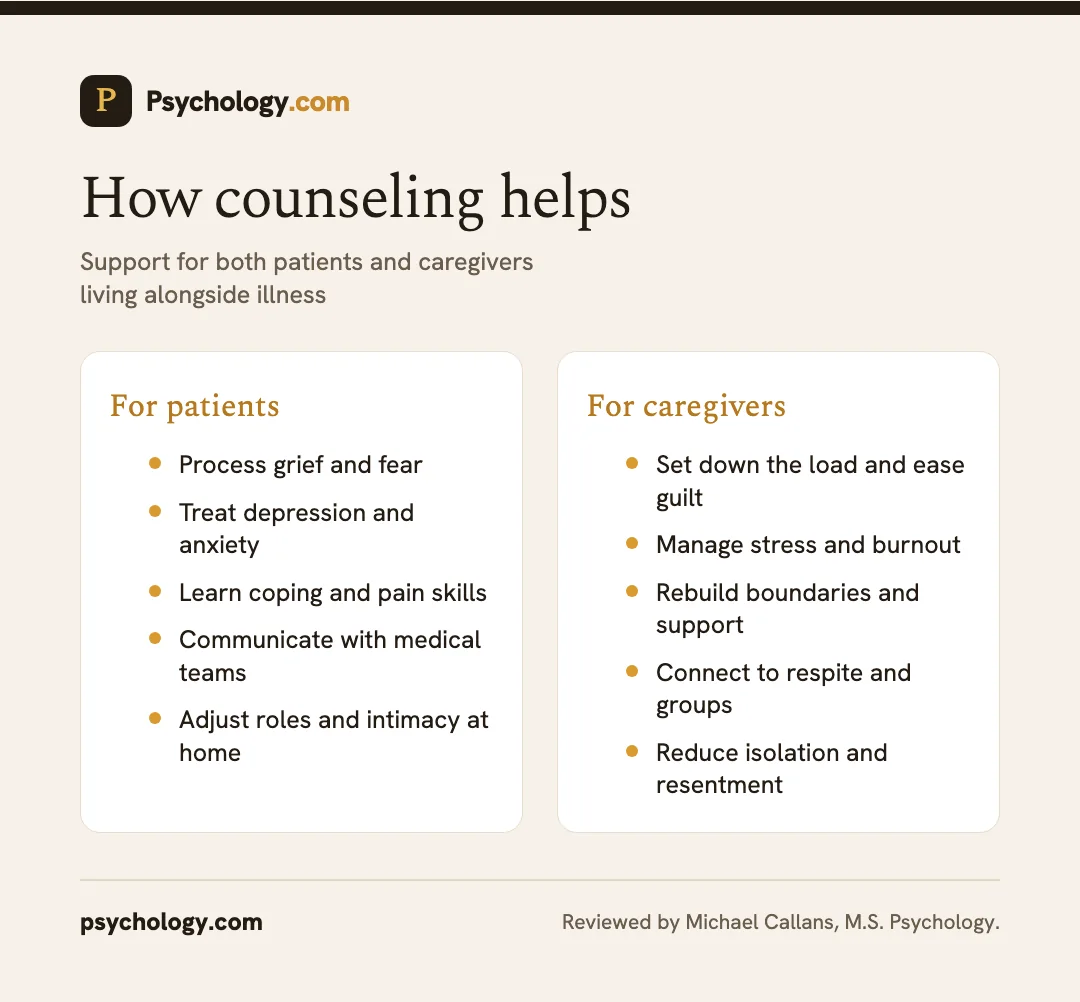
Counseling cannot cure a chronic illness, but it can change how patients and caregivers live alongside it. For people with a chronic condition, therapy provides a place to process grief and fear, treat depression and anxiety, and learn coping and pain management skills. Cognitive behavioral therapy can ease the worry and low mood that surround illness, and acceptance-based approaches help people pursue a meaningful life even when symptoms persist. Therapists can also help with practical strains like communicating with medical teams, navigating changes in relationships and intimacy, and adjusting roles at home.
For caregivers, counseling offers a space to set down the load, manage stress and guilt, and rebuild boundaries and support. Therapists often connect caregivers to respite resources and support groups, where shared experience reduces isolation. Couples and family counseling can help when illness reshapes a relationship, easing communication and resentment so that care does not crowd out connection. The American Psychological Association (APA) emphasizes that psychological support is a core part of living well with chronic conditions, for patients and families alike.
Free tools and worksheets
Practical, printable exercises from our free library that people managing chronic illness and caregiving often find useful. No signup needed.
Does this sound familiar? Wherever you are in this, as the patient or the caregiver, see which of these ring true right now.
Free, with an instant plain-language result and a PDF you can bring to a professional. Completion time varies. A screening is not a diagnosis; discuss the results and your medical symptoms with a clinician.
When to seek help
Whether you are the patient or the caregiver, reach out to a doctor or mental health professional if low mood, anxiety, or hopelessness persists or is difficult to manage, if you feel constantly overwhelmed or exhausted, if you are withdrawing from people, or if you are using alcohol or other substances to cope. Seek help immediately if you have thoughts of harming yourself. Support is available, it works, and asking for it is a sign of strength rather than failure.
Frequently asked questions
Is it normal to feel depressed or anxious after a chronic illness diagnosis?
Yes. A new diagnosis is a major life change, and adjustment difficulties, grief, anxiety, and low mood are common responses. These feelings are understandable, but when they are intense or long-lasting they deserve support, because depression and anxiety are treatable. Tell your medical team about changes in mood, sleep, and daily functioning so they can consider emotional distress, the illness, and treatment effects together.
Why is caregiving so hard on mental health?
Caregiving often means ongoing stress, lost time for yourself, financial strain, and watching someone you love struggle. Over months and years this can lead to exhaustion, isolation, and a higher risk of depression and anxiety, a pattern often called caregiver burnout. Ask the care team about respite, practical help, and support groups before exhaustion makes routine tasks harder.
How can counseling help when the illness itself will not go away?
Counseling does not need to cure the illness to help. It can ease depression and anxiety, build coping and communication skills, support grief and adjustment, reduce caregiver strain, and help both patients and caregivers find meaning and quality of life alongside the condition. Agree on concrete goals, such as asking for help, protecting rest, or managing worry around appointments.
What type of therapy helps with chronic illness?
Cognitive behavioral therapy has strong evidence for easing the depression and anxiety that accompany chronic illness, and acceptance and commitment therapy helps people build a meaningful life alongside symptoms that will not fully go away. Grief-focused work helps with the losses illness brings, and couples or family therapy eases relationship strain. Many therapists list chronic illness or health psychology as a specialty, so you can search for that directly.
How can I support a chronically ill loved one without burning out?
Build support before you feel desperate rather than after. Share tasks with other family members, accept specific offers of help, use respite care to take real breaks, and keep at least one activity and one relationship that are entirely yours. Watch for warning signs like constant exhaustion, resentment, or withdrawal, and treat them as signals to add support, not as proof you are failing.
What is disenfranchised grief?
Disenfranchised grief is grief that others do not fully recognize or validate, so it receives little support. Mourning your health, independence, career plans, or the future you expected are common examples with chronic illness, because no one has died and life outwardly continues. Naming it as real grief, with a therapist or a support group, is often the first step toward carrying it more lightly.
Related
- Chronic Pain
- Grief and Bereavement
- Depression
Therapists who specialize in chronic illness
Connect with a licensed therapist on Psychology.com who works with chronic illness.
- Barbara L Edwards
- Biofeedback Associates of Northeast Florida
- Caring Counseling Center
- Cynthia J Jones
- Diane M. Berry
More guidance on finding help →
Finding the right help
When you are ready to take the next step, these guides walk you through finding and starting with the right therapist.
- Getting started with therapy
- How to find the right therapist
- Find a therapist who takes insurance
- Free & low-cost therapy
Making a shared support plan
Write down tasks such as medication pickup, transportation, meals, personal care, and appointment follow-up. Name who usually handles each task and who could provide backup. Ask the medical team which tasks need professional training. A self-care plan can help protect the caregiver's appointments and rest alongside the patient's care needs.
Use the caregiver burnout self-check to organize concerns about exhaustion or isolation before speaking with a professional. It cannot determine a diagnosis or how safely someone can provide care. Our Conditions hub, chronic pain guide, and grief and bereavement guide provide related support. When appointments become difficult to attend, ask about accessible formats and coordination with the medical team.
References
- Centers for Disease Control and Prevention (CDC): About Chronic Diseases
- National Institute of Mental Health (NIMH): Chronic Illness and Mental Health
- National Institute on Aging (NIA): Taking Care of Yourself as a Caregiver
- American Psychological Association (APA): Chronic illness
- National Institute on Aging (NIA): Taking Care of Yourself: Tips for Caregivers
- MedlinePlus: Coping with Chronic Illness
- CDC: Healthy Habits: Caring for Yourself When Caring for Another
