 Reviewed by
In short
Prader-Willi syndrome is a genetic condition that affects appetite, development, and behavior. Persistent hunger, anxiety, repetitive behaviors, and difficulty with changes in routine can create daily challenges. Mental health support helps families plan predictable routines, respond to distress, and manage caregiver strain alongside coordinated medical, nutritional, and developmental care.
Key facts
- Prader-Willi syndrome (PWS) is a rare genetic disorder caused by changes on chromosome 15. The missing activity involves genes normally expressed from the father's chromosome, as explained by MedlinePlus Genetics.
- A hallmark feature is hyperphagia, an intense and persistent hunger that is a medical symptom, not a choice. Poor feeding in infancy can precede increased appetite in childhood; see GeneReviews.
- People with PWS may also experience anxiety, compulsive behaviors, and difficulty with transitions. A behavioral plan can address triggers and skills while the medical team assesses additional causes of distress. NICHD treatment guidance describes behavioral care.
- Structure, behavioral strategies, and mental-health support help the whole family manage daily life. Nutrition, hormone care, developmental services, and family support are complementary parts of NICHD treatment guidance.
What is Prader-Willi syndrome?
Prader-Willi syndrome is a rare, complex genetic disorder that affects many parts of the body and behavior. It is present from birth and arises when a group of genes on chromosome 15 fail to function as they should. According to the MedlinePlus Genetics resource, this affects the hypothalamus, a small region of the brain that helps regulate hunger, temperature, mood, and hormones. Mental health care is part of a broader plan that also addresses feeding, growth, sleep, and development. Ask the medical team who coordinates that plan and how families should report a sudden change in behavior.
The condition tends to unfold in stages. In infancy, babies are often very floppy (low muscle tone) and feed poorly. Later in early childhood, this typically shifts to an increased and then intense interest in food. Children and adults with PWS may also have mild to moderate intellectual disability, short stature, incomplete sexual development, and a characteristic set of behavioral features. Every person is different, and outcomes vary widely, but with early diagnosis and coordinated care, many people with PWS live full, meaningful lives.
Prader-Willi syndrome usually results from a spontaneous genetic change. It almost always occurs by chance and is not caused by parenting, diet, or anything a family did. Understanding the biology behind the behavior is the foundation of compassionate, effective support.
| Typical age | Appetite and feeding | What helps |
|---|---|---|
| Birth to about 9 months | Weak suck and low muscle tone make feeding difficult | Feeding support and close growth monitoring |
| About 9 months to 2 years | Feeding improves and growth steadies | Regular pediatric follow-up and early intervention |
| About 2 to 4 years | Weight can climb without an obvious appetite change | A dietitian-guided meal plan started early |
| About 4 to 8 years | Interest in food clearly increases | Predictable meal schedule and consistent routines |
| Around 8 years onward | Intense hunger with little feeling of fullness | A secured food environment and steady supervision |
| Adulthood | Hunger usually persists, though it eases for some | Ongoing structure, support, and team-based care |
The approximate age bands above summarize the nutritional phases described in GeneReviews. Children move through these phases at different rates; the table should guide discussion with a dietitian and medical team.
Behavioral and psychological features
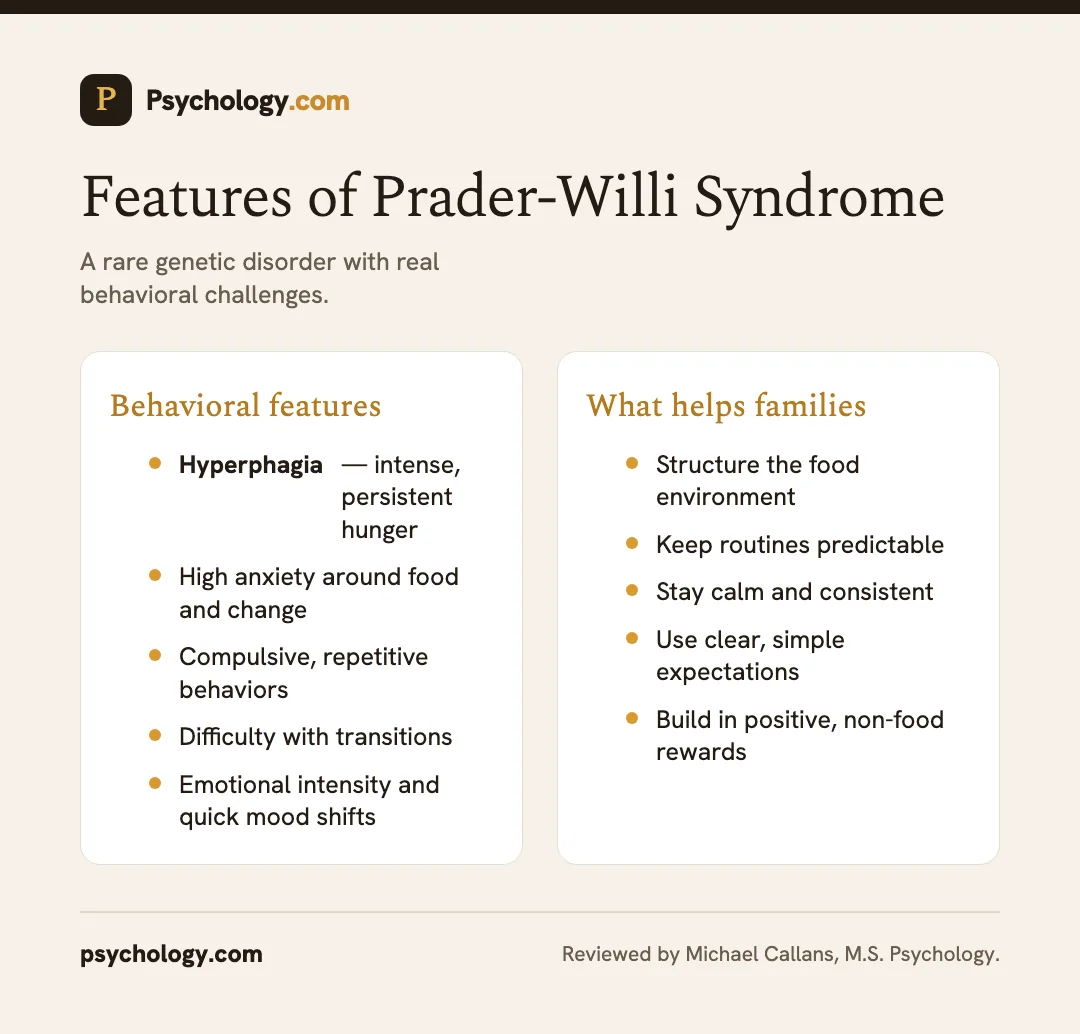
The psychological side of PWS is one of its most challenging and most misunderstood aspects. Common features include:
- Hyperphagia: an intense, persistent hunger and a reduced sense of fullness. Because the brain's appetite signals are disrupted, food can become an overwhelming preoccupation. This is a neurological symptom, not greed or a lack of discipline.
- Anxiety: many people with PWS experience high levels of anxiety, particularly around food, change, and uncertainty.
- Compulsive and repetitive behaviors: skin picking, hoarding, insisting on routines, and asking the same question repeatedly are common.
- Difficulty with transitions: sudden changes to plans or routines can be very distressing and may lead to outbursts.
- Emotional intensity: mood can shift quickly, and frustration can build when expectations are unclear or when access to food is restricted.
These behaviors make more sense when seen as the brain's response to a powerful, unmet drive and to anxiety about the world being unpredictable. Approaching them with that understanding, rather than as defiance, changes everything about how families and caregivers respond.
1 in 10,000 to 30,000people worldwide are affected by Prader-Willi syndromeMedlinePlus Genetics
About 70%of cases occur when a segment of the father's chromosome 15 is deletedMedlinePlus Genetics
25%of cases happen when a child inherits two copies of chromosome 15 from their motherMedlinePlus Genetics
Causes and diagnosis
Prader-Willi syndrome is caused by the loss of function of specific genes on the father's copy of chromosome 15. This can happen in a few ways, most commonly a missing segment of the chromosome. The change usually occurs randomly, and in most cases there is no family history. Diagnosis is confirmed through genetic testing, which can identify the specific cause and is increasingly done early in life when low muscle tone in a newborn prompts an evaluation. An early diagnosis matters because it opens the door to growth hormone therapy, nutritional planning, and behavioral support before patterns become entrenched.
How mental-health support helps
“Prader-Willi syndrome is a rare genetic condition that causes a wide range of physical symptoms, learning difficulties and behavioural challenges.”
Caring for someone with PWS is demanding, and mental-health support is for the whole family, not only the individual. Psychologists, behavioral therapists, and counselors who understand the syndrome can make daily life calmer and more predictable.
For the person with PWS, behavioral therapy can reduce anxiety, manage compulsive behaviors, and build coping skills for transitions and frustration. Approaches drawn from cognitive behavioral therapy and applied behavior analysis are often adapted to the person's developmental level, using clear routines, visual supports, and consistent responses. For parents and siblings, counseling offers a place to process stress, grief, and the exhaustion that can come with constant vigilance around food. Family-focused work helps everyone stay on the same page, set consistent expectations, and prevent burnout. Many families benefit from connecting with PWS support organizations, where shared experience and practical guidance go a long way.
It also helps to think of care as a team effort over time. A typical care team may include a pediatrician or family doctor, an endocrinologist, a dietitian, a psychologist or behavioral therapist, and often a speech or occupational therapist. Because the needs of someone with PWS shift as they move from childhood into adolescence and adulthood, regular check-ins keep the plan current. Mental-health professionals play a steady role across that whole journey, helping the family adjust strategies as new challenges, and new strengths, emerge.
Behavioral strategies for families
Day-to-day strategies are most effective when they are consistent, kind, and built around the brain biology of the condition:
- Structure the food environment: because hunger is constant, most families find that securing food, keeping a predictable meal schedule, and removing the burden of choice reduces anxiety and conflict. A shared food plan should protect health while treating the person with dignity.
- Keep routines predictable: visual schedules and advance warning before changes ease the distress that transitions can cause.
- Stay calm and consistent: a steady, low-conflict response to outbursts is more effective than negotiation in the moment.
- Use clear, simple expectations: people with PWS do better when rules are predictable and the same from one day to the next.
- Build in positive, non-food rewards: praise, activities, and time together support motivation without centering food.
Free tools and worksheets
Practical, printable exercises from our free library that people managing prader-willi syndrome often find useful. No signup needed.
When to seek help
Reach out to your care team or a mental health professional if anxiety, compulsive behaviors, or outbursts are interfering with daily life, if a child's mood or behavior changes noticeably, or if caregivers feel overwhelmed or burned out. Early, coordinated support is far easier than crisis management, and no family should navigate PWS alone. A doctor or psychologist who knows the syndrome can connect you with specialists, behavioral strategies, and support networks.
Frequently asked questions
What causes Prader-Willi syndrome?
Prader-Willi syndrome is a genetic disorder caused by the loss of function of certain genes on chromosome 15. It usually occurs by chance through a genetic change that affects gene activity. Genetic counseling can explain the specific mechanism found on testing and whether it changes the chance of PWS in another pregnancy. GeneReviews details these distinctions.
Why is hunger such a central feature?
Prader-Willi syndrome affects the part of the brain that regulates appetite, so people feel intense, persistent hunger (hyperphagia) and rarely feel full. This is a medical feature of the condition, not a lack of willpower, and it requires structured support. The level of hunger and food-seeking varies with development. Families can ask the care team to put meal routines and food supervision into a shared written plan.
Can mental-health support help families with Prader-Willi syndrome?
Yes. Behavioral strategies, counseling, and a consistent, predictable environment can reduce anxiety, manage compulsive behaviors, and support the whole family. A coordinated care team makes daily life more manageable. Support can also address caregiver exhaustion and help school staff follow the same routines. Ask for a plan that names the triggers, responses, and people responsible for follow-up.
How is Prader-Willi syndrome diagnosed?
Diagnosis is confirmed with genetic testing that looks for changes on chromosome 15. Testing is often prompted in the newborn period, when very low muscle tone and poor feeding raise concern. Confirming the diagnosis early matters because it opens the door to growth hormone evaluation, nutritional planning, early intervention services, and behavioral support before difficult patterns become established. An online questionnaire cannot confirm or exclude PWS. GeneReviews describes methylation analysis and additional testing.
Does growth hormone therapy help children with Prader-Willi syndrome?
Growth hormone therapy is a standard part of care for many children with the syndrome, prescribed and monitored by a pediatric endocrinologist. It supports growth, muscle tone, and body composition, and starting early is often recommended. Whether and when to begin is an individual decision made with the care team, based on the child's health and regular follow-up testing. The specialist should assess sleep and breathing before treatment and arrange ongoing monitoring. GeneReviews explains these precautions.
Can adults with Prader-Willi syndrome live independently?
Most adults with the syndrome need some level of lifelong support, particularly around food, since hyperphagia usually continues. Many live well in supported settings or with family, hold jobs or attend day programs, and enjoy full social lives. The right amount of independence varies from person to person, and a care team can help families plan the transition to adulthood. Planning can include meaningful daily activities, safe food access, and support for making decisions.
Related conditions
- Autism
- Learning Disabilities
- Child Behavior Disorders
Therapists who specialize in prader willi syndrome
Connect with a licensed therapist on Psychology.com who works with prader willi syndrome.
- Biofeedback Associates of Northeast Florida
- Cheri Albertson
- Donna Ulanowski
- Dr. Joe A Baez
- Dr. Judith Nelson Lowenthal
- Dr. Ken Counts
Explore how to choose a therapist →
Finding the right help
When you are ready to take the next step, these guides walk you through finding and starting with the right therapist.
- Getting started with therapy
- How to find the right therapist
- Find a therapist who takes insurance
- Free & low-cost therapy
References
- GeneReviews: Prader-Willi syndrome, genetics, nutritional phases, and care
- NICHD: Treatments for Prader-Willi syndrome
- FDA: Vykat XR prescribing information
- MedlinePlus Genetics: Prader-Willi syndrome
- National Institute of Neurological Disorders and Stroke (NINDS): Prader-Willi Syndrome
- Mayo Clinic: Prader-Willi syndrome
- Cleveland Clinic: Prader-Willi syndrome
- NIH GARD: Prader-Willi syndrome
- NHS: Prader-Willi syndrome

Planning care and caregiver support
Bring a short record of recent changes to appointments: sleep disruption, pain, skin injuries, food-seeking, transitions, and what helped the person settle. Agree on consistent responses across home, school, and respite care. A behavior chart can document patterns and positive goals. Use activities, encouragement, and other non-food rewards agreed with the care team.
Caregivers can use the caregiver burnout screening to reflect on their own strain and prepare a request for support. This questionnaire assesses caregiver experiences; PWS itself requires genetic testing. Our guides to anxiety and learning disabilities explain related support needs, and the conditions hub offers broader reading.
For persistent hunger, ask the specialist whether diazoxide choline extended-release tablets, Vykat XR, are appropriate. The FDA prescribing information indicates this medicine for hyperphagia in people with PWS aged 4 years and older. It requires monitoring, including blood glucose, and can cause fluid retention. Medication decisions belong with the treating clinician and the existing nutrition and supervision plan.
A sudden major change in alertness or behavior, or new abdominal pain, swelling, or vomiting, warrants prompt medical assessment. GeneReviews describes serious gastrointestinal complications and the importance of evaluating acute symptoms.