 Reviewed by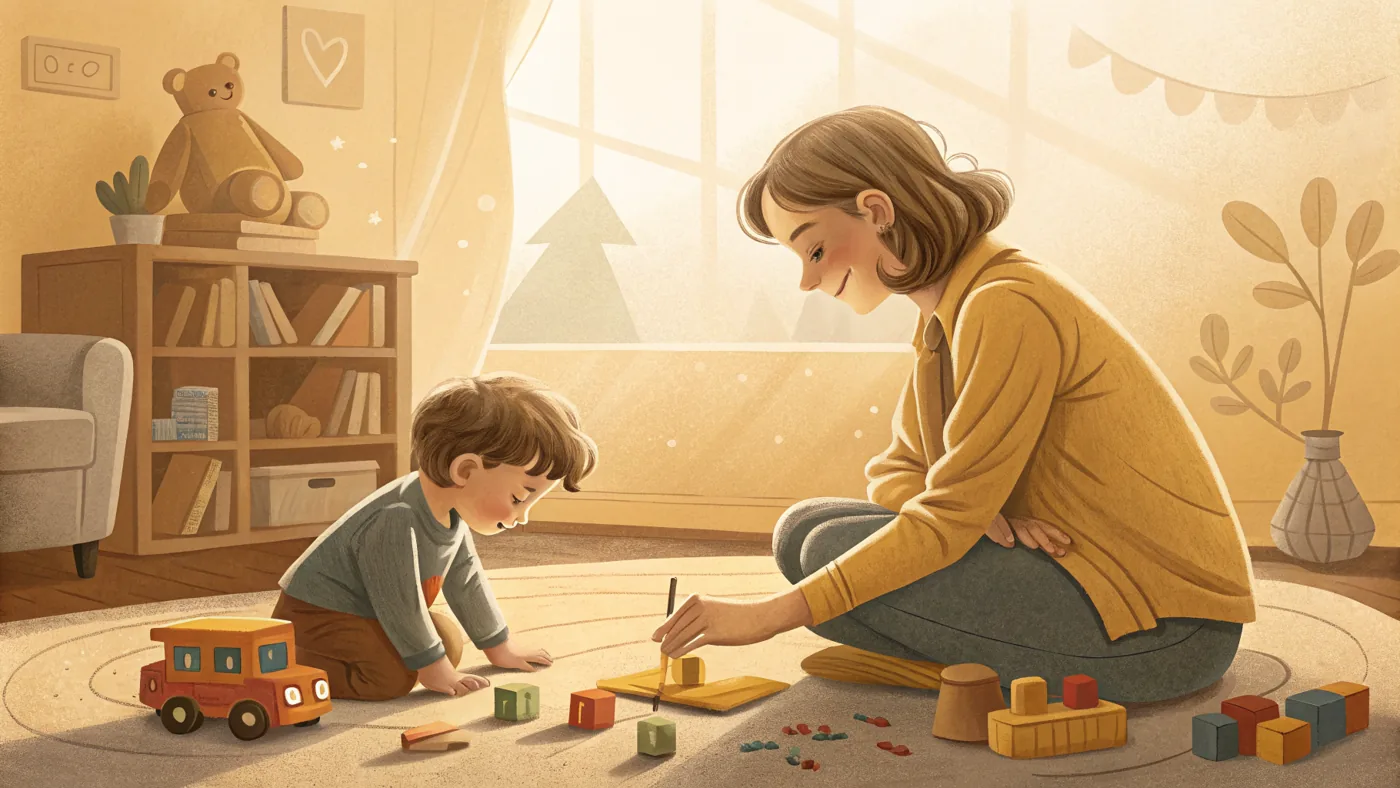
In short
Child therapy helps children manage emotions, behavior, anxiety, grief, and difficult experiences through developmentally appropriate psychotherapy. A child therapist uses play, conversation, and practical skills matched to the child's needs. Parents usually participate through guidance and home practice, while treatment goals focus on how the child functions at home, school, and with others.
Key facts
- Child therapy adapts to development: play materials help children express feelings, while CBT uses thinking and behavior skills. AACAP.
- Therapy can address anxiety, depressed mood, behavior problems, trauma, grief, and adjustment; the approach should match the child's concern. AACAP.
- Parent-child interaction therapy includes live coaching as parents practice interacting with their child. Other approaches involve parents through guidance or family sessions. AACAP.
- Research supports CBT for childhood anxiety and depression. Play therapy uses toys, drawings, and games to explore feelings and behavior; evidence and suitability vary by the problem being treated. AACAP.
What is child therapy?
Child therapy is psychotherapy designed specifically for children, usually from toddlerhood through the early teen years. A trained child therapist, often a psychologist, licensed clinical social worker, or licensed counselor with extra training in child development, helps a child understand and manage feelings, build coping skills, and work through difficulties at home, at school, or in relationships.
Before treatment begins, describe the specific changes you hope to see, such as easier school drop-offs, fewer aggressive outbursts, or a return to enjoyable activities. Ask how the proposed approach addresses those concerns and how the therapist will review progress with you.
The key difference from adult therapy is the method. Young children rarely sit down and talk through their problems the way adults do. Instead, therapists use developmentally appropriate tools: play, art, stories, games, and movement. Through these, a child expresses what is going on inside and practices new ways of handling it. As children grow, therapy shifts toward more direct conversation and skills, but it stays grounded in what a child can understand and use at their stage.
Therapy is not only for serious problems. It can help a child through a hard patch, a big transition, or a worry that has grown larger than it should. Seeking it out early often keeps a small difficulty from settling into a lasting pattern.
What it treats
Child therapy can help with a wide range of concerns, including:
- Anxiety, excessive worry, fears, and separation difficulties
- Sadness, low mood, irritability, and withdrawal
- Behavioral difficulties such as defiance, aggression, or frequent meltdowns
- Trauma, abuse, or frightening experiences
- Grief and loss
- Adjustment to divorce, a move, a new sibling, or illness in the family
- Social struggles, low self-esteem, or trouble with friendships
- Sleep problems and school refusal
When difficult behavior is intense or persistent, an evaluation can help sort out what is going on. Our guide to child behavior disorders covers conditions such as oppositional defiant disorder and conduct difficulties. Therapy also plays an important supporting role for children with developmental differences, including those on the autism spectrum, often alongside other specialized services.
Common types of child therapy
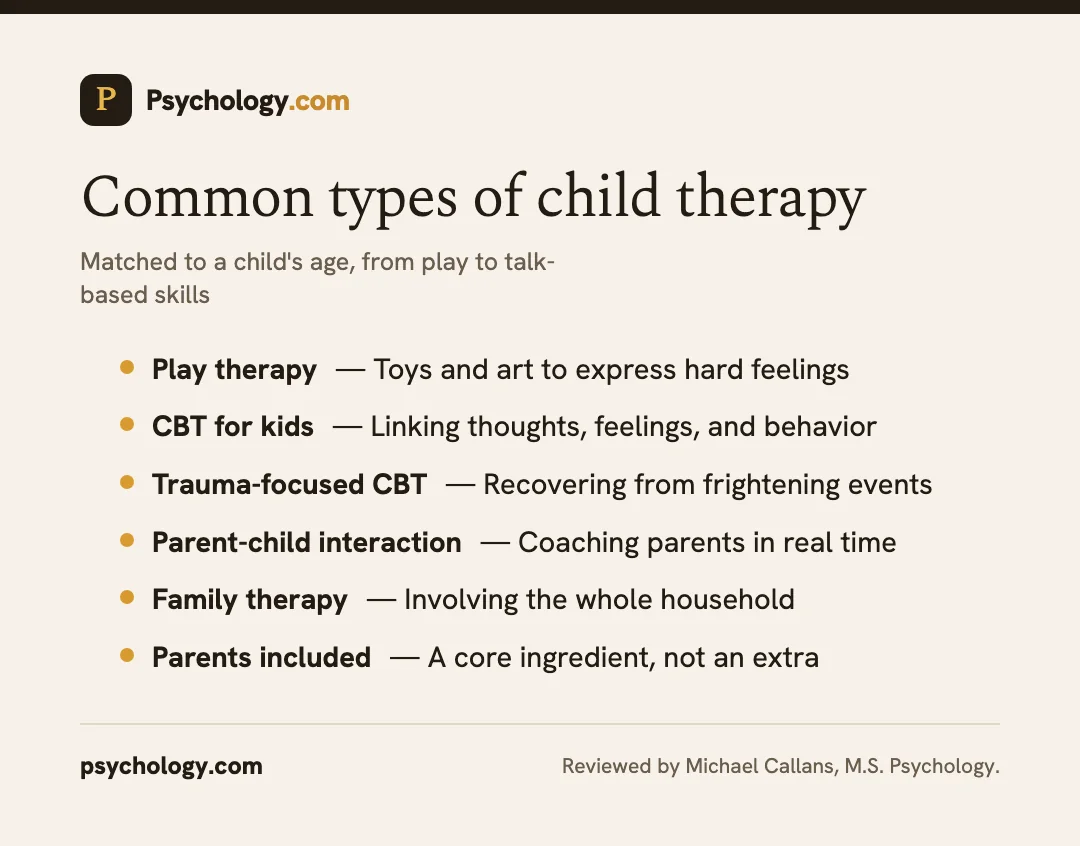
Play therapy
For younger children, play is the natural language. In play therapy, a child uses toys, art, and pretend scenarios to express feelings and work through experiences that are hard to put into words. A skilled therapist follows the child's lead, helps them name emotions, and gently guides them toward healthier ways of coping.
Cognitive behavioral therapy (CBT) for kids
Adapted for children, CBT helps a child notice the link between thoughts, feelings, and behavior, and learn practical skills to manage worry, anger, or sadness. Sessions often include simple exercises, drawings, and at-home practice. CBT is one of the most strongly supported treatments for childhood anxiety and depression.
Other approaches
Trauma-focused CBT helps children recover from frightening or harmful experiences. Parent-child interaction therapy coaches parents in real time to strengthen the relationship and manage behavior. Family therapy involves the whole household when patterns at home are part of the picture. The right approach depends on the child's age, needs, and what they are working through.
How parents are involved
Parents are essential partners in child therapy, not bystanders. Because children spend most of their time at home and school, the changes that last are usually the ones reinforced in daily life. A therapist will typically meet with you to understand your concerns, gather history, set goals, and check in on progress. Many sessions include time to coach you on strategies to use at home, from responding to big feelings to keeping routines steady.
The balance shifts with age. With young children, parents are often closely involved in or alongside sessions. With older children and teens, the therapist will protect more of the child's privacy to build trust, while still keeping you informed about safety and overall progress. If you are looking for tools to support your child between sessions, our parenting support guide offers practical strategies that pair well with therapy.
What to expect
The first appointment usually focuses on you and the therapist, with or without your child present, to understand the situation and history. From there, the therapist sets up a comfortable, playful, age-appropriate space where your child can feel safe. Early sessions are about building trust, since a child works best with someone they like and feel at ease with.
Session length and frequency depend on the child's developmental needs, the treatment approach, and the provider's plan. Ask about scheduling before starting. Progress can fluctuate. Tell the therapist promptly about worsening symptoms, new safety concerns, or distress after sessions so they can reassess the plan. The therapist will set goals with you, review them over time, and adjust the approach as your child grows and changes. Response and pace vary with the concern and treatment. Ask what changes would indicate that the approach is helping and when to consider a different plan.
Frequently asked questions
At what age can a child start therapy?
Young children can receive developmentally appropriate therapy, including work that involves caregivers and uses play. There is no universal starting age for every approach. A child mental health professional assesses development, the concern, and family needs before recommending care. Ask whether the clinician has experience with children at your child's developmental stage.
Will I be involved in my child's therapy?
Parents are usually involved in child therapy through sharing history, setting goals, learning strategies, and reviewing progress. Some approaches include direct coaching with the child present. Older children may also have private time with the therapist. Ask how the clinician handles confidentiality, safety concerns, and communication with parents before treatment begins.
How long does child therapy take?
The length of child therapy depends on the problem, its impact on daily life, the approach, and progress toward agreed goals. Some concerns respond to focused work; others need sustained support. Ask the therapist when progress will be reviewed and what changes to look for at home and school, rather than relying on a fixed deadline.
What emotional regulation skills can I practice with my child?
Practice naming feelings, noticing body signals, and choosing a calming activity when your child is settled enough to learn. Our emotional regulation skills for kids worksheet can support that practice. Ask the therapist to adapt exercises to your child's development and treatment goals. Keep practice brief and supportive, and avoid using a worksheet as punishment.
How do I know if my child needs therapy?
Consider an evaluation when changes in mood, behavior, sleep, school attendance, or friendships persist or interfere with daily life. A pediatrician can help assess possible medical or developmental contributors and suggest appropriate support. Bring concrete examples from home and school. You can ask for help sooner when your child or family is struggling.
Related
- Child Behavior Disorders
- Parenting Support
- Learning Disabilities
- Teen Mental Health Statistics 2026
Therapists who specialize in child therapy
Connect with a licensed therapist on Psychology.com who works with child therapy.
- A FAMILY MATTER
- A. Nires
- Advance Thru Psychotherapy and Family Development
- Amanda P Bailey
- Amy Keller
- Arlyn P. Stern LCSW
Finding the right help
When you are ready to take the next step, these guides walk you through finding and starting with the right therapist.
- Getting started with therapy
- How to find the right therapist
- Find a therapist who takes insurance
- Free & low-cost therapy
Supporting your child between sessions
Our Life & Relationships hub includes guidance on family changes and relationships. Pair the parenting guide with information on child behavior disorders when preparing questions for a clinician. The parenting style quiz is a reflection tool for caregivers, not an assessment of your child. Use it to identify responses you want to discuss with the therapist.
References
- MedlinePlus: Child mental health
- American Psychological Association (APA): Psychotherapy
- American Academy of Pediatrics: Emotional and behavioral health
- NHS: Mental health support for children and young people
- HelpGuide: Helping children cope with anxiety and stress
- AACAP: Psychotherapy for Children and Adolescents: Different Types