

Key facts
- A psychological evaluation is a routine part of preparing for bariatric surgery such as gastric bypass or sleeve gastrectomy. ASMBS evaluation guidance.
- Surgery changes the body but not the emotions and habits around food, so behavioral support matters. ASMBS aftercare guidance.
- Many people experience a real emotional adjustment after surgery, including body image and relationship changes. ASMBS support guidance.
- Ongoing counseling and support help patients adjust and provide opportunities to recognize and address depression and disordered eating during long-term follow-up. ASMBS follow-up guidance.
- Gastric bypass can change alcohol absorption and metabolism, increasing the risk of alcohol-related problems. Discuss alcohol use openly with your bariatric team. NIDDK side effects.
Overview
Bariatric surgery, sometimes called metabolic or weight-loss surgery, includes procedures such as gastric bypass and sleeve gastrectomy that change the stomach and digestive system to support significant, durable weight loss. For people living with severe obesity, it can improve or resolve serious health conditions and extend life. The American Society for Metabolic and Bariatric Surgery (ASMBS) describes it as one of the most effective treatments available for severe obesity. Psychological preparation helps turn the medical plan into routines a patient can manage at home, including eating, appointments, medication review, and asking for help.
Yet surgery is not a purely physical intervention. The reasons people gain weight, the ways they relate to food, and the emotions tied to eating do not disappear in the operating room. Long-term success depends heavily on behavioral and psychological change, which is why mental health professionals are part of the bariatric care team from the very beginning. Thinking of surgery as a tool, rather than a cure, is one of the healthiest mindsets a patient can bring.
The pre-surgery psych evaluation
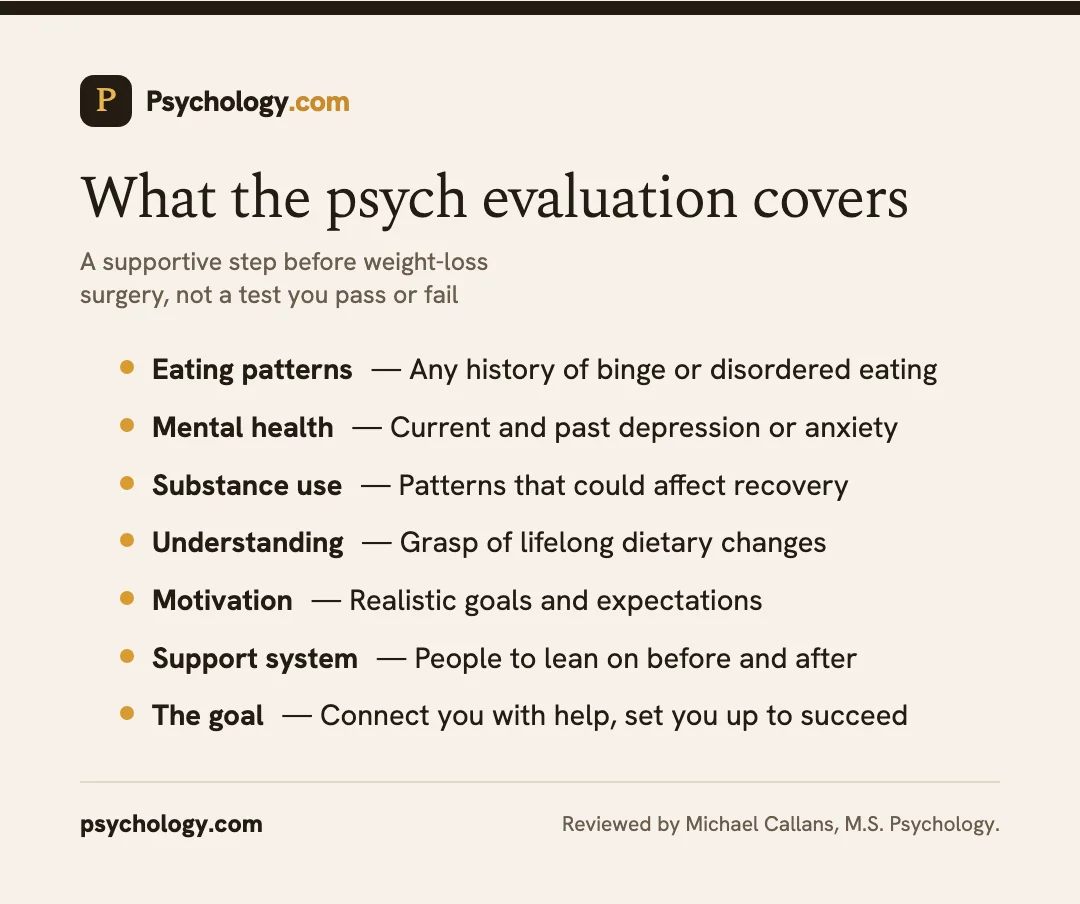
Nearly every reputable bariatric program requires a psychological evaluation before surgery. This is not an obstacle designed to disqualify people, and it is best understood as a supportive part of preparation. A psychologist or other mental health professional meets with the patient to understand their history and to make sure they are set up to succeed.
The evaluation typically explores eating patterns and any history of binge eating or other disordered eating, current and past mental health conditions such as depression and anxiety, substance use, the patient's understanding of the surgery and its lifelong dietary changes, motivation and expectations, and the strength of their support system. The goal is to identify anything that could be addressed beforehand, such as untreated depression or active binge eating, and to connect the patient with help where useful. As the American Psychological Association (APA) has reported, this assessment is also an opportunity to set realistic expectations and to begin building the skills that protect long-term results.
Eating behavior and emotional eating
Surgery limits how much a person can eat, but it does not change why they eat. For many people, food has served as comfort, stress relief, celebration, or a way to manage difficult feelings. After surgery, when eating large amounts is no longer possible and may cause discomfort, those underlying needs do not vanish, they simply lose their familiar outlet.
This is why behavioral support is so important. Without new coping strategies, some people experience a return of problematic eating in different forms, such as grazing on small amounts throughout the day, or, in a minority of cases, a shift toward other compulsive behaviors. Patients with a history of binge eating disorder or other eating disorders need particular attention, since these conditions can persist or re-emerge after surgery. Working with a therapist to understand emotional eating, build alternative coping skills, and establish a sustainable relationship with food is a key part of lasting success.
Body image after weight loss
Significant weight loss can transform health and confidence, but it also affects body image in complex ways. Some people are surprised that their self-image does not automatically catch up with their changing body, a gap researchers sometimes call phantom fat, where a person continues to perceive and react to themselves as they were before. Loose or excess skin after major weight loss can also become a new source of distress and self-consciousness.
Body image shifts are deeply tied to self-esteem. While many people feel more confident and capable after surgery, others find that long-standing feelings about their worth do not resolve simply because the number on the scale has changed. Addressing body image and self-esteem directly, often with the help of a therapist, supports a healthier and more stable sense of self through the transition.
Emotional adjustment and support
The months and years after bariatric surgery bring a genuine emotional adjustment that is easy to underestimate. Rapid physical change, hormonal shifts, a completely new way of eating, and altered routines can all affect mood. Relationships may change as well: partners, family, and friends sometimes respond to a person's transformation in unexpected ways, and dynamics that were organized around food or weight can be unsettled. Some people are caught off guard by feelings of sadness, irritability, or anxiety during a period they expected to feel only positive.
Research finds that depressive symptoms often improve after bariatric surgery, while some observational studies identify increased self-harm or suicide risk compared with nonsurgical groups. These different outcomes make long-term mental health monitoring important. Review of mental health outcomes. Study of suicide risk. None of this should discourage anyone from a procedure that helps many people thrive. The point is that emotional support is not optional aftercare, it is part of good treatment. Ongoing counseling, support groups, and a care team that takes mental health seriously help patients navigate the adjustment and protect the gains they have worked hard for.
When to seek help
Reach out to your bariatric team or a mental health professional if you notice persistent low mood, anxiety, or hopelessness before or after surgery, if old eating patterns return or new compulsive behaviors appear, if body image or relationship struggles are weighing on you, or if you are turning to alcohol or other substances. Seek help immediately if you have thoughts of harming yourself. Asking for psychological support is a normal and important part of the bariatric journey, not a setback.
Frequently asked questions
Why do I need a psychological evaluation before bariatric surgery?
The pre-surgery psychological evaluation is a standard assessment of readiness, safety, and support needs. It helps the team understand your eating patterns, mental health, and support system so they can set you up for the best long-term result and arrange any help you might need before or after surgery. Be candid about symptoms and previous treatment; the team may recommend additional care before scheduling surgery.
Does weight-loss surgery fix emotional eating?
No. Surgery changes the body, but it does not by itself resolve emotional eating, stress eating, or the feelings behind them. Many people benefit from therapy to build new coping skills, since food can no longer serve the same emotional role after surgery. A bariatric dietitian can also help distinguish dietary difficulties from patterns that need psychological support.
Is it normal to feel down or anxious after bariatric surgery?
Yes. Despite the positive change, many people experience a difficult emotional adjustment after surgery, including mood swings, anxiety, body image struggles, and changes in relationships. Ongoing support and counseling help, and persistent low mood should be discussed with your care team. Seek prompt help if symptoms interfere with eating, hydration, sleep, or basic care, or if you feel unsafe.
Can depression disqualify you from bariatric surgery?
A history of depression does not automatically rule out bariatric surgery. The evaluation considers current symptoms, safety, treatment, and your ability to follow the aftercare plan. Severe uncontrolled symptoms or active substance use may lead the team to recommend treatment before proceeding. Ask what concerns need addressing, who can help, and how readiness will be reassessed. ASMBS evaluation guidance.
What questions are asked in a bariatric psychological evaluation?
A bariatric psychological evaluation commonly asks about eating patterns, previous weight-management efforts, mood, anxiety, substance use, and your understanding of surgery. Expect discussion of daily routines, support at home, and how you will manage lifelong follow-up. Bring your medication list and relevant treatment history, and ask the program about forms, records, and evaluation fees before your appointment. ASMBS evaluation guidance.
Related
Therapists who specialize in bariatric surgery psychology
Connect with a licensed therapist on Psychology.com who works with bariatric surgery psychology.
- A FAMILY MATTER
- Advance Thru Psychotherapy and Family Development
- Barbara L Edwards
- Caring Counseling Center
- Cheri Albertson
- Cheryl M. Manfredi
Finding the right help
When you are ready to take the next step, these guides walk you through finding and starting with the right therapist.
- Getting started with therapy
- How to find the right therapist
- Find a therapist who takes insurance
- Free & low-cost therapy
References
- American Society for Metabolic and Bariatric Surgery (ASMBS): Patient resources
- American Psychological Association (APA): The mental side of weight-loss surgery
- National Institute of Diabetes and Digestive and Kidney Diseases (NIDDK): Bariatric Surgery
- Mayo Clinic: Bariatric surgery
- Cleveland Clinic: Bariatric (Weight-Loss) Surgery
Planning mental health aftercare
Before surgery, ask who to contact about worsening mood, difficulty following the eating plan, alcohol use, or medication concerns. Arrange follow-up with your bariatric team and any clinician prescribing psychiatric medication. Keep taking medication as prescribed until the prescriber reviews it; surgery can affect how some medicines are absorbed. ASMBS medication and follow-up guidance.
The mood and activity log can help you record changes to discuss with your team. A depression screening can organize symptoms, but it cannot determine surgical readiness or distinguish a nutritional problem from a mental health condition. Read about eating disorders and self-esteem, or explore the life and relationships hub for related support. Persistent vomiting, trouble keeping fluids down, or severe physical symptoms need prompt medical attention from your surgical team.