 Reviewed by
In short
Care that meets you where you are. Women's mental health is shaped by biology, hormones, and life roles in ways that change across the lifespan. Understanding those influences makes it easier to recognize when support would help, and effective help is available at every stage.
Key facts
- Women are diagnosed with depression and anxiety roughly twice as often as men.
- Hormonal transitions (puberty, the menstrual cycle, pregnancy, postpartum, and menopause) can affect mood.
- Postpartum depression affects about one in seven new mothers and is highly treatable.
- Therapy, sometimes combined with medication, is effective for the concerns women most commonly face.
Overview
Women experience the same mental health conditions as everyone else, but the patterns and triggers can differ. Biological factors such as hormonal changes, social factors such as caregiving demands and higher exposure to certain kinds of trauma, and the reality that women are more likely to seek and receive a diagnosis all shape the picture. The National Institute of Mental Health (NIMH) notes that some conditions, including depression and certain anxiety disorders, are more common in women, and that women may experience symptoms differently than men.
None of this means struggling is inevitable or that you are doing something wrong. It means there are specific, well-understood reasons women's mental health deserves attention, and well-established ways to support it.
Concerns across life stages
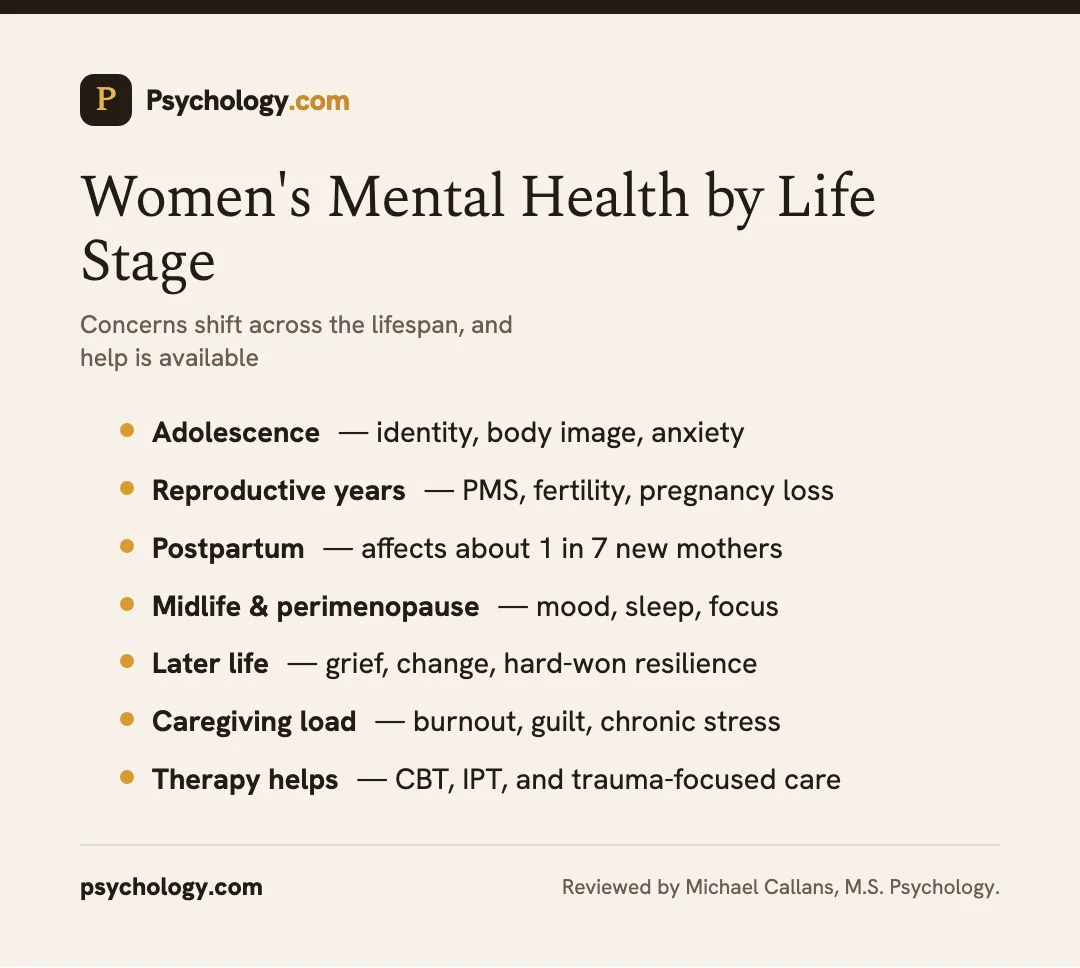
Mental health needs shift as life changes. Common concerns include:
- Adolescence and early adulthood. Puberty, identity, body image, and the onset of conditions like anxiety, depression, or eating disorders.
- The reproductive years. Premenstrual mood changes, the stress of fertility challenges and pregnancy loss, and prenatal anxiety or depression.
- Pregnancy and postpartum. The dramatic hormonal shifts after birth can trigger mood and anxiety symptoms. When low mood or anxiety lasts beyond the first two weeks, it may be postpartum depression, which affects about one in seven new mothers and responds well to treatment.
- Midlife and perimenopause. Fluctuating hormones, sleep disruption, and life changes can affect mood, concentration, and energy.
- Later life. Grief, health changes, and shifting roles, alongside the wisdom and resilience that often come with age.
Hormonal transitions do not cause mental illness on their own, but they can increase vulnerability, especially when combined with stress, sleep loss, or a personal or family history of mood problems. Recognizing these windows helps women and their clinicians respond early.
Caregiving load and trauma
Beyond biology, the roles many women carry shape their mental health. Women often shoulder a disproportionate share of caregiving, for children, aging parents, or both at once, along with much of the invisible work of running a household. That sustained load can lead to burnout, chronic stress, resentment, and guilt, particularly when there is little time left for rest or for the person's own needs.
Trauma is another major factor. Women experience certain forms of trauma, including sexual assault and intimate partner violence, at higher rates, which raises the risk of PTSD, anxiety, and depression. The World Health Organization (WHO) identifies gender-based violence and the burden of caregiving among the social factors that affect women's mental health worldwide. Naming these realities matters, because the distress they cause is a normal response to genuinely hard circumstances, not a personal failing, and trauma-informed care can help people heal.
Economic and social pressures add to the picture. Women are more likely to carry the mental load of planning and remembering for a household, to work in lower-paid or part-time roles, and to interrupt careers for caregiving, all of which can affect financial security and self-worth. Many also feel pressure to appear endlessly capable, which makes it harder to admit when they are struggling. Recognizing these forces helps explain why so many women reach a breaking point quietly, long after the strain began, and why permission to ask for help is itself part of the relief.
How therapy helps
Therapy gives women a confidential space to make sense of what they are carrying and to build practical tools for change. Evidence-based approaches such as cognitive behavioral therapy (CBT) and interpersonal therapy (IPT) are effective for depression and anxiety, including symptoms tied to hormonal transitions and the postpartum period. Trauma-focused therapies, including EMDR, help process difficult experiences. For caregiving stress, therapy can help with boundaries, guilt, and finding sustainable ways to cope.
Therapy can be used on its own or alongside medication when appropriate, and care during pregnancy and breastfeeding can be tailored safely with a clinician's guidance. The American Psychological Association (APA) reports that psychotherapy produces meaningful, lasting improvement for most people, and reaching out early tends to make recovery smoother.
Wondering where you stand? Take Take the PMDD test (PSST), the postpartum depression test (EPDS), or the ADHD test for women: free, confidential, a few minutes each, with an instant plain-language result and a PDF you can bring to a professional. A screening is not a diagnosis.
What to expect
A first session is a conversation. The therapist asks what brought you in, a bit about your history and current life, and what you would like to change. You stay in control of what you share. Sessions usually run about 45 to 50 minutes, often weekly to begin, and can be in person or online. Everything is confidential, with narrow legal exceptions the therapist will explain.
If you are seeking help around pregnancy, postpartum, or another specific concern, it is reasonable to ask whether a therapist has experience in that area. Fit matters, and it is fine to try someone else if the match does not feel right after a few sessions.
Finding the right therapist
A few steps make starting easier:
- Name what you want help with. Specific (postpartum anxiety) or broad (feeling stretched too thin) are both fine.
- Look for relevant experience. Perinatal mental health, trauma, or caregiving stress, depending on your needs.
- Use a trusted directory. Find a licensed professional whose specialties match. You can find a therapist through our directory.
- Start with a consultation. A short call can help you gauge comfort and fit.
- Loop in your doctor. An OB-GYN or primary care doctor can check your health, discuss medication, and refer you.
You do not have to manage everything on your own, and asking for help is a strength.
Frequently asked questions
Why are women diagnosed with depression and anxiety more often than men?
A mix of biological factors such as hormonal shifts, social factors such as caregiving load and higher rates of certain traumas, and the fact that women are more likely to seek and receive a diagnosis all play a role. The conditions are common and very treatable.
Are mood changes after having a baby normal?
Brief "baby blues" in the first couple of weeks are common. When low mood, anxiety, or hopelessness last longer than two weeks or interfere with caring for yourself or your baby, it may be postpartum depression, which is treatable and worth discussing with a professional.
Can therapy help with the stress of caregiving?
Yes. Caregiving for children, aging parents, or both can lead to burnout, resentment, and guilt. Therapy offers a space to set boundaries, process those feelings, and build sustainable coping strategies.
Related
Therapists who specialize in womens issues
Connect with a licensed therapist on Psychology.com who works with womens issues.
- 180 Wellness
- Advance Thru Psychotherapy and Family Development
- Amy Keller
- Arlyn P. Stern LCSW
- Barbara L Edwards
- Beth Britton
References
- National Institute of Mental Health (NIMH): Women and Mental Health
- World Health Organization (WHO): Women's health
- American College of Obstetricians and Gynecologists (ACOG): Postpartum depression
- American Psychological Association (APA): Understanding psychotherapy and how it works
- Office on Women's Health: Mental health