

Key facts
- LGBTQ identities are normal and healthy. They are not mental disorders. American Psychiatric Association: LGBTQ care
- LGBTQ people face higher rates of anxiety and depression with minority stress contributing to that increased risk. Mental Health America
- Affirming therapy, which respects identity and uses correct names and pronouns, supports respectful, individualized mental health care. American Psychiatric Association: LGBTQ care
- So-called conversion therapy is harmful and ineffective, and major medical bodies reject it. American Psychiatric Association: LGBTQ care
Overview
Lesbian, gay, bisexual, transgender, and queer people are as capable of strong mental health and rich, fulfilling lives as anyone else. Sexual orientation and gender identity are natural parts of human diversity, and leading health authorities have long since removed them from any list of disorders. The American Psychiatric Association and other major organizations are clear on this point. An affirming mental health assessment focuses on symptoms, safety, relationships, and personal goals while respecting how each person describes their identity.
At the same time, research consistently finds that LGBTQ people experience higher rates of depression, anxiety, and suicidal thoughts than the general population. Minority stress helps explain these disparities, alongside other personal, social, and health factors that influence mental health. Affirming care considers these pressures while assessing each person’s symptoms, strengths, and support needs.
Understanding minority stress
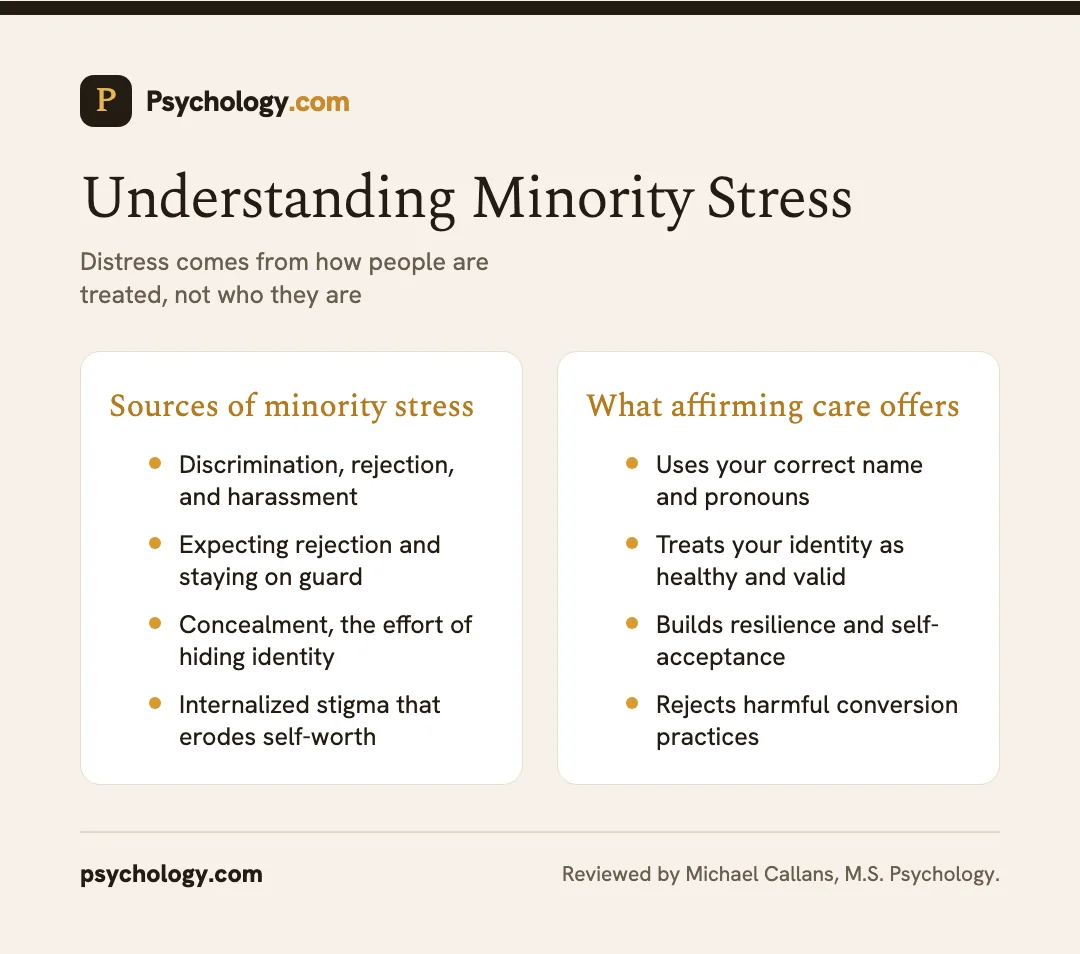
The leading explanation for these mental health disparities is the minority stress model. It describes the chronic, cumulative strain that comes from belonging to a stigmatized group. For LGBTQ people, this stress operates on several levels at once.
- External stressors: discrimination, rejection, harassment, violence, and the loss of relationships after coming out.
- The expectation of rejection: staying alert for hostility, which keeps the nervous system on guard.
- Concealment: the ongoing effort and vigilance of hiding one's identity to stay safe.
- Internalized stigma: absorbing negative societal messages, which can erode self-worth.
These pressures accumulate over time and help explain the higher rates of distress in LGBTQ communities. Stigma and discrimination create a preventable burden on mental health. That is also why building support, acceptance, and affirming care makes such a meaningful difference.
Unique challenges
Minority stress shows up in everyday life in specific ways. People may be navigating the coming-out process and decisions about who to tell and when. Family rejection can be especially painful, and for LGBTQ youth a lack of support at home is a significant risk factor for distress. Many face discrimination at work, in healthcare, or in their communities, and some carry the weight of past or ongoing rejection.
Transgender and nonbinary people may also experience gender dysphoria, the distress that can arise from a mismatch between gender identity and sex assigned at birth, and barriers to gender-affirming care can compound it. LGBTQ youth are at notably elevated risk for suicidal thoughts, which is why supportive adults and affirming environments are important sources of safety and support. Experiences vary widely, and reliable support can help people face these challenges while maintaining a positive sense of self.
Why affirming care matters
Affirming care is a therapeutic approach that respects and supports a person's sexual orientation and gender identity rather than treating it as something to question or change. An affirming therapist uses your correct name and pronouns, understands LGBTQ experiences and the role of minority stress, and helps you build resilience and self-acceptance. They focus on whatever you came in for, whether that is anxiety, depression, family conflict, identity, or relationships, in the full context of your life.
The contrast with non-affirming care is stark. So-called conversion therapy, which attempts to change a person's orientation or gender identity, has been rejected as harmful and ineffective by the American Psychological Association, the American Psychiatric Association, and other major medical and mental health organizations. Affirming care does the opposite: it reduces shame, strengthens coping, and is associated with better mental health outcomes. Feeling accepted by a therapist can itself be part of the healing.
Finding an affirming therapist
The right therapist makes a real difference, so it is worth finding someone who is genuinely affirming. Look for providers who name LGBTQ-affirming care among their specialties, and use a first consultation to ask about their training and approach. Reasonable questions include how much experience they have working with LGBTQ clients, how they stay current on LGBTQ issues, and how they would support your specific goals.
You deserve to feel respected from the first conversation. If a therapist seems uninformed, dismissive of your identity, or suggests your orientation or gender is a problem to be fixed, it is completely valid to look elsewhere. LGBTQ community centers, The Trevor Project for youth, and directories that let you filter for affirming providers can all help you find a good match. Support is out there, and you are worthy of care that sees you fully.
Frequently asked questions
Why do LGBTQ people experience higher rates of mental health challenges?
Being LGBTQ is not a disorder or a cause of distress in itself. Higher rates of anxiety and depression are driven by minority stress, the chronic strain of stigma, discrimination, rejection, and the effort of concealing one's identity. Individual experiences vary, and assessment should also consider sleep, physical health, other stressors, and existing sources of support.
What is an LGBTQ-affirming therapist?
An affirming therapist understands LGBTQ identities and experiences and treats them as healthy and valid. They use your correct name and pronouns, do not treat your identity as a problem to fix, and reject so-called conversion practices, which major medical organizations consider harmful and ineffective.
How do I find an affirming therapist?
Look for therapists who list LGBTQ-affirming experience, and ask about their training and approach in a first consultation. Directories that let you filter for affirming providers, along with referrals from LGBTQ centers and organizations, can help you find a good fit. Ask how they protect privacy and handle situations where family members use a different name or pronouns.
How do I figure out my gender identity?
Exploring gender identity can involve noticing which names, pronouns, forms of expression, and descriptions feel comfortable over time. You can reflect privately, talk with trusted people, or work with an affirming therapist. There is no deadline for choosing a label. A gender identity quiz can offer prompts for reflection, but your own experience determines how you describe yourself.
Can a sexual orientation test tell me who I am?
A sexual orientation test can prompt reflection about attraction, relationships, and identity, but it cannot establish a definitive label. Sexual orientation concerns patterns of attraction; gender identity concerns your sense of gender. You can explore either without sharing results or making immediate decisions. An affirming therapist can support uncertainty while respecting the language and pace you choose.
Related topics
Therapists who specialize in lgbtq issues
Connect with a licensed therapist on Psychology.com who works with lgbtq issues.
Finding the right help
When you are ready to take the next step, these guides walk you through finding and starting with the right therapist.
- Getting started with therapy
- How to find the right therapist
- Find a therapist who takes insurance
- Free & low-cost therapy
References
- American Psychiatric Association: LGBTQ mental health
- American Psychological Association (APA): LGBTQ+
- The Trevor Project: Crisis support for LGBTQ young people
- National Alliance on Mental Illness (NAMI): LGBTQI
- Mental Health America: LGBTQ+ communities and mental health
- World Health Organization (WHO): Gender and health
- American Psychiatric Association: LGBTQ care
Planning affirming support
Before a consultation, write down what you want help with and what information you want kept private. Ask how the clinician handles chosen names, appointment reminders, family involvement, and insurance paperwork. If disclosure could threaten housing, relationships, or personal safety, discuss a support plan before deciding whom to tell. Coming out is a personal choice with practical consequences that deserve time and care.
The gender identity quiz offers reflection prompts, and the Values Clarification Worksheet can help identify what matters to you. Neither determines an identity or provides a diagnosis. The life and relationships hub, anxiety guide, and depression guide offer related support for concerns you may want to discuss.