

Key facts
- Men are less likely than women to have received mental health treatment in the past year. The pattern varies by condition; mental health needs deserve assessment individually. NIMH: help-seeking and mental health.
- Depression in men can include irritability, fatigue, withdrawal, and increased substance use alongside sadness. NIMH: symptoms in men.
- Men are more likely to die by suicide than women. Recognizing distress and connecting with care are important parts of prevention. NIMH: suicide and men.
- Professional help can begin with a primary care visit and a referral for mental health care. Asking for support is a practical health decision. NIMH: getting help.
Overview
Changes that disrupt work, relationships, or daily responsibilities are useful reasons to seek an assessment. Describe what has changed in your sleep, energy, drinking, or patience, even if finding words for emotions feels difficult.
Men experience the full range of mental health concerns, including depression, anxiety, stress, grief, trauma, and substance use. An important concern in men's mental health is how often symptoms go unrecognized and untreated. Many men are taught from a young age to be self-reliant, to push through, and to keep difficult feelings to themselves. Over time, that can turn ordinary distress into something heavier and more isolating.
The National Institute of Mental Health (NIMH) notes that men and women can experience the same conditions differently, and that men may be less likely to recognize, talk about, and seek treatment for their symptoms. Understanding those differences is the first step toward getting help that actually fits.
How distress can show up in men
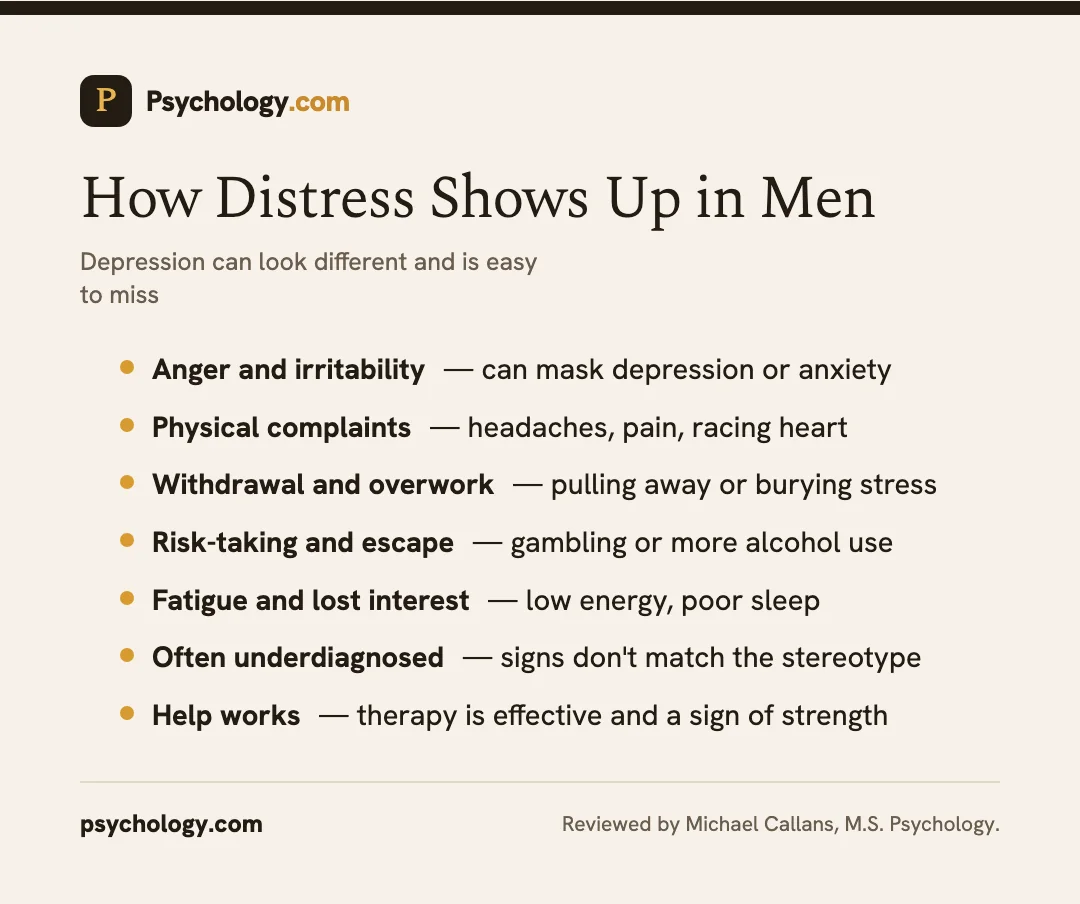
Mental health struggles do not always look like the classic picture of sadness or visible worry. In men, the signs can be easy to miss or mistake for something else:
- Anger and irritability. Short temper, frustration, or aggression can mask underlying depression or anxiety.
- Physical complaints. Headaches, digestive issues, chronic pain, or a racing heart, sometimes before any emotional symptom is noticed.
- Withdrawal and overwork. Pulling away from family and friends, or burying stress in long hours at work.
- Risk-taking and escape. Reckless behavior, gambling, or increased use of alcohol or drugs to numb difficult feelings.
- Fatigue and lost interest. Low energy, trouble sleeping, and a fading of activities that once felt rewarding.
These patterns can differ from familiar stereotypes of depression or anxiety, making them harder for men and the people around them to recognize. This is part of why depression in men is often underdiagnosed, and why anger or substance use can quietly stand in for an untreated condition.
Stigma and underuse of care
Stigma is one of the biggest barriers to men's mental health. Cultural messages about masculinity often equate emotional openness with weakness, which can lead men to minimize symptoms, avoid the word depression, and try to handle everything alone. The result is a measurable gap: men are consistently less likely than women to use mental health services, even when their symptoms are just as severe.
The stakes are high. According to the Centers for Disease Control and Prevention (CDC), men die by suicide at far higher rates than women, with multiple factors contributing to this difference. Unaddressed distress deserves attention well before a crisis. The encouraging news is that this pattern is not fixed. When men do reach out, effective treatment options are available to them, and challenging the idea that asking for help is weakness can be life-changing and, in some cases, lifesaving.
How therapy helps
Therapy gives men a confidential, practical space to understand what they are feeling and do something about it. A good therapist will not force you to talk in ways that feel foreign. Many approaches are concrete and goal-focused, which fits men who prefer to work on a clear problem. Cognitive behavioral therapy (CBT), for example, helps you spot the thoughts and habits that fuel stress, anger, or low mood and replace them with more useful responses.
Over time, therapy can help you manage anger before it damages relationships, reduce the anxiety or low mood you may have been carrying for years, process grief or past trauma, and cut back on coping habits like drinking that make things worse. It can also strengthen communication with a partner, children, and colleagues. The benefits are not abstract. The American Psychological Association (APA) reports that psychotherapy produces real, lasting improvement for most people who engage with it.
What to expect
The first session is a conversation about your concerns and what you hope to change. The therapist asks what brought you in, a little about your life and history, and what you would like to be different. You decide how much to share and how fast to go. Sessions can be in person or online. Ask about appointment length, frequency, fees, and how progress will be reviewed before you begin. Everything you discuss is confidential, with narrow legal exceptions the therapist will explain.
It is normal to feel skeptical or uncomfortable early on, especially if you have never done this before. That usually eases within a few sessions. If a particular therapist or approach does not feel like a fit, you are allowed to say so and try someone else. Fit matters more than getting it perfect on the first try.
Finding the right therapist
A few steps make starting easier:
- Name the goal. It can be specific, like managing anger, or broad, like feeling less weighed down.
- Consider fit. Some men prefer a therapist who is direct and practical, or one with experience in men's issues, trauma, or substance use.
- Use a trusted directory. Look for a licensed professional whose specialties match your needs. You can find a therapist through our directory.
- Start with a call. Many therapists offer a short consultation so you can get a feel for them first.
- Talk to your doctor. A primary care physician can check your health, rule out physical causes, and refer you on.
Reaching out is the hard part. After that, it gets easier, and you do not have to carry it alone.
Frequently asked questions
Why do men go to therapy less often than women?
Many men are raised to see asking for help as weakness, so they may downplay symptoms or cope alone. Stigma, busy work lives, cost, and a habit of solving problems independently can contribute. A practical starting point is to describe a specific concern, such as poor sleep or frequent arguments, and ask what help is available.
Can depression look different in men?
Yes. Depression in men can show up as irritability, anger, fatigue, withdrawal, risk-taking, or increased alcohol use, alongside sadness or loss of interest. These signs are easy to miss. A clinician can assess their pattern and impact, including physical health and substance use, before recommending care. Anger alone does not establish a depression diagnosis.
Is it normal for a man to feel anxious or overwhelmed?
Anxiety, stress, and feeling overwhelmed are common human experiences. Talking to a professional can help you manage them and protect your health and relationships. Seek support when distress persists, changes how you function, or leads to drinking or avoidance. You can start by telling your doctor what has become harder in everyday life.
Can an anger iceberg worksheet help me understand my feelings?
An anger iceberg worksheet can help you explore feelings that accompany anger, such as hurt, fear, shame, or exhaustion. Use it to describe a recent situation, what you felt physically, and what you needed. It is a reflection aid. Persistent anger, threats, or unsafe behavior call for professional assessment and a plan to protect everyone involved.
Related
Therapists who specialize in mens issues
Connect with a licensed therapist on Psychology.com who works with mens issues.
- 180 Wellness
- Advance Thru Psychotherapy and Family Development
- Amy Keller
- Arlyn P. Stern LCSW
- Barbara L Edwards
- Beth Britton
For more support with everyday pressures, explore Life & Relationships. A depression screening can organize symptoms for a conversation with a clinician, and the anger iceberg worksheet can help you name feelings behind anger. Screening results are not a diagnosis.
References
- National Institute of Mental Health (NIMH): Men and Mental Health
- Centers for Disease Control and Prevention (CDC): Suicide data and statistics
- American Psychological Association (APA): Understanding psychotherapy and how it works
- Mayo Clinic: Male depression, understanding the issues
- MedlinePlus: Men's health