

Key facts
- Acculturation stress is the strain of adapting to a new culture and is a common, understandable experience. WHO: migration and mental health
- Immigration can bring loss, isolation, identity questions, and intergenerational tension alongside its opportunities. WHO: migration and mental health
- Some immigrants and refugees carry trauma from before, during, or after their journey. WHO: migration and mental health
- Culturally responsive therapy can help, and you do not always need a therapist from your own background. WHO: migration and mental health
- Language barriers and concerns about confidentiality can delay access to mental health care. Ask a clinic about interpretation and privacy before sharing sensitive details. WHO: barriers to care
The mental-health impact of immigration
Immigration-related stress can affect daily functioning and deserves support when it becomes difficult to manage. Immigration reshapes nearly every part of a person's life at once: language, work, relationships, daily routines, and the unspoken cultural rules that once felt automatic. Even a chosen, hopeful move involves real loss, of home, of familiar faces, of a place where you simply belonged without explanation. Psychologists use the term acculturation stress to describe the strain that comes from navigating two cultures and adapting to a new one. Acculturation stress describes an adjustment experience rather than a diagnosis, and persistent symptoms deserve an individual assessment.
For many people this stress is manageable and eases over time. For others it builds into anxiety, depression, or persistent loneliness, particularly when it stacks on top of financial pressure, an uncertain legal status, or discrimination. The American Psychological Association notes that immigrants and refugees face distinct stressors that can affect mental health, while also showing remarkable resilience. A person's need for support can coexist with the strength it takes to rebuild a life.
Common challenges
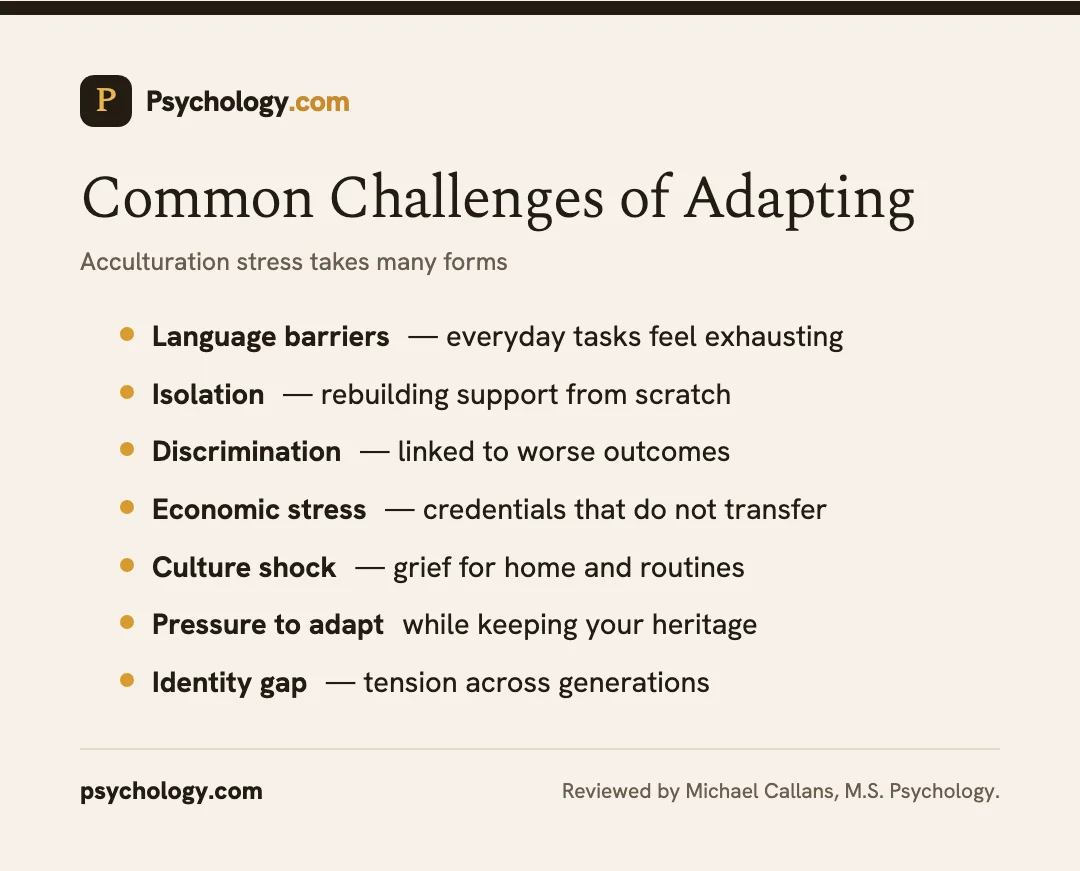
Acculturation stress shows up in many forms. Common challenges include:
- Language barriers, which can make everyday tasks exhausting and leave people feeling unseen or underestimated.
- Isolation, from being far from family, friends, and community and having to rebuild a support network from scratch.
- Discrimination, which the research consistently links to worse mental health outcomes.
- Economic and status stress, including underemployment, credentials that do not transfer, and the uncertainty of an immigration process.
- Culture shock and grief, a quiet mourning for the home, foods, and rhythms left behind.
- Pressure to adapt fast, while also holding on to a heritage that matters deeply.
These challenges often come in waves rather than all at once. It is common to feel competent and settled in some areas while still struggling in others, and to find that homesickness or loss resurfaces years later during a new life transition.
Identity and intergenerational dynamics
Immigration raises deep questions of identity. People often find themselves living between two cultures, fully at home in neither, working out which traditions to keep, which to adapt, and how to be themselves in a new context. This is meaningful work, but it can also be disorienting and lonely.
These dynamics play out across generations as well. Children and grandchildren of immigrants frequently acculturate faster than their parents, picking up the new language and customs at school. This acculturation gap can strain family relationships, with younger members feeling caught between their parents' expectations and the world outside the home, and older members fearing the loss of language, faith, and heritage. Each generation is often doing its best from a different vantage point. Therapy can give families a space to understand one another across that gap rather than blaming each other for it.
Trauma some carry
Not everyone who immigrates has experienced trauma, but some carry heavy histories. Refugees and asylum seekers in particular may have survived war, persecution, violence, or a dangerous journey, and the stress does not always end on arrival. Detention, separation from family, or fear of deportation can extend or deepen the harm. The result can be symptoms of post-traumatic stress, including flashbacks, nightmares, hypervigilance, and emotional numbness. Our guide to PTSD explains how trauma affects the mind and body and why it responds to treatment. Carrying these experiences is not a weakness, and effective, trauma-focused care exists to help people process them safely.
How therapy helps
Therapy offers a confidential space to make sense of an experience that few people fully understand unless they have lived it. A good therapist can help you process grief and loss, ease anxiety and depression, work through identity questions, strengthen family relationships, and, where needed, treat trauma with evidence-based approaches. Just as importantly, therapy can be a place where your background is met with curiosity and respect rather than having to be constantly explained or defended.
Healthy adaptation can mean holding on to what matters from your heritage while building a life in a new place. You can decide which traditions, relationships, and routines you want to carry forward. Therapy supports that balance, and the strengths many immigrants already have, including resilience, adaptability, and strong family and community ties, become resources in the work.
Finding culturally responsive care
The most helpful therapists for immigration-related stress are culturally responsive, meaning they are aware of how culture, migration, and identity shape a person's life and they approach your background with humility and respect. You do not always need a therapist from your exact culture, though for some people a shared language or heritage adds comfort and ease. What matters most is that the therapist takes your experience seriously and adapts their approach to fit you.
When you reach out, it is fair to ask about a therapist's experience working with immigrants or your specific community, whether services are available in your preferred language, and how they think about culture in therapy. If cost or paperwork feels like a barrier, community health centers and organizations that serve immigrants and refugees often provide low-cost, culturally informed care. Reaching out is a sign of strength, and support is available wherever you are in your journey.
Frequently asked questions
What is acculturation stress?
Acculturation stress is the strain that comes from adapting to a new culture. It can include language barriers, discrimination, loss of familiar support, and the pressure to balance a heritage culture with a new one. It is a common and understandable response to a major life change, not a personal failing.
Do I need a therapist from my own culture?
Not necessarily. What matters most is cultural responsiveness, meaning a therapist who is curious about and respectful of your background, even if it differs from theirs. A shared language or culture can help, but skill, humility, and a good fit matter more.
Is it normal to feel isolated years after immigrating?
Yes. Adjustment is not a straight line, and feelings of loss, homesickness, or isolation can surface long after the move, especially during life transitions. Support is available, and therapy can help you process these feelings and build connection. Consider whether loneliness is also affecting sleep, work, or your willingness to leave home, and bring those changes to a clinician.
How can I find mental health support as an immigrant?
Start with a community health center, an immigrant-serving organization, or a licensed therapist experienced in migration and cultural adjustment. Ask about your preferred language, interpreter availability, fees, and what information is needed to receive care. You can request an explanation of confidentiality before describing sensitive experiences. Practical help with housing, work, or legal questions may also ease stress alongside mental health support.
Related
- Anxiety
- Depression
- PTSD
Therapists who specialize in immigration
Connect with a licensed therapist on Psychology.com who works with immigration.
- Barbara L Edwards
- Diana C. Sanabria
- Dr. Cristy Lopez
- Dr. Gloria Montes
- Dr. Laura G. Kogan
- Dr. Orsolya Hunyady
Browse all therapists →
Finding the right help
When you are ready to take the next step, these guides walk you through finding and starting with the right therapist.
- Getting started with therapy
- How to find the right therapist
- Find a therapist who takes insurance
- Free & low-cost therapy
References
- American Psychological Association: Immigration and refugees
- American Psychiatric Association: Mental health of immigrants and refugees
- World Health Organization (WHO): Refugee and migrant health
- SAMHSA: National Helpline and finding treatment
- HelpGuide: Coping with stress and adjustment
Preparing for culturally responsive support
Before contacting a provider, write down the situations that are hardest: a work conversation, family disagreement, official appointment, or evening alone. Add what you want help with and which language lets you explain emotions most clearly. A stress diary can help you bring concrete examples. A stress-level self-check offers a starting point for discussion; it cannot diagnose a condition or determine whether you qualify for services.
You can ask: “How do you include culture in your work? Can we discuss the limits of confidentiality? What happens if I need an interpreter?” Choose how much personal history to share as trust develops. For related support, explore the Life & Relationships hub, grief and bereavement, and finding the right therapist.