Diaphragmatic Breathing Exercise: Learn the Foundation of Relaxation
This exercise teaches you to breathe from your diaphragm instead of your chest, the foundation of nearly every relaxation technique. Follow the simple steps to build the habit at your own pace.
 Reviewed by Michael Callans, MSW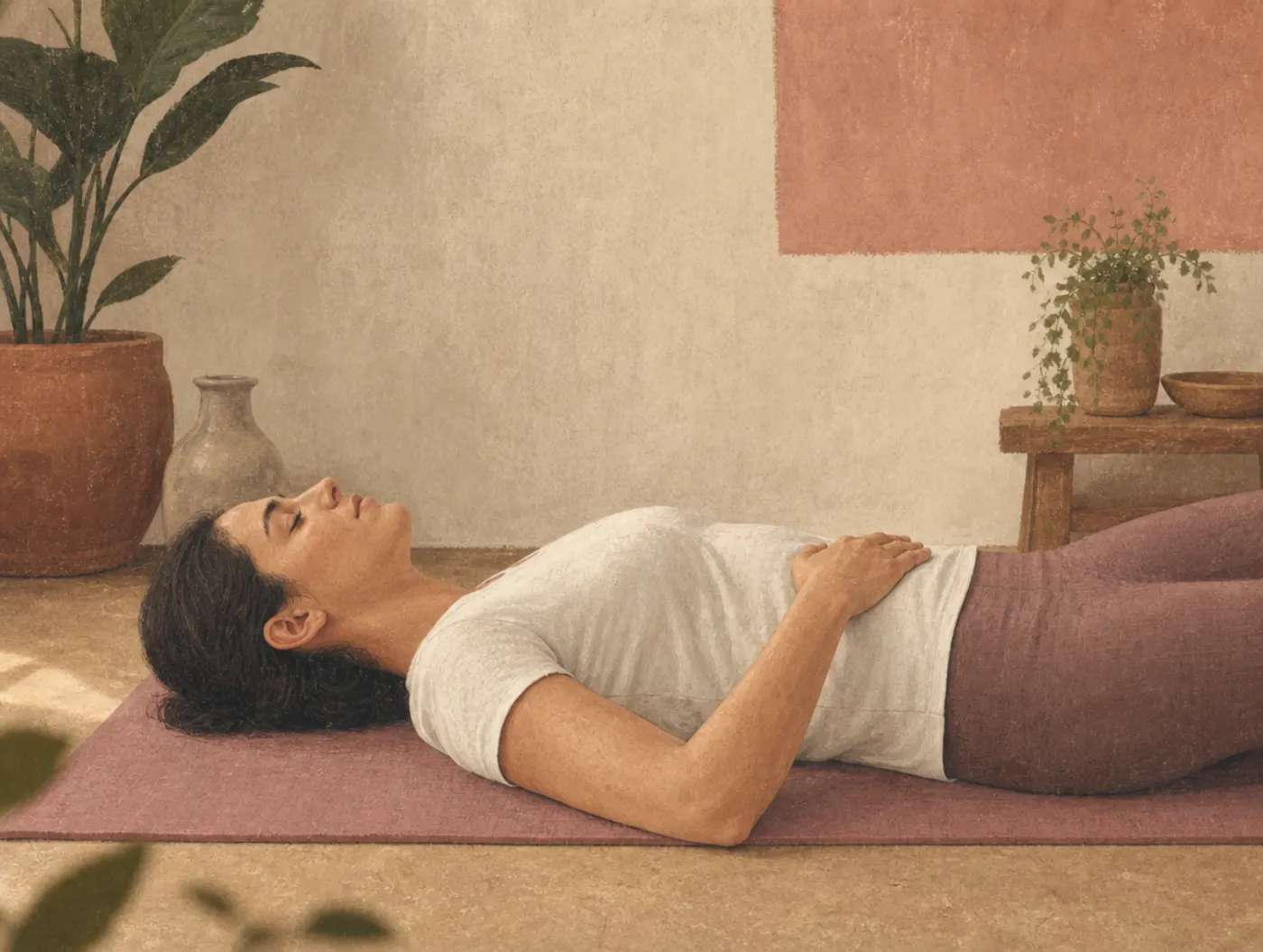
About this tool
Diaphragmatic breathing, often called belly breathing or abdominal breathing, means breathing deeply from the diaphragm (the large muscle below your lungs) rather than shallowly from the upper chest. When you breathe this way, your belly rises and falls while your chest and shoulders stay relatively still.
Most people under stress breathe shallowly from the chest, which keeps the body in a state of low-grade tension. Diaphragmatic breathing draws air more fully into the lungs and gently engages the vagus nerve, shifting the body toward its calming parasympathetic state. It is the foundation skill underneath box breathing, 4-7-8, progressive muscle relaxation, and most meditation.
It can feel unnatural at first, especially if you have spent years as a chest breather. That is normal. Practicing lying down, with a hand on your belly so you can feel the movement, makes it much easier to learn. With a little daily practice it becomes automatic, and you will find yourself breathing more calmly without thinking about it.
Research links regular diaphragmatic breathing to lower stress, reduced anxiety, and even small improvements in attention and mood, making it one of the highest-value habits for managing everyday stress.
A common mistake is trying to take the biggest possible breath by lifting the chest and shoulders, which defeats the purpose. The goal is a full, relaxed belly breath, not a forced one. Breathing too quickly is another frequent error, and it can cause lightheadedness; slowing down and breathing more gently usually settles that right away.
Diaphragmatic breathing helps most people feel calmer within minutes, but it is not a substitute for treatment when anxiety or stress is severe, persistent, or getting in the way of daily life. If that describes your experience, a licensed therapist can help you build a fuller set of tools, and you can search the Psychology.com therapist directory to find one.
References
- Ma X, et al. The effect of diaphragmatic breathing on attention, negative affect and stress in healthy adults. Front Psychol. 2017;8:874.
- Hopper SI, et al. Effectiveness of diaphragmatic breathing for reducing physiological and psychological stress in adults: a quantitative systematic review. JBI Database System Rev Implement Rep. 2019;17(9):1855-1876.
Cite this source
Psychology.com. (2026, September 14). Diaphragmatic Breathing Exercise. Psychology.com. https://psychology.com/tools/diaphragmatic-breathing
Diaphragmatic Breathing Exercise FAQ
What is diaphragmatic breathing?
It is breathing deeply from the diaphragm so your belly rises and falls, rather than shallow breathing from the upper chest. It is also called belly breathing or abdominal breathing.
How is it different from regular deep breathing?
It is the mechanics underneath deep breathing. Many people take a deep breath by lifting the chest and shoulders. Diaphragmatic breathing keeps those still and lets the belly do the work, which is more efficient and more calming.
How long until it feels natural?
For most people, a few minutes of practice a day over a week or two is enough for it to start feeling automatic. Practicing lying down speeds this up.
Is it safe for everyone?
It is gentle and safe for most people. If you have a lung or heart condition and feel short of breath, check with your doctor first.
Is diaphragmatic breathing the same as belly breathing?
Yes. Diaphragmatic breathing, belly breathing, and abdominal breathing all describe the same technique: breathing so the diaphragm draws air deep into the lungs and the belly rises, instead of breathing shallowly by lifting the chest and shoulders.
Does diaphragmatic breathing help with anxiety?
It can help calm the physical symptoms of anxiety, such as a racing heart or tight chest, by engaging the body's parasympathetic response. It works well alongside other coping skills, and a therapist can help if anxiety is frequent or severe.