Deep Breathing Exercise: A Simple Guided Pattern to Calm Your Body in Minutes
A deep breathing exercise uses gentle, slower breaths to help you settle during stress or anxiety. Follow the guided pattern at a comfortable pace without forcing your breath.
 Reviewed byMichael Callans, MSW
Related tools & tests
Anxiety or stress hard to shake?
A therapist can help you treat the root, not just calm the symptoms. Free to search our directory.
Therapists Who Work With Anxiety
A worksheet is a start. These licensed therapists work with the same problem; every member is matched to the federal NPI Registry and board checks are dated on the profile.
-
View profile
Luke SzczechLPCC, MS
License verified, checked Oct 13, 2026
Sauk Rapids, Minnesota Telehealth and in person $150 per session
-
View profile
License verified, checked Oct 2, 2026
Overland Park, Kansas Telehealth and in person $125 per session
-
View profile
Melanie A. GlasseyMA, LPC
License verified, checked Oct 2, 2026
“Healing beyond words”
Lancaster, Pennsylvania Telehealth $175 to $200 per session, sliding scale


About this tool
A deep breathing exercise is a guided practice of slowing your breath gently to help manage the physical tension of stress or anxiety. It gives you a repeatable action to try when you feel wound up, while leaving room to adjust the rhythm to your comfort. Stress can change breathing patterns, and research links slow breathing with changes in the nervous system and feelings of relaxation. The response varies, so you may notice a small shift, a delayed change, or little difference on a particular occasion.
The aim is a slow, comfortable rhythm with an easy exhale. This exercise suggests a longer out-breath as a pacing cue, while NHS guidance also describes gentle breathing with even counts. You do not have to reach a particular count or empty your lungs completely for the practice to be worthwhile. If lengthening the exhale makes you strain or gasp, return to your usual breathing and try a more comfortable rhythm later.
You can do this anywhere and no one needs to know you are doing it. Like any skill, it works better with practice. Used regularly when you are calm, it becomes a reliable tool you can reach for the moment stress rises.
If you feel lightheaded, that usually means you are breathing too fast or too deeply. Slow down, breathe more gently, and return to a natural rhythm.
Deep breathing is the simplest version of a family of paced-breathing techniques. Box Breathing adds two equal pauses at the top and bottom of the breath, which some people find gives the mind more to hold onto. 4-7-8 Breathing lengthens the pause and the exhale further, which can feel more sedating but is harder to sustain for beginners. This exercise strips the pattern down to an inhale and a longer exhale, which makes it the easiest one to start with and to do without counting closely.
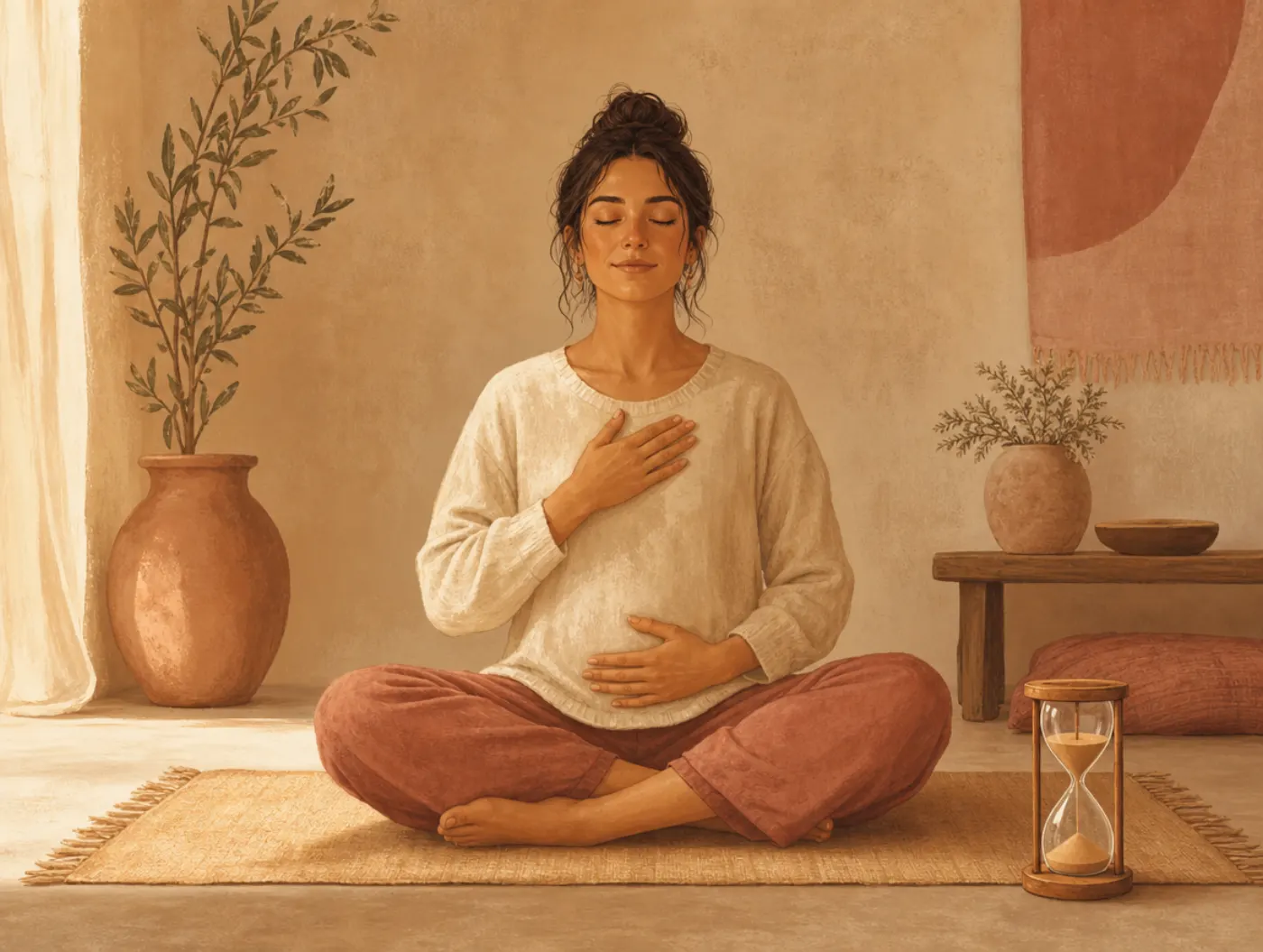
A common difficulty is holding the shoulders tense while trying to take a large breath. Resting a hand on your belly, as the steps above suggest, can help you notice gentle movement without trying to push your abdomen outward. Some chest movement is normal. Another mistake is forcing a big, effortful inhale or squeezing the breath out. Keep the in-breath easy and let the exhale leave gently; the exercise should not feel like a test of lung capacity or how long you can tolerate discomfort.
Deep breathing calms the body in the moment, but it does not address what is causing frequent anxiety or stress. If you find yourself reaching for this exercise many times a day, or if the calm never seems to last, that pattern is worth bringing to a licensed therapist. Our directory at /therapist/ lets you search by specialty, free and without an account.
Zaccaro and colleagues reviewed slow-breathing research in healthy adults and reported changes in heart-rate variability alongside psychological outcomes such as greater relaxation. The studies used different breathing methods and measurements. This supports cautious use as a relaxation practice, while leaving uncertainty about which pattern suits a particular person. The review does not establish that this exact guided exercise treats an anxiety disorder.
The calm rating is a personal snapshot, without a pass mark or diagnostic meaning. Alongside the rating, note whether your shoulders softened, breathing felt easier, or attention became less scattered. If the rating stays the same, record that honestly. You can use the result to decide whether this practice is worth repeating, adjusting, or replacing with another option from the Relaxation Techniques page.
If focusing on your breath makes you more distressed, stop the paced exercise and let breathing return to its usual rhythm. You could try Grounding Techniques by paying attention to your surroundings instead. Recurrent dizziness or breathlessness deserves medical advice, because symptoms alone cannot tell you whether the cause is anxiety or a breathing problem. An Anxiety Test can support reflection on symptoms, but it cannot explain a physical symptom or provide a diagnosis.
References
- Zaccaro A, et al. How breath-control can change your life: a systematic review on psycho-physiological correlates of slow breathing. Front Hum Neurosci. 2018;12:353.
- Jerath R, et al. Physiology of long pranayamic breathing: neural respiratory elements may provide a mechanism that explains how slow deep breathing shifts the autonomic nervous system. Med Hypotheses. 2006;67(3):566-571.
- National Health Service. Breathing exercises for stress. https://www.nhs.uk/mental-health/self-help/guides-tools-and-activities/breathing-exercises-for-stress/
- Cambridge University Hospitals NHS Foundation Trust. Breathing exercises in the treatment of hyperventilation. https://www.cuh.nhs.uk/patient-information/breathing-exercises-in-the-treatment-of-hyperventilation/
- Cambridge University Hospitals NHS Foundation Trust. Breathing pattern disorders: an overview. https://www.cuh.nhs.uk/patient-information/breathing-pattern-disorders-an-overview/
Cite this source
Psychology.com. (2026, September 16). Deep Breathing Exercise. Psychology.com. https://psychology.com/tools/deep-breathing
Deep Breathing Exercise FAQ
How does deep breathing reduce anxiety?
Slow breathing can influence the nervous system processes involved in physical arousal and may help you feel less tense. The aim is gentle, comfortable breathing, with space to notice how your body responds. It can be a coping skill during anxiety, though feeling calmer immediately is not a requirement or a guaranteed result.
How long should I breathe for?
Practice for as long as the breathing feels comfortable. NHS guidance suggests at least five minutes for its gentle breathing exercise, alongside regular practice. You can begin with a shorter attempt if counting feels difficult. Avoid chasing a slower rhythm or longer exhale when either makes you strain, feel dizzy, or gasp for air.
Why do I feel dizzy when I breathe deeply?
Breathing more deeply or quickly than your body needs can lower carbon dioxide levels and cause lightheadedness or tingling. Stop forcing the breath and return to a comfortable natural rhythm. Dizziness can have other causes, so seek medical advice if it persists, recurs, or comes with other concerning symptoms.
Is anything I type saved?
No. Everything stays in your browser. Nothing is uploaded or stored, and the PDF is created on your own device.
Does deep breathing actually work for anxiety?
Slow-breathing research suggests benefits for relaxation and some anxiety symptoms, although methods and results vary. The review by Zaccaro and colleagues studied healthy adults, so it does not establish this exercise as a treatment for anxiety disorders. If anxiety disrupts sleep, relationships, work, or everyday activities, discuss it with a licensed clinician.
Can I do this exercise lying down?
Yes. Deep breathing works whether you are sitting, lying down, or standing. Lying down can make it easier to feel your belly rise and fall, which is useful when you are first learning the pattern. Once it feels familiar, you can do it seated at a desk or standing in a doorway.