Continuing education that respects your clinical judgment
Self-paced courses on the work you actually do: ethics and boundaries, suicide assessment, AI in practice, telehealth, documentation, supervision. Built to a published specification, reviewed by our editorial board, priced plainly. Start with a free hour of ethics and see how we teach.
·

The people behind the courses
Every course here is written to a published specification and reviewed by our editorial board before release. That board is practicing, doctorate-level, license-verified clinicians. Courses still being written are marked as such and cannot be bought.
 Suzanne Degges-WhitePhD, LCPC, LPC, LMHC, NCC Professor of Counseling. Licensed in Illinois, North Carolina, and Indiana.
 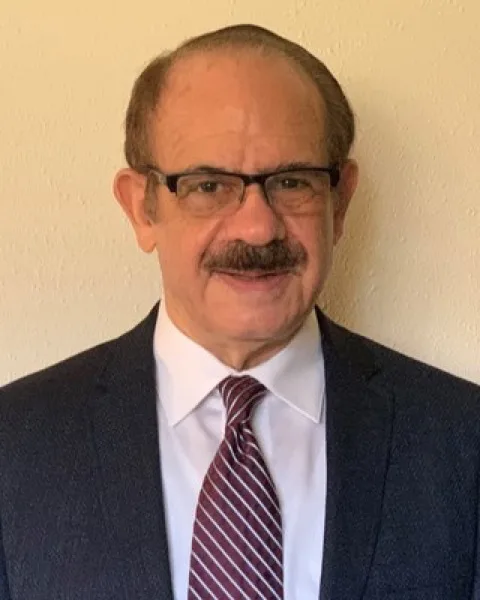 David A. BrooksPhD, ABPP, ABN Licensed clinical psychologist. More than 30 years in practice. Trauma and neuropsychology.
  Kalen D. ZeigerPhD, LMFT, CCTP, CFTP Licensed marriage and family therapist. Certified clinical trauma professional.
  Jack BartelPsyD Licensed clinical psychologist in Florida, Michigan, and Virginia, plus PSYPACT states.
  Matt EdelsteinPsyD, BCBA-D Licensed psychologist and board certified behavior analyst.
 How a course is made here
- Written to a published specification. Learning objectives, timed instruction, worked case material, and a verified reference list, built before a single page is sold.
- Reviewed by licensed faculty. Our editorial board reviews every course before it goes on sale, and we disclose exactly how each course was developed, generative AI drafting included. Courses still being written are marked as such and are not for sale.
- Tested adversarially before you see it. Every exam is audited so that test-taking tricks fail: answer patterns are randomized and checked statistically, and each question maps to a stated learning objective.
- Sourced, dated, and maintained. Every clinical and legal claim carries a reference. State rules show a last-verified date. Courses are reviewed on a schedule, and material changes are versioned.
The catalog
5 courses open now, with 14 hours of instruction. 6 more in production. Every course ends with an exam, an evaluation, and a certificate of completion.
 Ethics in Everyday Practice
Free one-hour introduction to the ethical decision process working clinicians actually use. Free View →
 Ethics and Professional Boundaries
The recurring renewal course: boundaries, confidentiality, digital presence, and repair. $39 View →
 Suicide Assessment and Safety Planning
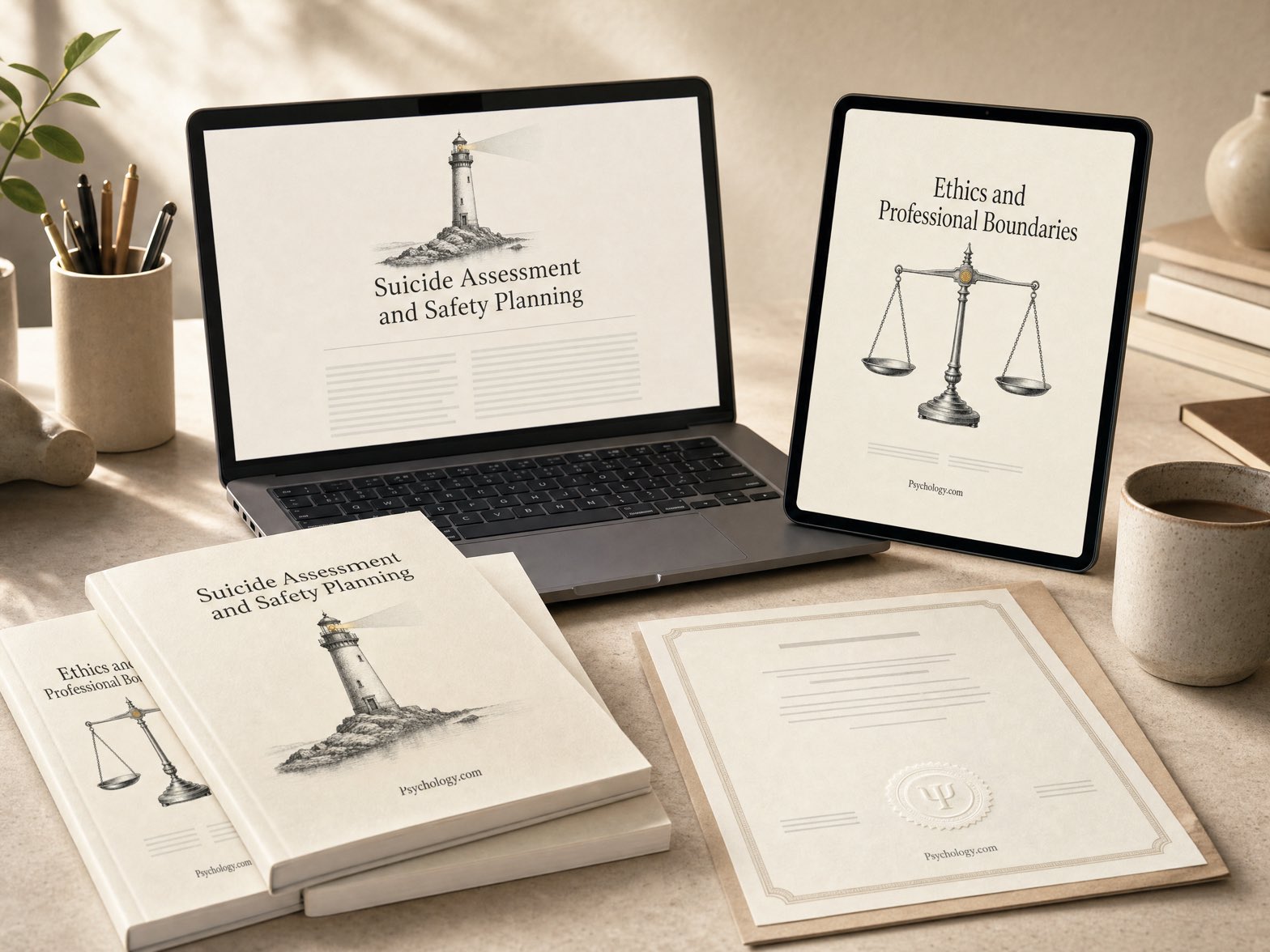
Six hours of practical assessment, safety planning, and documentation skills. $69 View →
 AI in Clinical Practice: Ethics, Consent and Documentation
The practical course on AI tools, consent language, AI notes, and client chatbot use. $39 View →
 Telehealth Law and Ethics
Consent, emergencies, client location, and cross-state practice, with state supplements. $39 View →
 Clinical Documentation and Measurement-Based Care
The golden thread, medical necessity, and outcome measures that improve care. $69 View →
 CBT Foundations and Case Formulation
The cognitive model, formulation, and core interventions with worked case progressions. $69 View →
 Trauma-Informed Assessment and Stabilization
Screening, phase-oriented care, stabilization skills, and knowing when to refer. $69 View →
 Cultural Responsiveness in Clinical Practice
Population-specific clinical skills mapped to state cultural competency designations. $39 View →
 Implicit Bias in Clinical Decisions
A focused one-hour module built for state implicit bias mandates. $19 View →
 Supervisor Ethics and Effective Supervision
The renewal course for current supervisors: ethics, evaluation, gatekeeping, telesupervision. $69 View →
Single courses
Free–$69
The one-hour ethics course is free, three hours is $39, six hours is $69. Buy exactly the hours you need, keep access for a year. The $19 one-hour titles open as they are finished.
Browse coursesThe Launch Bundle
$99
Ethics and Boundaries, Suicide Assessment, and AI in Clinical Practice together. Twelve hours of instruction for less than the price of ten.
See the bundleAnnual CE Membership
$149/year
Every course in the catalog, everything we add this year, one price. Professional directory members get it included.
See the membershipCE for your license
Every license carries its own renewal rules and approval bodies. Start from your profession and we will show the hours you need, your state's mandates, and the courses built for them.
CEUs for social workersLCSW, LICSW, LMSW: ethics hours, suicide training mandates, and state rules from California to New York.View → CEUs for counselors
LPC, LPCC, LMHC: ethics and cultural requirements, jurisprudence, and self-study limits by state.View → CEUs for marriage and family therapists
LMFT renewal hours, the 2026 AAMFT code, telehealth rules, and supervisor requirements.View → CE for psychologists
APA-world continuing education, California CPD categories, and New York's own system, explained.View →
Field guides for clinicians
Free, sourced, and dated reading on the topics our courses teach: the editorial layer behind the catalog. No signup, no paywall.
AI Therapy Laws by State: September 2026 RegisterTrack state AI therapy laws, chatbot restrictions, effective dates, pending bills, and practical duties for mental health clinicians.Read →Boundary Crossings vs Violations in Therapy
Distinguish boundary crossings from violations, assess gifts and other gray zones, and document decisions with attention to power and harm.Read →Cognitive Distortions: A Clinical Guide to CBT
Recognize common cognitive distortions, use them in CBT formulation, and work with thoughts without dismissing clients' real experiences.Read →Counseling Compact and Cross-State Telehealth: 2026
Check the September 2026 Counseling Compact rollout, PSYPACT, social work compact status, and the duties that apply before cross-state therapy.Read →Cultural Humility vs Competence in Clinical Practice
Understand cultural humility, its origins, its relationship to competence, and its practical role in assessment, treatment planning, and CE.Read →Golden Thread Documentation: A Clinician's Guide
Connect assessment, treatment plans, progress notes, and medical necessity with practical examples of clear, defensible clinical documentation.Read →How to Become a Clinical Supervisor: State Guide
Compare supervisor pathways for counselors, social workers, MFTs, and psychologists in California, Texas, Florida, and New York.Read →Is ChatGPT HIPAA Compliant? A Clinician's Guide
Consumer ChatGPT is not a clinical PHI workflow. Understand BAAs, eligible alternatives, state AI therapy laws, consent, and note-review duties.Read →Safety Plan in Therapy: A Guide for Professionals
Understand the Stanley-Brown safety-planning steps, common implementation failures, means safety conversations, evidence limits, and follow-up.Read →Trauma-Informed Care: A Practical Clinical Guide
Understand trauma-informed care, the six principles and four Rs, screening, everyday clinical workflows, and boundaries for trauma-focused treatment.Read →What Is Implicit Bias? A Guide for Clinicians
Understand implicit bias in clinical decisions, the IAT debate, practical ways to improve care, and Michigan's training requirements.Read →
How our courses work
Every course is reviewed by our editorial board before release. You read (or listen) at your own pace, work through real case material, pass a final exam, and complete a course evaluation. Your certificate of completion issues immediately and stays at your private course link, downloadable any time, even if you cancel.
Straight answers
How many CEUs do social workers need?
Are online, self-paced CEUs accepted?
Which approvals do these courses carry?
What does a course cost?
How do exams and certificates work?
Who writes these courses?
Start with the free ethics hour.
Exam and certificate included. No card, no catch, unsubscribe anytime.
Catalog and review. 5 self-paced courses are open now, totaling 14 hours of instruction. Our editorial board has 5 licensed clinicians; their profiles are linked above.
Who teaches. Courses are built to a specification written by licensed clinicians and drafted with generative AI, then reviewed by our editorial board of practicing, license-verified clinicians before release. The same disclosure appears inside every course and on every certificate.
Refunds. Full refund within 30 days if you have not yet passed the final exam. No questions, one email.
Crisis resources. If you or someone you know is in crisis, call or text 988 (Suicide and Crisis Lifeline) in the US. Our courses train professionals and are not a crisis service.