Grief Rituals & Ceremonies: Ideas to Give Your Grief a Shape and a Place to Go
Grief rituals and ceremonies are intentional acts that honor a loss, privately or with others. This free PDF offers memorial and anniversary ideas you can adapt to your beliefs.
 Reviewed byMichael Callans, MSW
Why rituals help
Grief can feel shapeless and out of control. A ritual gives it edges: a beginning, an action, an ending.
It offers something to do with feelings that have nowhere else to go, a way to honor the person, and often a way to grieve together with others who loved them. None of this erases the loss. It helps you carry it.
Personal rituals you can do alone
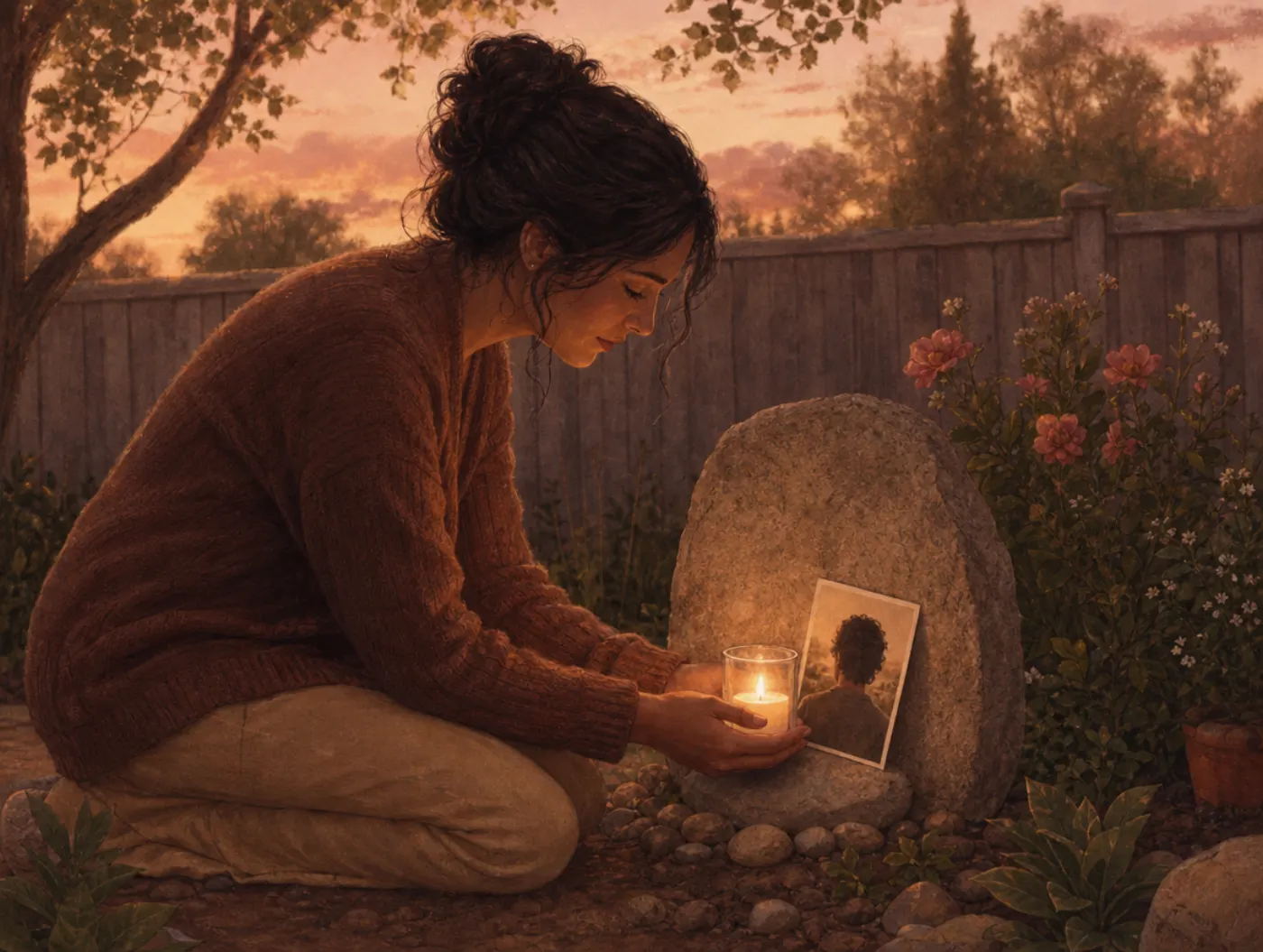
- Light a candle at a set time, on an anniversary or whenever you miss them.
- Cook their favorite meal or recipe and eat it in their memory.
- Keep a memory box of photos, letters, and small objects.
- Write them a yearly letter or note (see the goodbye letter exercise).
- Visit a place that was meaningful to you both.
- Plant a tree, flowers, or a small garden in their honor.
- Wear or carry something of theirs on hard days.
Shared rituals with family or friends
- Hold a small gathering to share memories and stories.
- Make a toast to them at meals, birthdays, or holidays.
- Create a photo album or memory book together.
- Donate, volunteer, or fundraise for a cause they cared about.
- Release flowers on water, or scatter ashes at a meaningful spot.
- Set a place or leave an empty chair at a celebration in their memory.
Rituals for anniversaries and milestones
- Mark the death anniversary in a way that feels right, big or small.
- Acknowledge their birthday with a tradition of your own.
- Find a gentle way to include them in holidays and family events.
- Note the firsts (first holiday, first birthday without them) and plan ahead for them.
A gentle reminder
There is no ritual you are required to do and no timeline you must keep. If a tradition stops feeling helpful, you can change it or let it go. If a new one appears years later, follow it. Rituals serve you, not the other way around. The rest of our free grief worksheets work the same way: use what helps, set aside what does not. If you want to see why grief returns in waves long after you thought it had settled, the grief cycle diagram shows that pattern on one page.
Related tools & tests
Looking for ways to honor your loss?
A grief counselor can help you find rituals and meaning that fit you. Free to search our directory, no account needed.
Therapists Who Work With Grief & loss
A worksheet is a start. These licensed therapists work with the same problem; every member is matched to the federal NPI Registry and board checks are dated on the profile.
-
View profile
Nadia LoeweLMFT
License verified, checked Oct 9, 2026
“Hello. Welcome to my page!”
Pleasanton, California Telehealth and in person $120 to $160 per session
-
View profile
Shaudi AdelLCSW, MSW
License verified, checked Oct 13, 2026
“Check out my profile for a free consultation!”
New York, New York Telehealth $80 per session, sliding scale
-
View profile
Sheri GalensMA, LPC
License verified, checked Sep 29, 2026
“A space to feel heard, understand yourself more deeply, and become your most authentic self.”
Royal Oak, Michigan In person $90 to $125 per session, sliding scale



About this tool
Grief rituals and ceremonies are deliberate actions used to remember someone who died and acknowledge the loss, such as sharing a meal or reading a letter. This guide offers ideas for personal memorials and shared occasions, with space to choose what fits your relationship, beliefs, and energy. Across every culture and throughout history, humans have used ritual to meet loss. Funerals, wakes, sitting shiva, anniversaries, candle lighting, scattering ashes, and quiet personal traditions all do something the mind cannot do alone: they give grief a shape, a time, and a place. Ritual turns formless pain into an act you can actually carry out, which can be steadying when everything feels chaotic.
Research on grief suggests that meaningful rituals can help people regain a sense of control after a loss and feel more connected to the person who died and to others grieving alongside them. Rituals also support what grief scholars call continuing bonds, the healthy ongoing connection we keep with those we have lost. A yearly toast or a visit to a special place is one way that bond stays alive.
There is no single correct ritual, and it does not need to be religious or formal. Some people find comfort in the traditions of their faith or family. Others create something entirely personal: cooking a loved one's recipe on their birthday, keeping a memory box, planting a tree, or writing them a note each year. What matters is that it feels true to you and to the person you are honoring.
Because grief is not linear, ritual is not a one-time event. You may want to mark the loss on the first day, again at the funeral, every anniversary, and at unexpected moments for years. Returning to a ritual is not dwelling. It is one of the ways love keeps showing up.
Psychologist J. William Worden describes tasks of mourning that include accepting the reality of a death and finding a way to stay connected to the person while continuing to live. Ritual is one of the ways people carry out both. A study by Norton and Gino found that people who carried out a ritual after a loss reported feeling more in control and less grief, even when the ritual itself had no effect on the practical situation. These experiments examined responses to different kinds of loss, including relationships and lotteries. They do not establish a treatment for prolonged grief or show that a particular memorial will help everyone. Grief rituals also have cultural and religious histories that extend beyond this psychological research.
A ritual does not need an audience, a script, or a special occasion to count. Some of the simplest ones, saying a name out loud, keeping a chair empty, pausing at the same hour each year, do the same work as an elaborate ceremony: they give you a concrete way to hold someone in mind. If you are unsure where to start, pick the smallest version of an idea below and see how it feels before building it into something larger. For a simple plan, choose a meaningful object, decide what you would like to say or remember, and choose a closing action such as putting the object away. You can write the plan on the printed guide so you do not have to decide everything while emotions are strong.
Grief rituals are a support, not a treatment, and it is common for them to sit alongside professional help rather than replace it. If grief feels unbearable for a long stretch, if it is hard to function in daily life, or if the loss keeps surfacing in ways that frighten you, a grief counselor can help you carry it. Our therapist directory can help you find one who specializes in loss.
For a shared ceremony, explain the plan in advance and make participation optional. Someone might want to listen without speaking, contribute a written memory, join remotely, or remember privately later. Agree before displaying photographs or sharing personal stories publicly. If relatives disagree about faith, music, or the relationship itself, separate acts of remembrance may feel more respectful than asking everyone to perform the same ritual.
If the relationship was painful or complicated, your ritual can acknowledge mixed feelings. You might write what you miss, what hurt, and what you want to carry forward, then keep the writing private. You do not have to describe the person as perfect, forgive harm, or make contact with unsafe relatives. The Goodbye Letter Exercise can provide a place to put words you do not want to say at a gathering.
Afterward, consider whether the ritual felt meaningful, manageable, or too demanding. Tears alone do not tell you whether it helped, and a quiet emotional response does not mean you cared less. Plan an ordinary activity afterward, such as eating a meal or calling a trusted person, and give yourself permission to change future plans. If distress feels unmanageable, pause and seek support.
The Continuing Bonds Worksheet can help you reflect on memories and values beyond a memorial occasion. Grief & Loss Worksheets offers related exercises, while the Grief Test is a screening resource rather than a diagnosis or a timetable for mourning. Use any results to describe your concerns in a conversation with a professional, without treating them as instructions about how you should remember someone.
References
- Klass D, Silverman PR, Nickman SL, eds. Continuing Bonds: New Understandings of Grief. Taylor & Francis; 1996.
- Norton MI, Gino F. Rituals alleviate grieving for loved ones, lovers, and lotteries. J Exp Psychol Gen. 2014;143(1):266-272.
- Worden JW. Grief Counseling and Grief Therapy: A Handbook for the Mental Health Practitioner. 5th ed. Springer; 2018.
- Norton, M. I., & Gino, F. (2014). Rituals alleviate grieving for loved ones, lovers, and lotteries. Journal of Experimental Psychology: General, 143(1), 266-272. Abstract and publication record: https://pubmed.ncbi.nlm.nih.gov/23398180/
Cite this source
Psychology.com. (2026, September 16). Grief Rituals & Ceremonies. Psychology.com. https://psychology.com/tools/grief-rituals
Grief Rituals & Ceremonies FAQ
What are grief rituals?
Intentional acts that help you mark and honor a loss, from funerals and anniversaries to private traditions like lighting a candle or cooking a loved one's recipe. They give shapeless grief a time, a place, and an action. This free printable PDF offers options you can adapt, whether you want a private moment or a shared ceremony.
Do grief rituals actually help?
For many people, yes. Research suggests meaningful rituals can restore a sense of control after a loss and strengthen the connection to the person who died and to others grieving with you. Findings describe possible benefits, not a promise of relief. A ritual may feel meaningful while also bringing sadness, and it can be changed or stopped if it feels too demanding.
Do rituals have to be religious?
Not at all. They can follow your faith or family traditions, or be entirely personal and secular. What matters is that the ritual feels true to you and to the person you are honoring. If people taking part have different beliefs, explain the plan beforehand and offer ways to participate without prayer or spoken contributions. Private remembrance is also a valid choice.
How often should I do a grief ritual?
As often as it helps. There is no required occasion or timeline. Because grief is not linear, you may return to a ritual on anniversaries and at unexpected moments for years, and that is healthy. Let your willingness and circumstances guide the decision. If the ritual starts to feel compulsory or interferes with daily responsibilities, discuss that experience with a grief counselor and consider adapting it.
When should I start a grief ritual?
Whenever it feels right. Many people begin with something small at the funeral or in the first days after a loss, then develop rituals for anniversaries and milestones as time passes. There is no correct time to begin, and starting a new ritual years later is just as meaningful as starting right away.
What can I do on the anniversary of someone's death?
Common choices include lighting a candle, visiting a meaningful place, cooking their favorite meal, making a toast, or writing them a letter. Some people mark the day quietly and alone, others gather people who loved the person too. Choose whatever feels true to your relationship with them, and let it change from year to year.