Emotional Regulation Activities for Kids: Fun Ways to Name and Calm Big Feelings
Emotional regulation activities for kids use play, feeling words, and calming practice to help children respond to big feelings with support from a trusted adult.
 Reviewed byMichael Callans, MSW
Naming feelings (emotional literacy)
- Feelings check-in: at dinner, everyone names a feeling from the day and why.
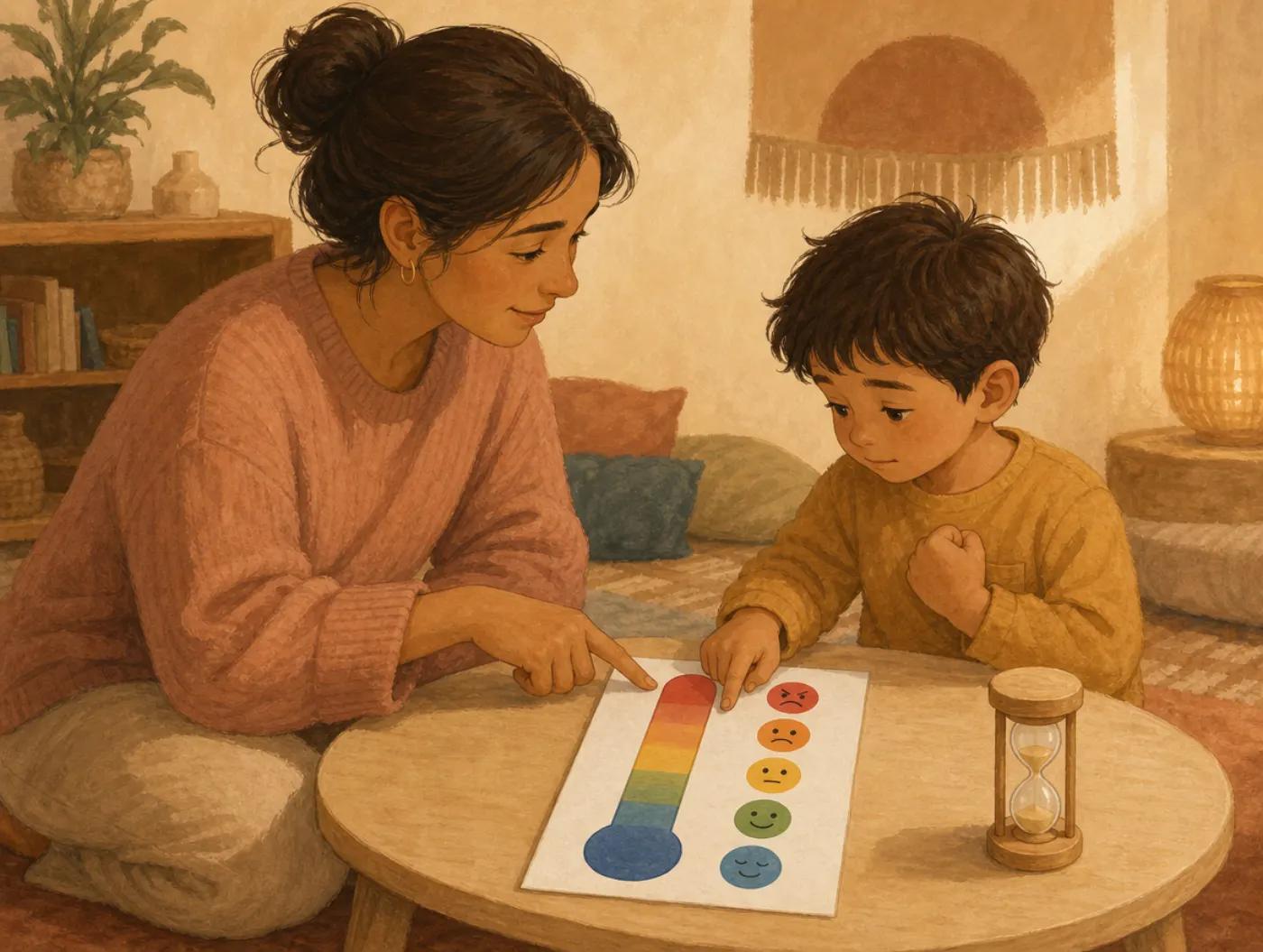
- Make a feelings chart with faces, and point to how you feel each morning.
- Read picture books about emotions and pause to name what characters feel.
- Play feelings charades: act out an emotion for others to guess.
- Use a feelings thermometer: is the feeling small, medium, or huge right now?
Calming the body
- Balloon breathing: breathe in to fill your belly like a balloon, slowly let it out.
- Blow bubbles, real or imaginary, to make breaths slow and long.
- Squeeze and release: tense your whole body for five seconds, then go floppy.
- Animal moves: stomp like an elephant or curl up small like a turtle to shift energy.
- Cozy wrap: bundle up in a blanket and feel snug and safe.
Building self-control (games)
- Red light, green light, or freeze dance, to practice stopping and starting on cue.
- Simon Says, which builds the pause between hearing and acting.
- Take turns being the leader, to practice waiting and patience.
- Beat the timer: see if you can stay calm or quiet until the sand runs out.
- Build a glitter jar together and watch it settle, like a feeling settling down.
A simple in-the-moment routine
- Name it: help your child say what they feel (you seem really frustrated).
- Stay close and calm, since your child borrows your steadiness first.
- Pick a calming tool together: a few balloon breaths, a squeeze, or movement.
- Wait for the wave to pass before talking about what happened.
- Afterward, praise any effort to calm down, however small.
What to expect
Progress is slow and uneven, and that is normal. A child who managed a feeling beautifully on Monday may fall apart on Tuesday, because regulation depends on sleep, hunger, and how full the day's stress cup already is. Keep practicing during calm moments, keep modeling it yourself, and look for progress over months rather than days. If you want to notice and praise one specific behavior along the way, a free behavior chart for kids keeps the goal and reward visible.
Related tools & tests
Want help building these skills?
A child therapist can teach you and your child practical emotion-regulation tools that last. Free to search our directory.
Therapists Who Work With Parenting
A worksheet is a start. These licensed therapists work with the same problem; every member is matched to the federal NPI Registry and board checks are dated on the profile.
-
View profile
License verified, checked Oct 23, 2026
“An active, collaborative partnership focused on helping you shift negative cycles and build real-world coping strategies.”
Montgomery, Alabama Telehealth $100 to $160 per session
-
View profile
Gail PoustLMFT, MSc
License verified, checked Oct 6, 2026
“Therapy for the hardest chapters of reproductive life: fertility, loss, postpartum, PMDD, perimenopause, and OCD. Online for adults anywhere in California.”
Berkeley, California Telehealth $180 per session
-
View profile
Grayson WallenLPCC/LPC
License verified, checked Sep 29, 2026
“Gottman Couples Therapist Male CA and AZ”
Encinitas, California Telehealth and in person $250 to $500 per session, sliding scale



About this tool
Emotional regulation activities for kids are playful ways to practice recognizing feelings, expressing needs, and choosing safe responses with adult support. This free printable offers feeling games, body-based activities, and an in-the-moment routine for caregivers to adapt to their child. Emotional regulation is the ability to notice a feeling, understand it, and respond to it in a manageable way rather than being swept away by it. These skills support participation in school, friendships, and family life, and children can practice them with guidance that fits their development. Infants depend heavily on caregivers for comfort and support. The capacity to manage emotions continues developing through childhood and into adulthood, with different support needs across situations. Before interpreting an outburst as deliberate misbehavior, consider what demands your child is facing and whether they need help communicating, resting, or managing the environment.
Kids learn to regulate through co-regulation first: a calm adult helps them settle, again and again, until they can do it themselves. The activities below build the pieces of that skill. Some teach emotional literacy, the simple but powerful ability to name what you feel, which research links to calmer responses. Others teach the body-based tools that bring an activated nervous system back down, such as slow breathing, movement, and sensory grounding.
The key is to practice when everyone is calm. When a child is very distressed, keep your words simple and focus on safety and comfort; save detailed teaching for a calmer moment. By playing these as games during peaceful moments, you build the pathways your child can reach for later. With practice and support, you may notice more space between a feeling and a reaction, although progress varies and these activities cannot promise a particular outcome.
Go at your child's pace and keep it light. Praise effort, not just success. The goal is not a child who never gets upset, which is neither possible nor healthy, but a child who is slowly learning what to do with big feelings when they come.
James Gross, whose process model of emotion regulation underlies much of this research, distinguishes between managing a feeling before it fully arrives and managing it once it has already shown up, which is what most of these body-based tools do. Dan Siegel and Tina Payne Bryson describe a related idea in child-friendly language as naming a feeling to tame it: putting words to what you feel engages the thinking brain and helps settle the emotional one.
There is no score to track here, so look for small, specific signs of change rather than a sudden transformation: a child who used to go straight from calm to a full meltdown pausing for even a few seconds to say 'I'm mad', or reaching for a balloon breath without being prompted. It helps to notice which specific activities your child gravitates toward, since kids often adopt one or two calming tools as their own rather than using the whole list evenly.
If outbursts are frequent, intense, involve hurting themselves or others, or seem out of step with what other children the same age typically handle, that is worth a conversation with a pediatrician or a licensed child therapist rather than something to work through with activities alone. You can start by browsing child therapists through the Psychology.com therapist directory.
Co-regulation includes the environment as well as the adult response. Rosanbalm and Murray describe supportive relationships, predictable surroundings, and skills coaching in their practice brief on development. Before asking your child to use a calming tool, consider whether hunger, an unexpected transition, noise, or a difficult task needs attention. For example, you could preview a change in activity and stay nearby while your child chooses what would help.
Adapt the activity to how your child communicates. A child may point to Emotion Cards, draw, gesture, or choose a picture instead of naming a feeling aloud. Offer a tentative guess such as, "You look frustrated; is that close?" and accept a correction. Let movement and sensory preferences guide the choice of activity. A blanket should be optional and easy to leave; never use it to restrain a child or require touch as part of calming down.
Keep limits clear while making room for feelings. You might say, "You are angry. I will help keep everyone safe. You can ask for space." Once your child is settled, discuss what happened and practice a safe alternative together. Calm-Down Corner Cards can support a space your child chooses to use with help nearby. Avoid making that space a punishment or making affection depend on completing an exercise.
Use the Feelings Thermometer to invite your child to describe intensity in their own way. If you keep notes, describe the situation, what support you offered, and what your child said helped. Share patterns with caregivers or school staff who support your child, without treating the notes as a diagnosis. Parenting Worksheets offers related activities. The linked Emotional Dysregulation Test should not be used to label a child or substitute for a pediatric assessment.
If a game becomes a contest your child dreads, change the rules together. In freeze dance, for example, let everyone start moving again after a missed cue instead of eliminating someone. With the timer activity, allow your child to speak, move, or stop; silence should never be the price of receiving help. Ask afterward whether the game felt enjoyable, frustrating, or too difficult. Use that feedback to adjust the activity before trying it again, and avoid comparing siblings or classmates.
Caregivers can also need a plan for their own rising frustration. Choose a phrase you can use before you become overwhelmed, such as, "I need to slow down so I can help." If another trusted adult is available, agree on how to ask them to take over while you settle. Keep supervision appropriate to your child's needs. Rosanbalm and Murray emphasize that adults may need support and practice to provide co-regulation; needing that support does not make you a poor caregiver.
References
- Siegel DJ, Bryson TP. The Whole-Brain Child. Delacorte Press; 2011.
- Gross JJ. Emotion regulation: current status and future prospects. Psychol Inq. 2015;26(1):1-26.
- Center on the Developing Child. Building the brain's air traffic control system. Harvard University; 2011.
- Rosanbalm KD, Murray DW. Co-Regulation From Birth Through Young Adulthood: A Practice Brief. Office of Planning, Research, and Evaluation, Administration for Children and Families. https://fpg.unc.edu/sites/fpg.unc.edu/files/resources/reports-and-policy-briefs/Co-RegulationFromBirthThroughYoungAdulthood.pdf
Cite this source
Psychology.com. (2026, September 16). Emotional Regulation Activities for Kids. Psychology.com. https://psychology.com/tools/emotional-regulation-kids
Emotional Regulation Activities for Kids FAQ
What are emotional regulation activities?
Playful exercises that teach children to notice and name their feelings and to calm their bodies, building the skill of managing emotions instead of being overwhelmed by them. Examples include feelings charades, pointing to a feelings chart, and practicing comfortable breathing together. An adult joins in, models the skill, and adapts the activity to the child. These educational tools do not diagnose a condition.
When should we practice them?
Practice during calm, willing moments, when your child can explore the activity with you. During an outburst, focus on safety, simple words, and available comfort. Return to teaching after things settle. Keep practice flexible and stop if a game becomes frustrating; completing the whole printable is not the goal.
At what age can kids learn to regulate emotions?
The foundations develop from infancy through responsive caregiving, and children continue building regulation skills as they grow. Young children need substantial help from a trusted adult. As language and attention develop, adapt activities to what your child can understand and do. There is no single birthday when children should manage every strong feeling independently.
My child still melts down even though we practice. Is that normal?
Completely. Progress is slow and uneven, and it dips when kids are tired, hungry, or stressed. Look for change over months, not days, and keep praising the effort. Notice what was happening before the outburst and what support helped afterward. Seek advice from a pediatrician or child therapist if episodes cause significant distress, disrupt daily life, or involve harm.
Do these activities help with anxiety, not just anger?
These activities can be used to practice responding to anxious feelings as well as anger or frustration. Naming a worry or choosing a comfortable calming activity may give your child a way to ask for support. Benefits vary. Persistent fear, avoidance, or difficulty attending school deserves a conversation with a pediatrician or child therapist.
What is the difference between emotional regulation and self-control?
Emotional regulation is noticing and managing an inner feeling, while self-control is choosing an outer behavior in the moment. They are related and often taught together, but a child can feel calmer inside while still needing practice pausing before they act, which is why turn-taking games like Simon Says round out the feeling-focused activities here.