Reward Chart (Kids): A Simple Printable Chart to Encourage Good Behavior
A simple, printable chart to encourage one or two positive behaviors at a time, using stickers, checks, and small rewards to make progress visible and motivating.
 Reviewed by Michael Callans, MSW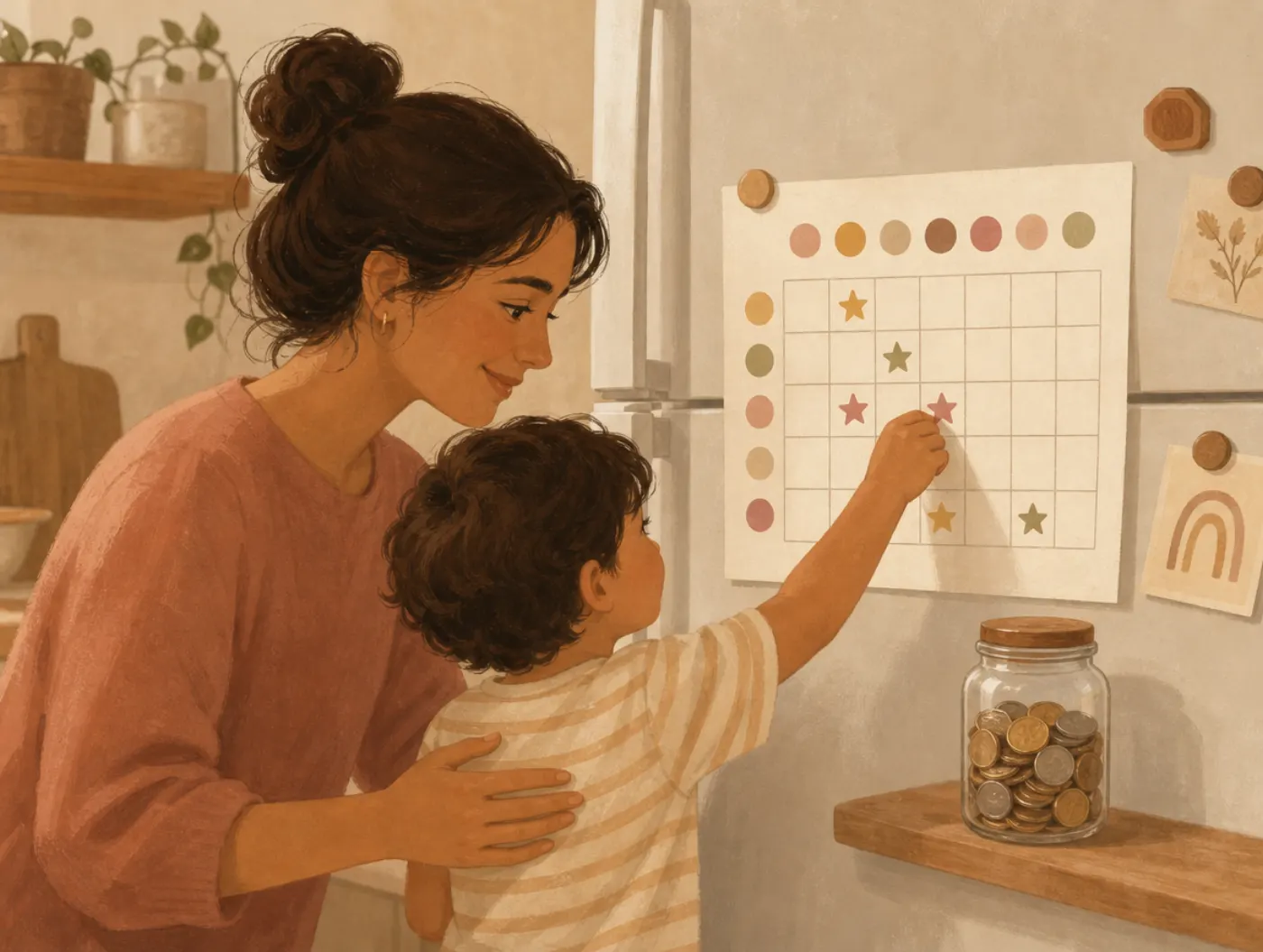
About this tool
A reward chart is a positive reinforcement tool. The idea, drawn from decades of behavioral research, is simple: behaviors that get noticed and rewarded tend to happen more often. For young children, a chart makes that invisible process visible. A sticker or check is immediate, concrete feedback that says you did the thing we agreed on, and that feedback is often more motivating than the reward itself.
The chart works best when the target behavior is specific and within the child's reach. Brushed teeth without being asked beats the vague be good. Start with one or two behaviors, not ten, so success is likely and the chart stays encouraging rather than discouraging. Pair every sticker with warm, specific praise, since your attention is the most powerful reward of all.
Reward charts are most effective for children roughly ages three to ten, and they are a teaching tool, not a bribe. The aim is to help a new habit take hold, after which the chart can gently fade away. They are not designed to stop serious or unsafe behavior, which usually needs a different approach and sometimes professional support.
Keep rewards small and frequent at first. A sticker today, a little extra story time at the end of a good week. Big, far-off prizes tend to lose their pull for young children, who respond best to reward that comes soon after the effort.
The idea behind reward charts traces back to B.F. Skinner's research on operant conditioning, which found that behavior followed by a positive consequence tends to happen more often. Child psychologist Alan Kazdin later built these same principles into structured parent training programs, showing that consistent, immediate reinforcement applied over weeks can meaningfully reduce defiant and oppositional behavior in children.
Pay attention to the pattern on the chart over a week or two, not any single day. A few missed marks in a row usually means the target behavior is still too hard, the reward has lost its pull, or the chart needs to move somewhere your child sees it more often. A steadily filling chart with occasional blanks is real progress, and it is a better guide than judging any one day on its own.
A reward chart is built for everyday behaviors like getting dressed, brushing teeth, or using kind words. It is not designed to manage aggression, safety concerns, or behavior that seems out of proportion to typical development. If a behavior is frequent, intense, or putting your child or others at risk despite a consistent, well-designed chart, talk with your pediatrician or a licensed child and family therapist. Psychology.com's therapist directory can help you find someone who works with children and families.
References
- American Academy of Pediatrics. What's the best way to discipline my child? HealthyChildren.org.
- Kazdin AE. The Kazdin Method for Parenting the Defiant Child. Houghton Mifflin; 2008.
Cite this source
Psychology.com. (2026, September 14). Reward Chart (Kids). Psychology.com. https://psychology.com/tools/behavior-reward-chart
Reward Chart (Kids) FAQ
What age is a reward chart best for?
Reward charts work best for children roughly three to ten years old, who respond well to immediate, visible feedback. Older children usually need more flexible, conversation-based approaches.
Are reward charts just bribery?
No. A bribe is offered to stop a tantrum in the moment. A reward chart sets a clear goal in advance and rewards effort toward it, which is how all of us learn new habits. The aim is to build the habit and then let the chart fade.
What if my child loses interest?
That usually means the behavior is too hard or the reward is too small or too far away. Make the steps easier and the rewards smaller and sooner. Pair every mark with warm, specific praise, which matters more than the prize.
Should I take away stickers for bad behavior?
No. Removing earned stickers turns a positive tool into a punishment and usually backfires. Keep the chart purely about catching and rewarding the good.
Is this reward chart free to print?
Yes. The reward chart is a free, printable PDF with no account required. Print as many copies as you like and start a fresh chart whenever your child is ready to work on a new behavior.
How many stickers should it take to earn a reward?
There is no fixed rule, but rewards should feel close and achievable to a young child. A small prize after just a few marks, plus a slightly bigger one for a good week, works better than one big prize far in the future. As your child gets older and can wait longer, you can stretch the gap between effort and reward.