Behavior Chart (Kids): Build a Custom Printable Chart for Positive Behavior
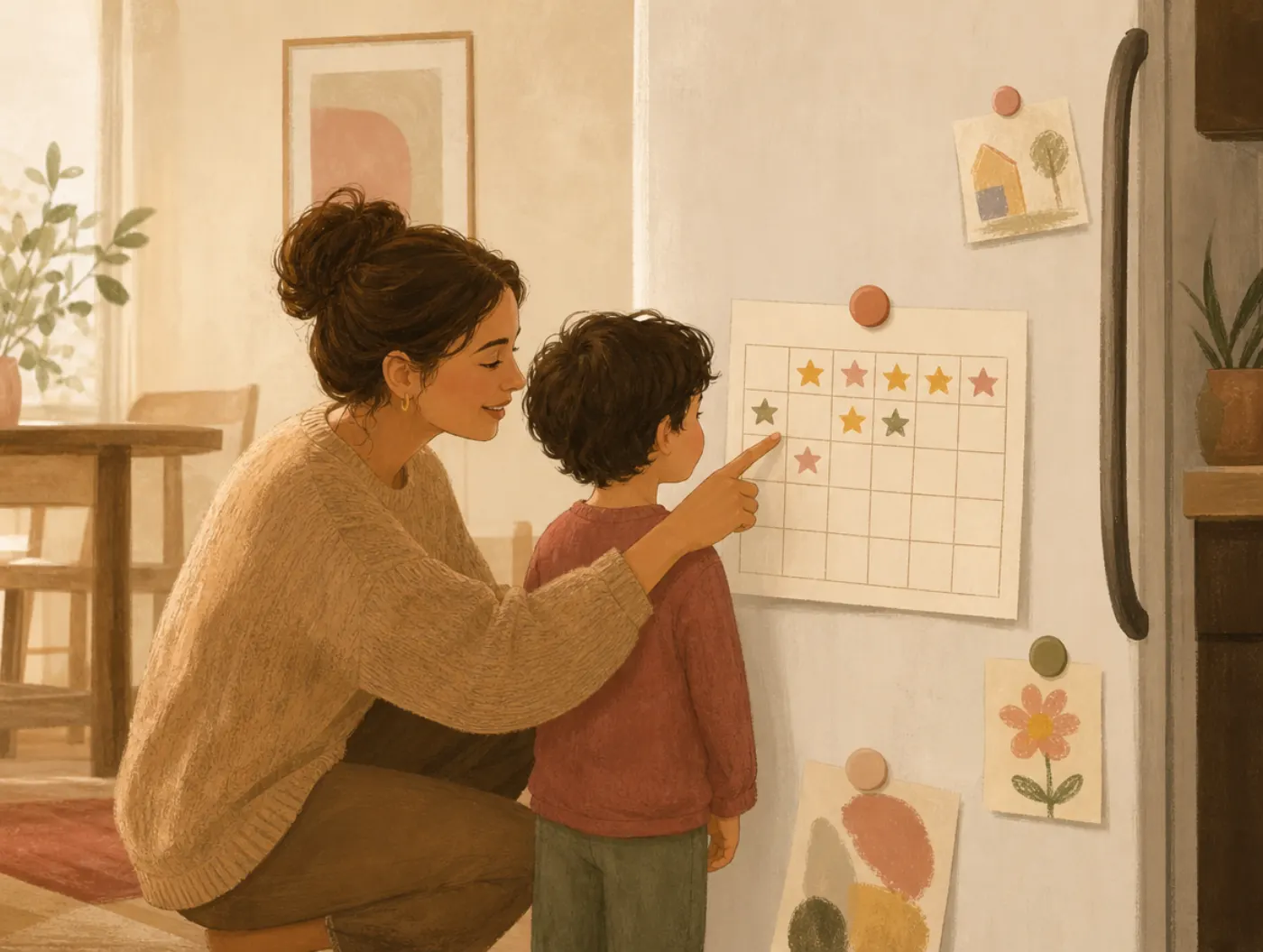
A behavior chart for kids makes a specific goal and its reward visible. Use this free builder to choose target behaviors, days, and rewards, then download a printable PDF. Use it as an online behavior chart, or print it.
 Reviewed byMichael Callans, MSW
Related tools & tests
Want a plan that fits your child?
A therapist who works with children and families can help you go beyond a chart. Free to search our directory.
Therapists Who Work With Parenting
A worksheet is a start. These licensed therapists work with the same problem; every member is matched to the federal NPI Registry and board checks are dated on the profile.
-
View profile
License verified, checked Oct 2, 2026
Overland Park, Kansas Telehealth and in person $125 per session
-
View profile
Michelle FosterLCSW, MSW
License verified, checked Oct 8, 2026
“Welcome! I'm glad you're taking the first step in your journey.”
Jonesboro, Georgia Telehealth $200 per session, sliding scale
-
View profile
Migdalis NievesLCSW-C, LICSW, LCSW
License verified, checked Sep 30, 2026
Richmond, Virginia Telehealth $150 to $175 per session



About this tool
A behavior chart for kids is a printable record of a specific action a child is learning, paired with an agreed reward. This free builder helps you replace vague expectations such as behaving well with visible goals that you can explain, notice, and praise. A behavior chart is a positive reinforcement tool that makes progress visible to a child. The principle is well established in behavioral science: behaviors that get noticed and rewarded tend to grow. For young children, who live very much in the present, a sticker or check right after the behavior is powerful feedback, often more motivating than the reward at the end of the week.
This builder lets you tailor the chart to your child instead of using a generic template. The most effective charts target one or two specific, doable behaviors phrased as something to do rather than to stop. Got dressed by myself works far better than stop dawdling, because it is concrete, achievable, and easy to celebrate. Starting small keeps the experience encouraging, which is what keeps a child engaged.
Behavior charts are a teaching tool, not a bribe and not a discipline system for serious problems. The goal is to help a new habit take root, then let the chart gently fade once the behavior comes naturally. Keep rewards small and frequent, pair every mark with genuine praise, and never take away earned marks as punishment, which turns the tool against you.
Fill in the fields below, download your chart, and put it somewhere your child sees it often at their eye level. Read the goal together and explain what earns a mark before you begin. Keep the chart accessible for encouragement while respecting your child's comfort about who can see it.
The token economy principle behind behavior charts traces to B.F. Skinner's research on operant conditioning in the mid-20th century, later developed into structured parent training programs by psychologist Alan E. Kazdin, described in The Kazdin Method for Parenting the Defiant Child. The American Academy of Pediatrics also recommends positive reinforcement, such as praise and small reward systems, over punishment for shaping children's behavior. Reward, punishment and negative reinforcement are routinely mixed up; our short course sorts the three with everyday examples.
Watch the pattern on the chart more than any single day. Missed days can happen and do not, by themselves, mean the chart has failed. If marks are consistently missing, review whether the goal is clear, achievable, and supported before expecting more effort. Break it into a smaller, more specific step, or adjust the reward plan with your child, rather than adding pressure.
If your child's behavior includes aggression, frequent meltdowns, or difficulty at school despite consistent charting, or if you suspect something like ADHD is part of the picture, a pediatrician or a child and family therapist can help build a more complete plan. You can search the Psychology.com therapist directory for a therapist who works with children.
A useful goal describes an action you can observe. For example, placing shoes in their basket after coming home is easier to recognize than being responsible. Decide together whether doing it with a reminder counts. If another caregiver uses the chart, share the same definition and reward agreement so the child is not trying to guess which adult's expectations apply.
The CDC recommends checking whether the child can do the task, understands the goal, and wants the reward when a chart is not helping. Practice the missing skill together or change the task to something achievable. Offer choices that suit your family, such as choosing a game to play together. An empty space should prompt curiosity about what support was needed, rather than a judgment about the child's character.
The American Academy of Pediatrics describes reward charts as a way to recognize success and advises gradually reducing the program as the behavior becomes established. Its guidance supports the approach behind this tool; it does not establish that this particular builder has been clinically tested. Keep praise specific and continue noticing effort as reliance on marks decreases.
A completed chart records only the goal you chose and the opportunities you observed. It cannot explain why a child struggled or screen for ADHD. If you need more context, the Behavior Tracker can help you record what happened around a difficult moment. Emotional Regulation Activities for Kids offers ways to practice handling feelings alongside the chart, and Parenting Worksheets brings related resources together.
References
- American Academy of Pediatrics. What's the best way to discipline my child? HealthyChildren.org.
- Kazdin AE. The Kazdin Method for Parenting the Defiant Child. Houghton Mifflin; 2008.
- Centers for Disease Control and Prevention. Tips for Using Praise and Rewards. April 30, 2026. https://www.cdc.gov/parenting-toddlers/responding-to-behavior/using-rewards.html
- American Academy of Pediatrics. Positive Reinforcement Through Rewards. November 6, 2023. https://www.healthychildren.org/English/family-life/family-dynamics/Pages/Positive-Reinforcement-Through-Rewards.aspx
Cite this source
Psychology.com. (2026, October 18). Behavior Chart (Kids). Psychology.com. https://psychology.com/tools/behavior-chart
Behavior Chart (Kids) FAQ
How do I make a good behavior chart?
Pick one or two specific, positive behaviors, set a realistic goal, and choose a small reward your child cares about. Mark the chart right after each success with warm, specific praise, and keep it where your child sees it. Explain what earns a mark before you start, and demonstrate the action if your child is still learning it.
How many behaviors should I track at once?
Just one or two. Tracking too many at once makes success unlikely and the chart discouraging. Add a new goal only once the first habit is solid. Choose a goal your child can understand and achieve with the support you have agreed to provide. If the chart becomes confusing, simplify it and practice the target action together before adding more expectations.
Should I remove marks for misbehavior?
No. Taking away earned marks turns a positive tool into a punishment and usually backfires. Keep the chart focused only on catching and rewarding the good. Handle a safety problem or another concern separately from the earned reward. Explain what your child can do at the next opportunity, and provide help practicing that action if they need it.
Is anything I type saved?
No. The builder runs entirely in your browser. Nothing is uploaded or stored, and the PDF is created on your own device.
At what age do behavior charts work best?
Behavior charts can be adapted to a child's understanding and interests. CDC guidance uses simple charts for toddlers and preschoolers, while the American Academy of Pediatrics describes tokens for early school-age children and points or agreements for older children. Choose a format your child understands and wants to use, with a goal that fits their current abilities.
How long should I use a behavior chart?
Use the chart while it helps your child practice the target behavior, and review whether the plan still fits. There is no fixed deadline for this worksheet. As the behavior becomes consistent and your child relies less on marks, gradually phase out the chart while continuing specific praise. If progress stalls, reassess the goal and support rather than extending the same plan indefinitely.
Is this a behavior tracker for kids or a reward chart?
It is a reward chart. A behavior tracker for kids records what happened around a difficult moment so you can see patterns; this builder does the opposite job, making one or two positive goals and an agreed reward visible so you can notice and praise success. A completed chart records only the goal you chose and the opportunities you observed. If you need to record what led up to a behavior, the Behavior Tracker tool is the better fit.
Can I use this as a positive reinforcement chart?
Yes. A positive reinforcement chart for kids is exactly what this builder makes: behaviors that get noticed and rewarded tend to grow, and for young children a sticker or check right after the behavior is powerful feedback. Keep rewards small and frequent, pair every mark with specific praise, and never remove earned marks as punishment. The American Academy of Pediatrics recommends positive reinforcement over punishment for shaping children's behavior.